格物
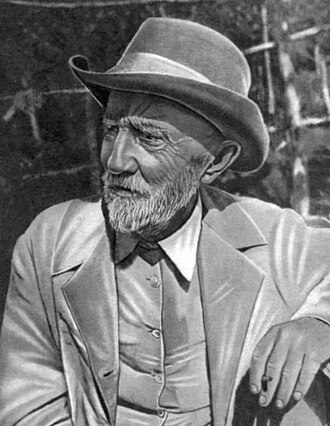
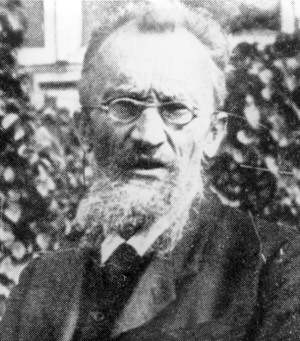
图:作者不详 · Public domain · Wikimedia Commons
- 出生
- 1855 年 10 月 15 日,Michurovka
- 逝世
- 1935 年 6 月 7 日,米丘林斯克
- 国籍
- 俄罗斯帝国、俄罗斯共和国、苏维埃俄国、苏联
- 学科
- 生物学
- 职业
- 植物学家、遗传学家
- 母语 / 工作语言
- 俄语
研究领域
师承
博士生3
来自 Wikidata 的「博士导师」「师从」「博士生」「学生」记录,可能不全。
所获奖项(4)
- 1912Order of Saint Anna, 3rd class
- —列宁勋章
- —红旗劳动勋章
- —俄罗斯苏维埃联邦社会主义共和国功勋科技工作者
学会与院士
百科正文
米丘林生于梁赞省多尔戈耶村附近维尔辛领地(今梁赞州普隆斯基区米丘洛夫卡)的小贵族家庭,从1875年开始在科兹洛夫城进行良种选育工作,1899年又在城郊先后建立苗圃,开始进行果树的选种育种研究工作。20世纪初已培育出一些果树品种。俄国内战结束后,他的工作得到了列宁的重视。
1923年苏联人民委员会决定把他的苗圃作为国家科研单位,1928年并正式命名为“米丘林中央果树、浆果树作物选种遗传学研究站”,1934年改组为“米丘林中央遗传学实验室”。他在六十年的实践中培育出苹果、梨、杏、葡萄等三百多种果树品种。1935年当选为苏联科学院名誉院士和农业科学院院士。主要著作有《工作原理与方法》《六十年工作总结》等,收入《米丘林全集》。
米丘林去世后,苏联农业院院长、伪科学家李森科将自己提出的一套物种获得性理论命名为“米丘林生物学”,包括关于定向培育、远缘杂交、无性杂交等改变植物遗传性的理论和方法。实则这套理论与米丘林没有关系。
李森科的“米丘林生物学”得到了斯大林的支持,李森科借助政治权势打击迫害了大批苏联科学家。
1940年代开始,“米丘林生物学”在中国共产党控制的地区得到提倡,并在1950年代推广至全中国。1955年中国科学界召开庆祝米丘林诞辰100周年大会;但在中苏交恶后,中国大陆又纠正了这一错误。
以上内容摘自维基百科「伊万·米丘林」,按 CC BY-SA 4.0 使用,去掉了参考文献、外部链接等尾部小节,公式改写成了纯文本。全文、配图和出处见原文。
英文维基百科补充中文条目比较短,下面是英文条目「Ivan Michurin (biologist)」的原文
Ivan Vladimirovich Michurin (Russian: Иван Владимирович Мичурин; 27 October [O.S. 15 October] 1855 – June 7, 1935) was a Russian practitioner of selection to produce new types of crop plants, Honorable Member of the Soviet Academy of Sciences, and academician of the Lenin All-Union Academy of Agriculture.
Throughout all his life, Michurin worked to create new sorts of fruit plants. He introduced over 300 new varieties. He was awarded the Order of Lenin and Order of the Red Banner of Labour for his achievements. The town of Michurinsk is named in his honor, as was the Bulgarian town of Tsarevo between 1950 and 1991.
Life and work
In 1875, Michurin leased a strip of land of about 500 square metres not far from Tambov, began collecting plants, and started his research in pomology and selection. In 1899, he acquired a much bigger strip of land of about 130,000 square metres and moved all of his plants there.
In 1920, right after the end of the Russian Civil War, Vladimir Lenin ordered People's Commissar of Agriculture Semyon Sereda to organize an analytic research project on Michurin's works and practical achievements. On September 11, 1922, Mikhail Kalinin visited Michurin at Lenin's personal request. On November 20, 1923, the Council of People's Commissars recognized Michurin's "fruit garden" as an institution of state importance. In 1928, the Soviets established a selectionist genetic station on the basis of Michurin's garden, which would be re-organized into the Michurin Central Genetic Laboratory in 1934.
Michurin made a major contribution in the development of genetics, especially in the field of pomology. In his cytogenetic laboratory, he researched cell structure and experimented with artificial polyploidy. Michurin studied the aspects of heredity in connection with the natural course of ontogenesis and external influence, creating a whole new concept of predominance. He proved that predominance depends on heredity, ontogenesis, and phylogenesis of the initial cell structure and also on individual features of hybrids and conditions of cultivation. In his works, Michurin assumed a possibility of changing genotype under external influence.
Michurin was one of the founding fathers of scientific agricultural selection. He worked on hybridization of plants of similar and different origins, cultivating methods in connection with the natural course of ontogenesis, directing the process of predominance, evaluation and selection of seedlings, and acceleration of the process of selection with the help of physical and chemical factors.
Michurin's method of crossing of geographically distant plants would be widely used by other selectionists. He worked out theoretical basis and some practical means for hybridization of geographically distant plants. Michurin also proposed means for overcoming the genetic barrier of incompatibility during the process of hybridization, such as pollination of the young hybrids during their first florescence, preliminary vegetative crossing, and use of a “mediator”, pollination with the mix of different kinds of pollen.
The Soviets began to cultivate Michurin's hybrids of apple, pear, cherry, rowan and others. The variety Antonovka is the most famous apple he developed. It is so popular in Russia that it was given the name The People's Apple. It is widely used in Russia and Poland for fresh eating and culinary purposes. In other parts of Europe and North America, it is principally used as a hardy rootstock. Michurin also cultivated hybrids of grape, apricot, sweet cherry and other southern plants in the northern climates.
以上内容摘自英文维基百科「Ivan Michurin (biologist)」,按 CC BY-SA 4.0 使用,去掉了参考文献、外部链接等尾部小节,公式改写成了纯文本。全文、配图和出处见原文。
同一学科、同时代的科学家



同一学科的科学家
更多 ›