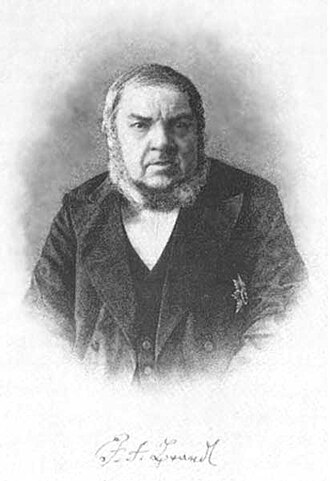
格物
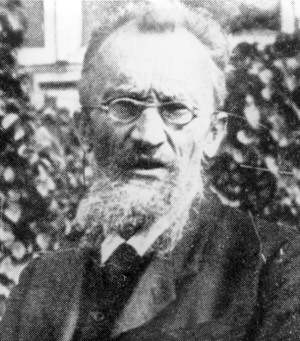
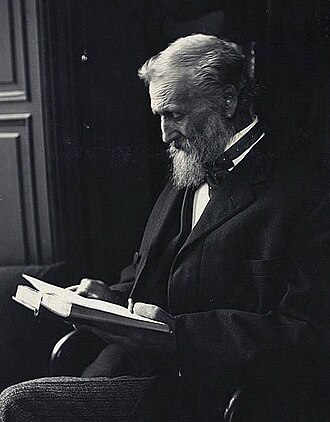
图:Public domain · Wikimedia Commons
- 出生
- 1846 年 9 月 25 日,圣彼得堡
- 逝世
- 1940 年 6 月 22 日,格拉茨
- 国籍
- 俄罗斯帝国、德意志帝国
- 学科
- 生物学、地球科学、博物与综合
- 职业
- 地理学家、世界语者、地球科学家、气象学家
- 母语 / 工作语言
- 德语、俄语、世界语
- 母校
- 圣彼得堡国立大学、莱比锡大学、海德堡大学
- 工作单位
- Deutsche Seewarte(1875—1919)、The Voeikov Main Geophysical Observatory(1872—1875)
研究领域
主要贡献
代表成就
所获奖项(3)
- 1886honorary member of the Physics Association (Frankfurt am Main, Germany)
- 1937Adlerschild des Deutschen Reiches
- —honorary doctorate of the University of Graz
学会与院士
百科正文
传记
家境
1846年9月25日,弗拉迪米尔·彼得·柯本生于俄罗斯帝国圣彼得堡。他的祖父是德国医生,受俄罗斯帝国女皇叶卡捷琳娜二世邀请至俄罗斯帝国以改善当地卫生状况,后来成为女王的私人医生。他的父亲彼得·柯本(Peter Köppen)是地理学家、历史学家、古俄罗斯文化民族志学家,对俄罗斯帝国科学家与西欧斯拉夫人的学术交流有重大贡献。他的女婿是提出大陆漂移学说的阿尔弗雷德·魏格纳。
学业
1864年,柯本于俄罗斯帝国克里米亚辛菲罗波尔读中学。1864年,于圣彼得堡大学修读植物学。1867年,他转校至海德堡大学;1870年,他于莱比锡大学发表博士论文。
事业
1872年,他于俄罗斯帝国从事植物学工作。1875年,他到德意志帝国汉堡出任海军气象台的海洋气象部门主任。1940年6月22日,弗拉迪米尔·彼得·柯本卒于奥地利格拉兹。
以上内容摘自维基百科「弗拉迪米爾·彼得·柯本」,按 CC BY-SA 4.0 使用,去掉了参考文献、外部链接等尾部小节,公式改写成了纯文本。全文、配图和出处见原文。
英文维基百科补充中文条目比较短,下面是英文条目「Wladimir Köppen」的原文
Wladimir Petrovich Köppen ( KUH-pən; German: [ˈkœpn̩]; Russian: Влади́мир Петро́вич Кёппен, romanized: Vladímir Petróvich Kyoppen, IPA: [vlɐˈdʲimʲɪr pʲɪˈtrovʲɪtɕ ˈkʲɵp(ː)ʲɪn]; 25 September 1846 – 22 June 1940) was a Russian–German geographer, meteorologist, climatologist and botanist. After studies in St. Petersburg, he spent the bulk of his life and professional career in Germany and Austria. The Köppen climate classification system, named after a proposal he first made in 1884, with some modifications, is still widely used. Köppen made significant contributions to several branches of science, and coined the name aerology for the science of the upper atmosphere.
Background and education
Wladimir Köppen was born in St. Petersburg, Russia. He lived there until he was 20 years old. Köppen's grandfather, Johann Friedrich von Köppen, was one of several German doctors invited to Russia by Empress Catherine II to improve sanitation and was later personal physician to the tsar. Johann's son (Wladimir's father), Peter von Köppen (Pyotr Ivanovich Köppen in Russian) (1793–1864), was a noted geographer, historian and ethnographer of ancient Russian cultures and an important contributor to intellectual exchanges between western European slavists and Russian scientists. Wladimir attended secondary school in Simferopol, Crimea, and began his studies of botany in 1864 at the University of St. Petersburg.
He frequently traveled to his family's estate on the Crimean coast from St. Petersburg and to and from Simferopol, in the interior of the peninsula. The floral and geographical diversity of the Crimean peninsula, as well as the starker geographical transitions between the capital and his home, did much to awaken an interest in the relationship between climate and the natural world.
In 1867, he transferred to the University of Heidelberg. In 1870, he defended his doctorate dissertation on the effects of temperature on plant growth at the University of Leipzig. He served in the Prussian ambulance corps in the Franco-Prussian War and later worked at the Central Physical Observatory in St. Petersburg.
He identified five major climatic groups, which correspond with the five main vegetation groups:
- Tropical rainy climate
- Dry climate
- Warm temperature rainy climate
- Snowy and cold climate
- Polar climate
Career and contributions
Köppen was a principal founder of modern climatology and meteorology. Between 1850 and 1860, Köppen contributed to Seewart's sailing handbooks for the Atlantic, Pacific and Indian Oceans by studying ship reports over the winds of different oceans. Between 1872 and 1873 Köppen was employed in the Russian meteorological service as an assistant where he helped prepare the daily synoptic weather map.
In 1875, he moved back to Germany and became the chief of the new Division of Marine Meteorology at the German Maritime Observatory (Deutsche Seewarte) based in Hamburg. There, he was responsible for establishing a weather forecasting service for the northwestern part of Germany and the adjacent sea areas. After four years of service, he was able to move on to his primary interest of fundamental research, and left the meteorological office. In 1937, he was personally honored by German Chancellor Adolf Hitler with the Adlerschild des Deutschen Reiches.
Köppen began a systematic study of the climate and experimented with balloons to obtain data from upper layers of the atmosphere. In 1884, he published the first version of his map of climatic zones in which the seasonal temperature ranges were plotted. It led to the development of the Köppen climate classification system around 1900, which he kept improving for the rest of his life. The full version of his system appeared first in 1918; after several modifications, the final version was published in 1936.
Apart from the description of climate types, he was acquainted with paleoclimatology. In 1924, he and his son-in-law Alfred Wegener published a paper called Die Klimate der Geologischen Vorzeit (The climates of the geological past) providing crucial support to the Milanković theory on ice ages. In 1911, he co-wrote The Thermodynamics of the Atmosphere, a textbook that became very popular.
Personal life
He had a wife, Marie, and five children including his daughter Else, who married Köppen's student Alfred Wegener. Marie's sister Sophie and her children moved in with the Köppens in 1888.
以上节选摘自英文维基百科「Wladimir Köppen」,按 CC BY-SA 4.0 使用,去掉了参考文献、外部链接等尾部小节,公式改写成了纯文本。篇幅所限,较长的小节只摘了开头一部分,有的小节没有收;全文、配图和出处见原文。
同一学科、同时代的科学家

同一学科的科学家
更多 ›