格物
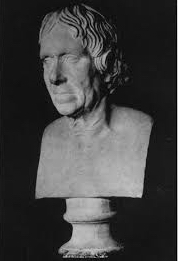
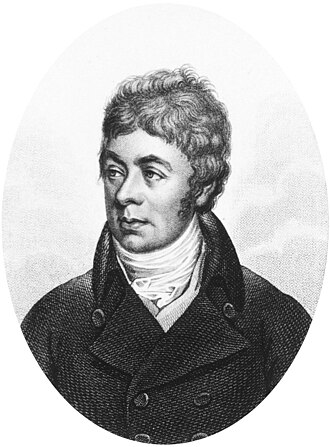
图:作者不详 · Public domain · Wikimedia Commons
- 出生
- 1748 年 5 月 10 日,伊沃托
- 逝世
- 1830 年 8 月 24 日,索特维尔莱鲁昂
- 国籍
- 法国
- 学科
- 生物学、博物与综合
- 职业
- 生物学家、鸟类学家、自然科学家、动物学家
- 母语 / 工作语言
- 法语
研究领域
百科正文
维埃约是第一批用卡尔·林奈式二名法科学描述鸟类的研究者之一。至少有26个他命名的鸟类至今仍在学术界使用。他也是第一批研究换羽变化和活鸟的鸟类学家之一。
生平
维埃约出生于法国上诺曼底大区的伊沃托,早年活动于法属圣多明戈(今属海地)伊斯帕尼奥拉岛的圣多明哥一带,从事经济贸易活动。在那里,他对自然历史产生了浓厚兴趣。后来,法国大革命爆发,他不得不逃往美国。在那里,他花了数十年的时间收集和研究资料,为后来《北美鸟类博物志》的完成奠定了基础,其中的前两卷于1807年在法国出版。
他后来还出版了一系列著作,包括《法国鸟类学》(1823–30)等。
以上内容摘自维基百科「路易·皮埃尔·维埃约」,按 CC BY-SA 4.0 使用,去掉了参考文献、外部链接等尾部小节,公式改写成了纯文本。全文、配图和出处见原文。
英文维基百科补充中文条目比较短,下面是英文条目「Louis Pierre Vieillot」的原文
Louis Pierre Vieillot (French pronunciation: [lwi pjɛʁ vjɛjo]; 10 May 1748 – 24 August 1830) was a French ornithologist.
Vieillot is the author of the first scientific descriptions and Linnaean names of a number of birds, including species he collected himself in the West Indies, as well as North American and South American species discovered but not formally named by Félix de Azara and his translator Sonnini de Manoncourt. He was among the first ornithologists to study changes in plumage and one of the first to study live birds. At least 88 of the genera erected by Vieillot are still in use.
Biography
Vieillot was born in Yvetot. He represented his family's business interests in Saint-Domingue (Haiti) on Hispaniola, but fled to the United States during the Haitian rebellions that followed the French Revolution. On Buffon's advice, he collected material for the Histoire naturelle des oiseaux de l'Amérique Septentrionale, the first two volumes of which were published in France beginning in 1807.
Vieillot returned to France for the last time in 1798, where the position created for him at the Bulletin des Lois left him sufficient leisure to continue his natural history studies. Following the death of Jean Baptiste Audebert, Vieillot saw the two parts of the "Oiseaux dorés" through to completion in 1802; his own Histoire naturelle des plus beaux oiseaux chanteurs de la zone torride appeared in 1806.
Vieillot's Analyse d'une nouvelle Ornithologie Elémentaire (1816) set out a new system of ornithological classification, which he applied with slight modifications in his contributions to the Nouveau dictionnaire d'histoire naturelle (1816–1819). Bitter rivalries existed between the leading ornithologists, and the classification introduced by Vieillot was strongly criticized by Coenraad Temminck in a pamphlet published in 1817. In 1820, Vieillot undertook the continuation of the Tableau encyclopédique et méthodique, commenced by Pierre Joseph Bonnaterre in 1790. He also published an Ornithologie française (1823–1830).
Toward the end of his life, Vieillot became blind. He was granted a government pension in his final year, but died in relative poverty.
Vieillot is now considered to be the authority for the scientific names of 88 genera and 402 species. Only Carl Linnaeus, Philip Sclater, and John Gould are considered to be the authority for more species. Vieillot is commemorated in the scientific names of three birds: Lybius vieilloti (Vieillot's barbet), Coccyzus vieilloti (Puerto Rican lizard cuckoo), and Sphecotheres vieilloti (Australasian figbird).
Some believe that Leach's storm petrel should be named "Vieillot's storm petrel" since he was the first to obtain a specimen of the species and to describe it. He did this in the New Dictionary of Natural History, published in 1817. He described the type location as the shores of Picardy, "se tient sur l"Ocean."
以上内容摘自英文维基百科「Louis Pierre Vieillot」,按 CC BY-SA 4.0 使用,去掉了参考文献、外部链接等尾部小节,公式改写成了纯文本。全文、配图和出处见原文。
同一学科、同时代的科学家


同一学科的科学家
更多 ›