格物
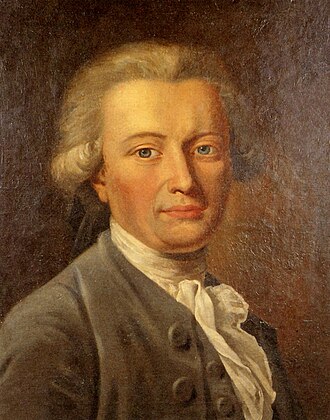
图:Johann Heinrich Wilhelm Tischbein · Public domain · Wikimedia Commons
- 出生
- 1754 年 11 月 27 日,Mokry Dwór
- 逝世
- 1794 年 1 月 10 日,巴黎
- 国籍
- 波兰立陶宛联邦、皇家普鲁士、美因茨共和国、德国
- 学科
- 生物学、医学、博物与综合
- 职业
- 探险家、人类学家、民族学家、蕨类植物学家
- 母语 / 工作语言
- 德语
- 母校
- 圣彼得中学
- 工作单位
- 美因茨大学、维尔纽斯大学(1784—1787)
研究领域
所获奖项(1)
- —英国皇家学会院士
学会与院士
百科正文
生平
在年少时,他跟随父亲作多次科学探索,包括1765年历时3年的俄国考察和詹姆斯·库克的第二次太平洋航行。这次旅程的记录《世界环航中的观察》为南太平洋与波利尼西亚的地理学和民族学作出重要的贡献,在科学家与普通读者眼中是令人尊敬的作品。因此他以22岁的年纪加入了皇家学会和被考虑为现代科学旅行文学的创建者之一;他也是科学游记文学的奠基人之一。
返回欧洲之后,他转向学术发展。1778年至1784年,他在卡塞尔的卡罗琳学院任教自然历史学。后来,1784年至1787年,前往维尔纽斯大学继续教授,直到1788年他接受美因兹大学的图书馆馆长一职为止。当时他大部分的科学著作包括了民族学和植物学,但他同时为许多关于旅行和探险的书写序及翻译,包括了詹姆斯·库克日志的德文翻译。
作为德国启蒙时期的中心人物,他有很多追随者,包括了他的密友-利希滕贝格。他的思想和人格强烈影响19世纪其中一名最伟大的德国科学家亚历山大·洪堡。1790年,他与亚历山大·洪堡旅行莱茵河下游各地,譬如荷兰、比利时、英国、法国,最后返回美因兹。1792年11月,美因兹为法国革命军队占领,他成了雅各宾党俱乐部-“自由与平等之友协会”其中一名创会成员,在美因兹共和国(Mainzer Republik)(德国最早的共和党州份)扮演领导角色。1793年7月,当他以美因兹共和国代表的身份于巴黎出现,普鲁士与奥地利联合重夺美因兹,并宣布福斯特为被放逐者。自此他不能返回德国,与亲友相隔异地。最终在1794年于巴黎病逝。
以上内容摘自维基百科「格奥尔格·福斯特」,按 CC BY-SA 4.0 使用,去掉了参考文献、外部链接等尾部小节,公式改写成了纯文本。全文、配图和出处见原文。
英文维基百科补充中文条目比较短,下面是英文条目「Georg Forster」的原文
Johann George Adam Forster, also known as Georg Forster (German: [ˈɡeːɔʁk ˈfɔʁstɐ]; 27 November 1754 – 10 January 1794), was a German geographer, naturalist, ethnologist, travel writer, journalist and revolutionary. At an early age, he accompanied his father, Johann Reinhold Forster, on several scientific expeditions, including James Cook's second voyage to the Pacific. His report of that journey, A Voyage Round the World, contributed significantly to the ethnology of the people of Polynesia and remains a respected work. As a result of the report, Forster, who was admitted to the Royal Society at the early age of twenty-two, came to be considered one of the founders of modern scientific travel literature.
After returning to continental Europe, Forster turned toward academia. He taught natural history at the Collegium Carolinum in the Ottoneum, Kassel (1778–84), and later at the Academy of Vilna (Vilnius University) (1784–87). In 1788, he became head librarian at the University of Mainz. Most of his scientific work during this time consisted of essays on botany and ethnology, but he also prefaced and translated many books about travel and exploration, including a German translation of Cook's diaries.
Forster was a central figure of the Enlightenment in Germany, and corresponded with most of its adherents, including his close friend Georg Christoph Lichtenberg. His ideas, travelogues and personality influenced Alexander von Humboldt, one of the great scientists of the 19th century who hailed Forster as the founder of both comparative ethnology (Völkerkunde) and regional geography (Länderkunde). When the French took control of Mainz in 1792, Forster played a leading role in the Mainz Republic, the earliest republican state in Germany. During July 1793 and while he was in Paris as a delegate of the young Mainz Republic, Prussian and Austrian coalition forces regained control of the city and Forster was declared an outlaw. Unable to return to Germany and separated from his friends and family, he died in Paris of illness in early 1794, not yet 40.
The standard author abbreviation G.Forst. is used to indicate this person as the author when citing a botanical name.
以上节选摘自英文维基百科「Georg Forster」,按 CC BY-SA 4.0 使用,去掉了参考文献、外部链接等尾部小节,公式改写成了纯文本。篇幅所限,较长的小节只摘了开头一部分,有的小节没有收;全文、配图和出处见原文。
同一学科、同时代的科学家


同一学科的科学家
更多 ›