格物
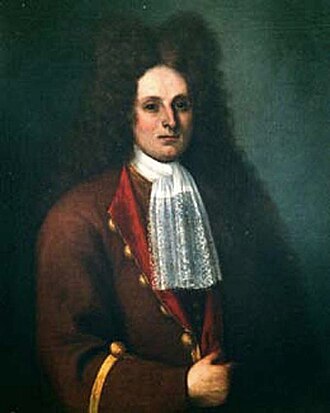
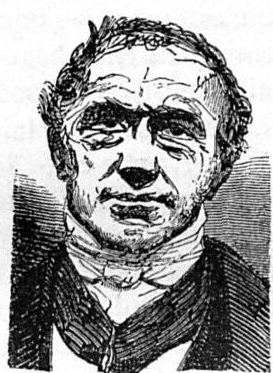
图:http://www-groups.dcs.st-and.ac.uk/~history/PictDisplay/Ricc… · Public domain · Wikimedia Commons
- 出生
- 1676 年 5 月 28 日,威尼斯
- 逝世
- 1754 年 4 月 15 日,特雷维索
- 国籍
- 威尼斯共和国
- 学科
- 数学、博物与综合
- 职业
- 数学家
- 母语 / 工作语言
- 意大利语
- 母校
- 帕多瓦大学(1696 年)、恩宠圣母圣殿 (布雷西亚)(1693 年)
研究领域
主要贡献
代表成就
师承
学生1
来自 Wikidata 的「博士导师」「师从」「博士生」「学生」记录,可能不全。
百科正文
教育
黎卡提最早在布雷西亚的面对贵族的耶稣会学校接受教育。1693年进入帕多瓦大学学习法律。1696年获得法学博士学位。在斯蒂法诺·德格雷·阿格里的鼓励下,黎卡提开始学习数学和分析。
黎卡提收到了彼得大帝的邀请,邀请他就任圣彼得堡科学院院长;也曾被维也纳邀请担任帝国法官;还包括帕多瓦大学等多所大学提供的教职,但都予以了拒绝,以便专心进行数学分析研究。他经常为威尼斯参议会提供建议,以建设运河。
应黎卡提的要求,他对于多项式的某些工作被包括在玛利亚·阿涅西的积分著作之中。
黎卡提方程以他的名字命名,其形式为: y'(x)=q₀(x)+q₁(x) y(x)+q₂(x) y²(x)
此处 q₀(x)≠ 0 且 q₂(x)≠ 0
个人生活
黎卡提的父亲阿斯·黎卡提来自一个在威尼斯有自己领地的贵族家庭,他的母亲则来自于一个很有权势的科隆家庭。他的长子文森佐·黎卡提,一位基督教徒,也从事数学研究,在双曲函数方面有开拓型贡献。次子乔尔达诺·黎卡提是首位测量材料杨氏模量的科学家,比托马斯·杨早25年。1723年雅各布·黎卡提当选博洛尼亚研究院荣誉院士。
以上内容摘自维基百科「雅各布·黎卡提」,按 CC BY-SA 4.0 使用,去掉了参考文献、外部链接等尾部小节,公式改写成了纯文本。全文、配图和出处见原文。
英文维基百科补充中文条目比较短,下面是英文条目「Jacopo Riccati」的原文
Jacopo Francesco Riccati (28 May 1676 – 15 April 1754) was a Venetian mathematician and jurist from Venice, known for his widely influential work on solving differential equations. He is best known for having studied the equation that bears his name.
Biography
Early life and education
Jacopo Riccati was born on 28 May 1676 to a noble family. His mother belonged to the Colonna family, one of the most influential princely families in Renaissance Rome. His father, a nobleman, died when he was still a boy, leaving him an estate sufficient for lifelong independence.
He was educated first at the Jesuit school for the nobility in Brescia, and in 1693 he entered the University of Padua to study law. He received a doctorate in law (LL.D.) in 1696. Encouraged by Stefano degli Angeli to pursue mathematics, he studied mathematical analysis. By 1710 he was familiar with the ideas of differential and integral calculus. His main work was in the field of differential equations, and he introduced new methods to solve them, such as the methods of separating variables and lowering the order of the equation. He corresponded with several European mathematicians, including Leonhard Euler and Daniel and Nicholas Bernoulli. Riccati personally supervised the education of Ramiro Rampinelli, the teacher of Maria Gaetana Agnesi and Paolo Frisi.
Career
Riccati received various academic offers but declined them in order to devote his full attention to the study of mathematical analysis on his own. In 1696 he married the countess Elisabetta Onigo, and established his residence in Treviso, refusing the invitation by Peter the Great to become the president of the St. Petersburg Academy of Sciences. He was also asked to Vienna as an imperial councillor (Consigliere Aulico) and offered a professorship as the University of Padua. He declined all these offers, preferring to stay in Italy and devote himself to his studies privately.
Riccati played a pivotal role in the diffusion of Newton's ideas in Italy. Most of his scientific work concerns mathematical analysis, especially differential equations. He is best known for introducing the differential equation that bears his name: y'(x)=q₀(x)+q₁(x) y(x)+q₂(x) y²(x) where q₀(x)≠ 0 and q₂(x)≠ 0.
This non-linear ordinary differential equation was to become of paramount importance in the centuries to come. Some of his work on polynomials was included by Maria Gaetana Agnesi, at Riccati's request, in the book on integral calculus of her Analytical Institutions. Riccati was very interested in hydraulics as well, and was often consulted by the Senate of Venice on the construction of canals and dikes along rivers. In addition, he studied economics, history, theology, ethics, metaphysics, and poetry. His works were collected and published in four volumes after his death (Lucca 1761-1765).
Personal life
Riccati and his wife had nine children, three of whom followed in their father's footsteps. Vincenzo Riccati, a Jesuit, pioneered the development of hyperbolic functions. Giordano Riccati was the first to measure the ratio of Young's moduli of metals—preceding the better known Thomas Young by 25 years.
Honors
Jacopo Riccati was named honorary Academician of the Academy of Sciences of the Institute of Bologna in 1723. The 6,5-kilometer sized main-belt asteroid 14074 Riccati, discovered at the San Vittore Observatory in 1996, was named in honor of him and his two sons, Vincenzo and Giordano.
以上内容摘自英文维基百科「Jacopo Riccati」,按 CC BY-SA 4.0 使用,去掉了参考文献、外部链接等尾部小节,公式改写成了纯文本。全文、配图和出处见原文。
同一学科、同时代的科学家

同一学科的科学家
更多 ›