格物
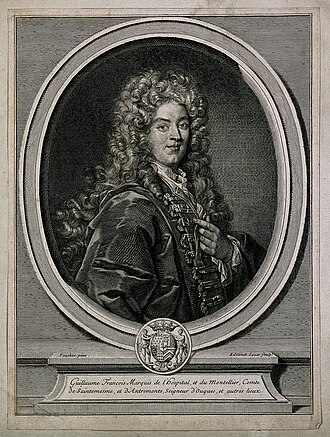
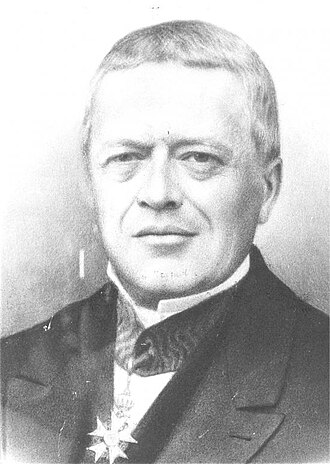
图:Gérard Edelinck · CC BY 4.0 · Wikimedia Commons
- 出生
- 1661 年,巴黎
- 逝世
- 1704 年 2 月 2 日,巴黎
- 国籍
- 法兰西王国
- 学科
- 数学、博物与综合
- 职业
- 数学家
- 母语 / 工作语言
- 法语
- 母校
- 法国科学院
- 工作单位
- 法国科学院
研究领域
主要贡献
代表成就
以他 / 她命名
师承
来自 Wikidata 的「博士导师」「师从」「博士生」「学生」记录,可能不全。
学会与院士
百科正文
生平
洛必达以十五岁之龄解答出帕斯卡的摆线难题。1691年末至1692年7月,他跟随伯努利学习微积分。其后他集合牛顿、莱布尼兹及伯努利的研究成果加以分析,解决最速降线问题。他在1696年的著作《阐明曲线的无穷小分析》是全世界首本以微分为主要内容的数学教科书,以定义及公理讲述变量、无穷小量等微分概念,在早期微积分教学及推广中起了很大的带头及鼓舞作用。但有指,洛必达的《阐明曲线的无穷小分析》之内容,是抄袭伯努利与其谈论微积分之信件的内容。除了微分外,他曾在几何及代数上写过论文,也有涉足物理力学。他的积分教科书在他逝世后才出版。
姓氏拼法
洛必达的法语姓氏L'Hôpital古时写作带s的L'Hospital。一般认为现拼法不符合历史,不过却有证据反驳这看法:在他朋友皮埃尔·伐里农1725年出版的书中,洛必达的姓氏一律写作L'Hôpital。而达朗贝尔-狄德罗百科全书中,他的姓氏写作没有s、o上也没有变音符号的L'Hopital。
以上内容摘自维基百科「紀堯姆·德·洛必達」,按 CC BY-SA 4.0 使用,去掉了参考文献、外部链接等尾部小节,公式改写成了纯文本。全文、配图和出处见原文。
英文维基百科补充中文条目比较短,下面是英文条目「Guillaume de l'Hôpital」的原文
Guillaume François Antoine, Marquis de l'Hôpital (French: [ɡijom fʁɑ̃swa ɑ̃twan maʁki də lopital]; 7 June 1661 – 2 February 1704) was a French mathematician. His name is firmly associated with l'Hôpital's rule for calculating limits involving indeterminate forms 0/0 and ∞/∞. Although the rule did not originate with l'Hôpital, it appeared in print for the first time in his 1696 treatise on the infinitesimal calculus, entitled Analyse des Infiniment Petits pour l'Intelligence des Lignes Courbes. This book was a first systematic exposition of differential calculus. Several editions and translations to other languages were published and it became a model for subsequent treatments of calculus.
Biography
L'Hôpital was born into a military family. His father was Anne-Alexandre de l'Hôpital, a Lieutenant-General of the King's army, Comte de Saint-Mesme and the first squire of Gaston, Duke of Orléans. His mother was Elisabeth Gobelin, a daughter of Claude Gobelin, Intendant in the King's Army and Councilor of the State.
L'Hôpital abandoned a military career due to poor eyesight and pursued his interest in mathematics, which was apparent since his childhood. For a while, he was a member of Nicolas Malebranche's circle in Paris and it was there that in 1691 he met young Johann Bernoulli, who was visiting France and agreed to supplement his Paris talks on infinitesimal calculus with private lectures to l'Hôpital at his estate at Oucques. In 1693, l'Hôpital was elected to the French academy of sciences and even served twice as its vice-president. Among his accomplishments were the determination of the arc length of the logarithmic graph, one of the solutions to the brachistochrone problem, and the discovery of a turning point singularity on the involute of a plane curve near an inflection point.
L'Hôpital exchanged ideas with Pierre Varignon and corresponded with Gottfried Leibniz, Christiaan Huygens, and Jacob and Johann Bernoulli. His Traité analytique des sections coniques et de leur usage pour la résolution des équations dans les problêmes tant déterminés qu'indéterminés ("Analytic treatise on conic sections") was published posthumously in Paris in 1707.
Calculus textbook
In 1696 l'Hôpital published his book Analyse des Infiniment Petits pour l'Intelligence des Lignes Courbes ("Infinitesimal calculus with applications to curved lines"). This was the first textbook on infinitesimal calculus and it presented the ideas of differential calculus and their applications to differential geometry of curves in a lucid form and with numerous figures; however, it did not consider integration.
The history leading to the book's publication became a subject of a protracted controversy. In a letter from 17 March 1694, l'Hôpital made the following proposal to Johann Bernoulli: in exchange for an annual payment of 300 pounds, Bernoulli would inform l'Hôpital of his latest mathematical discoveries, withholding them from correspondence with others, including Varignon. Bernoulli's immediate response has not been preserved, but he must have agreed soon, as the subsequent letters show. L'Hôpital may have felt fully justified in describing these results in his book, after acknowledging his debt to Leibniz and the Bernoulli brothers, "especially the younger one" (Johann). Johann Bernoulli grew increasingly unhappy with the accolades bestowed on l'Hôpital's work and complained in private correspondence about being sidelined. After l'Hôpital's death, he publicly revealed their agreement and claimed credit for the statements and portions of the text of Analyse, which were supplied to l'Hôpital in letters. Over a period of many years, Bernoulli made progressively stronger allegations about his role in the writing of Analyse, culminating in the publication of his old work on integral calculus in 1742: he remarked that this is a continuation of his old lectures on differential calculus, which he discarded since l'Hôpital had already included them in his famous book.
Personal life
L'Hôpital married Marie-Charlotte de Romilley de La Chesnelaye, also a mathematician and a member of the nobility, and inheritor of large estates in Brittany. Together, they had one son and three daughters. L'Hôpital died at the age of 42. The exact cause of his death is not widely recorded, and historical sources do not provide specific details regarding the circumstances of his passing.
以上节选摘自英文维基百科「Guillaume de l'Hôpital」,按 CC BY-SA 4.0 使用,去掉了参考文献、外部链接等尾部小节,公式改写成了纯文本。篇幅所限,较长的小节只摘了开头一部分,有的小节没有收;全文、配图和出处见原文。
同一学科、同时代的科学家

同一学科的科学家
更多 ›