格物
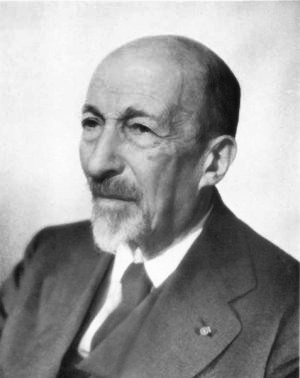
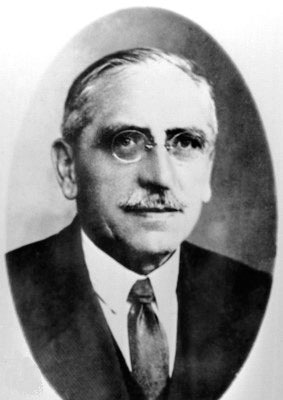
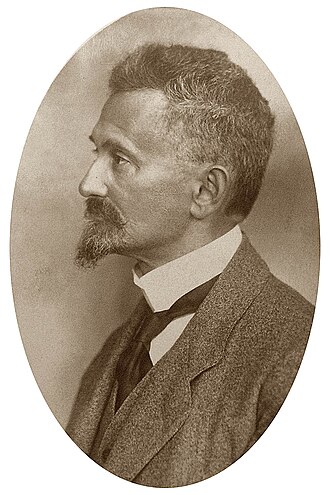
图:Matankic · CC BY-SA 4.0 · Wikimedia Commons
- 出生
- 1865 年 12 月 8 日,凡尔赛
- 逝世
- 1963 年 10 月 17 日,巴黎
- 国籍
- 法国
- 学科
- 数学、博物与综合
- 职业
- 数学家、教授、研究者、大学教师
- 母语 / 工作语言
- 法语
- 母校
- 高等师范学校(1888 年)、路易大帝中学(1884 年)、查理曼高中(1876 年)、巴黎大学(博士,1892 年)
- 工作单位
- 法兰西公学院(1897—1937)、哥伦比亚大学(1940—1944)、巴黎综合理工学院(1912—1940)、布丰中学(1890—1893)、巴黎大学(1897—1912)、圣路易中学(1889—1890)、波尔多大学(1893—1897)、巴黎中央理工学院(1920—1933)
研究领域
主要贡献
代表成就
以他 / 她命名
师承
博士生15
学生1
来自 Wikidata 的「博士导师」「师从」「博士生」「学生」记录,可能不全。
所获奖项(11)
- 1883综合竞赛
- 1892Grand prix des sciences mathématiques
- 1898彭赛列奖
- 1903Petit d'Ormoy, Carriere, Thebault Award
- 1908Estrade-Delcros award
- 1919西利曼纪念讲座
- 1932英国皇家学会外籍会员
- 1951费尔特里内利奖
- 1954荣誉军团大十字勋章
- 1956CNRS金奖
- 1957耶路撒冷希伯来大学荣誉博士
学会与院士
百科正文
生平
他在巴黎高等师范学院学习。德雷福斯事件他也牵涉在内,此后他活跃于政治,坚定支持为犹太人的事业。
他为偏微分方程创造了适定性问题概念。他也给了其名字予论体积的阿达马不等式,还有阿达马矩阵,是阿达马变换所以建基的。量子计算的阿达马门使用这个矩阵。
1936年曾受清华大学邀请至中国讲学讲学3个多月(同时期者尚有美国数学家诺伯特·维纳),影响了中国近代数学发展。
在阿达马所著的《数学领域的发明心理学》(Psychology of Invention in the Mathematical Field),他用内省来描述数学思维过程。与把认知和语言等同的作者截然相反,他描述他的数学思考大部分是无字的,往往有心象伴随著,浓缩了证明的整体思路。
他学生之一是安德烈·韦伊。
深入阅读
Life and Work of Jacques Hadamard, Vladimir Maz'ya & T. O. Shaposhnikova, American Mathematical Society, February 1998, hardcover, 574 pages, ISBN 0-8218-0841-9
以上内容摘自维基百科「雅克·阿达马」,按 CC BY-SA 4.0 使用,去掉了参考文献、外部链接等尾部小节,公式改写成了纯文本。全文、配图和出处见原文。
英文维基百科补充中文条目比较短,下面是英文条目「Jacques Hadamard」的原文
Jacques Salomon Hadamard (French: [adamaʁ]; 8 December 1865 – 17 October 1963) was a French mathematician who made major contributions in complex analysis, number theory, differential geometry, and partial differential equations.
Biography
The son of a teacher, Amédée Hadamard, of Jewish descent, and Claire Marie Jeanne Picard, Hadamard was born in Versailles, France and attended the Lycée Charlemagne and Lycée Louis-le-Grand, where his father taught. In 1884 Hadamard entered the École Normale Supérieure, having placed first in the entrance examinations both there and at the École Polytechnique. His teachers included Tannery, Hermite, Darboux, Appell, Goursat, and Picard. He published his famous thesis in 1892 containing the Hadamard gap theorem, the Cauchy–Hadamard theorem, Hadamard's theorem on the radius of meromorphy and the Hadamard fractional integral. Later that year, he was awarded the Grand Prix des Sciences Mathématiques for a memoir containing the Hadamard factorization theorem that applies it and the results of his thesis to the Riemann zeta function.
In 1892, Hadamard married Louise-Anna Trénel, also of Jewish descent, with whom he had three sons and two daughters. The following year he took up a lectureship in the University of Bordeaux, where he proved his celebrated inequality on determinants, which led to the discovery of Hadamard matrices when equality holds. In 1896 he made two important contributions: he proved the prime number theorem, using complex function theory (also proved independently by Charles Jean de la Vallée-Poussin); and he was awarded the Bordin Prize of the French Academy of Sciences for his work on geodesics in the differential geometry of surfaces and dynamical systems. In the same year he was appointed Professor of Astronomy and Rational Mechanics in Bordeaux. His foundational work on geometry and symbolic dynamics continued in 1898 with the study of geodesics on surfaces of negative curvature. For his cumulative work, he was awarded the Prix Poncelet in 1898.
After the Dreyfus affair, which involved him personally because his second cousin Lucie was the wife of Dreyfus, Hadamard became politically active and a staunch supporter of Jewish causes though he professed to be an atheist in his religion.
In 1897 he moved back to Paris, holding positions in the Sorbonne and the Collège de France, where he was appointed Professor of Mechanics in 1909. In addition to this post, he was appointed to chairs of analysis at the École Polytechnique in 1912 and at the École Centrale in 1920, succeeding Jordan and Appell. In Paris Hadamard concentrated his interests on the problems of mathematical physics, in particular partial differential equations, the calculus of variations and the foundations of functional analysis. He introduced the idea of well-posed problem and the method of descent in the theory of partial differential equations, culminating in his seminal book on the subject, based on lectures given at Yale University in 1922. Later in his life he wrote on probability theory and mathematical education.
Hadamard was elected to the French Academy of Sciences in 1916, in succession to Poincaré, whose complete works he helped edit. He became foreign member of the Royal Netherlands Academy of Arts and Sciences in 1920.
On creativity
In his book Psychology of Invention in the Mathematical Field, Hadamard uses the results of introspection to study mathematical thought processes, and tries to report and interpret observations, personal or gathered from other scholars engaged in the work of invention. In sharp contrast to authors who identify language and cognition, he describes his own mathematical thinking as largely wordless, often accompanied by mental images that represent the entire solution to a problem. He surveyed 100 of the leading physicists of the day (approximately 1900), asking them how they did their work.
Hadamard described the experiences of the mathematicians/theoretical physicists Carl Friedrich Gauss, Hermann von Helmholtz, Henri Poincaré and others as viewing entire solutions with "sudden spontaneousness".
Hadamard described the process as having four steps of the five-step Graham Wallas creative process model, with the first three also having been put forth by Helmholtz: Preparation, Incubation, Illumination, and Verification (Wallas' five stages added "Intimation" prior to Illumination, a sudden feeling of being about to find the solution to a problem).
以上节选摘自英文维基百科「Jacques Hadamard」,按 CC BY-SA 4.0 使用,去掉了参考文献、外部链接等尾部小节,公式改写成了纯文本。篇幅所限,较长的小节只摘了开头一部分,有的小节没有收;全文、配图和出处见原文。
同一学科、同时代的科学家