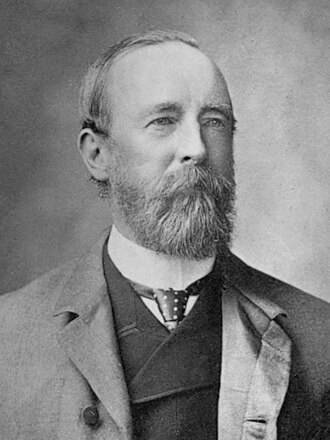
格物
- 出生
- 1755 年 4 月 11 日,肖迪奇
- 逝世
- 1824 年 12 月 21 日,霍克斯顿
- 国籍
- 大不列颠及爱尔兰联合王国
- 学科
- 生物学、地球科学、医学、博物与综合
- 职业
- 医生、古生物学家、神经科医生、植物学家
- 母语 / 工作语言
- 英语
- 母校
- 伦敦医学院
研究领域
百科正文
生平
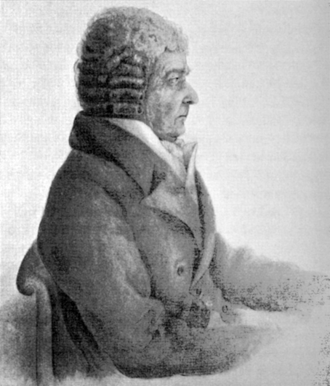
1755年出生于伦敦肖迪奇,1784年被伦敦市法团任命为外科医师。1817年因发表一篇医学论文《论震颤性麻痹》(An Essay on the Shaking Palsy),首次详述了帕金森病的相关症状,而被让-马丁·沙可用于命名此类疾病帕金森氏症。
以上内容摘自维基百科「詹姆斯·帕金森」,按 CC BY-SA 4.0 使用,去掉了参考文献、外部链接等尾部小节,公式改写成了纯文本。全文、配图和出处见原文。
英文维基百科补充中文条目比较短,下面是英文条目「James Parkinson」的原文
James Parkinson (11 April 1755 – 21 December 1824) was an English surgeon, apothecary, geologist, palaeontologist, and political activist. He is best known for his 1817 work An Essay on the Shaking Palsy, in which he was the first to describe "paralysis agitans", a condition that was later renamed Parkinson's disease by Jean-Martin Charcot.
Early life
James Parkinson was born on 11 April 1755 in Shoreditch, London, England. He was the son of John Parkinson, an apothecary and surgeon practising in Hoxton Square in London, and the oldest of five siblings, including his brother William and his sister Mary Sedgwick. In 1784, Parkinson was approved by the City of London Corporation as a surgeon.
On 21 May 1783, he married Mary Dale, with whom he subsequently had eight children; two did not survive past childhood. Soon after he was married, Parkinson succeeded his father in his practice in 1 Hoxton Square.
Politics
In addition to his flourishing medical practice, Parkinson had an avid interest in geology and palaeontology, as well as the politics of the day.
Parkinson was a strong advocate for the underprivileged, and an outspoken critic of the Pitt government. His early career was marked by his being involved in a variety of social and revolutionary causes, and some historians think he most likely was a strong proponent for the French Revolution. He published nearly 20 political pamphlets in the post-French Revolution period, while Britain was in political chaos. Writing under his own name and his pseudonym "Old Hubert", he called for radical social reforms and universal suffrage.
Parkinson called for representation of the people in the House of Commons, the institution of annual parliaments.
Medicine
Parkinson turned away from his tumultuous political career, and between 1799 and 1807, published several medical works, including a work on gout in 1805. He was also responsible for early writings on ruptured appendix.
Parkinson was interested in improving the general health and well-being of the population. His writings on public health revealed a concern for the welfare of the people similar to that expressed in his political activism. He was also a crusader for the legal protection for the mentally ill, as well as their doctors and families.
In 1812, Parkinson assisted his son with the first described case of appendicitis in English, and the first instance in which perforation was shown to be the cause of death.
He believed that any worthwhile surgeon should know shorthand, at which he was adept.
Science
Parkinson's interest gradually turned from medicine to nature, specifically the relatively new fields of geology and palaeontology. He began collecting specimens and drawings of fossils in the latter part of the 18th century. He took his children and friends on excursions to collect and observe fossil plants and animals. His attempts to learn more about fossil identification and interpretation were frustrated by a lack of available literature in English, so he decided to improve matters by writing his own introduction to the study of fossils.
In 1804, the first volume of his Organic Remains of a Former World was published. Gideon Mantell praised it as "the first attempt to give a familiar and scientific account of fossils". A second volume was published in 1808, and a third in 1811. Parkinson illustrated each volume and his daughter Emma coloured some of the plates.
Death and memorials
Parkinson died on 21 December 1824, after a stroke that interfered with his speech. He bequeathed his houses in Langthorne to his sons and wife, and his apothecary's shop to his son John. His collection of organic remains was given to his wife, and much of it was sold in 1827; a catalogue of the sale has never been found. He was buried at St. Leonard's Church, Shoreditch.
Parkinson's life is commemorated with a stone tablet inside the church of St Leonard's, Shoreditch, where he was a member of the congregation; the exact site of his grave is not known and his body may lie in the crypt or in the churchyard. A blue plaque at 1 Hoxton Square marks the site of his home. Several fossils were named after him.
以上节选摘自英文维基百科「James Parkinson」,按 CC BY-SA 4.0 使用,去掉了参考文献、外部链接等尾部小节,公式改写成了纯文本。篇幅所限,较长的小节只摘了开头一部分,有的小节没有收;全文、配图和出处见原文。
同一学科、同时代的科学家


同一学科的科学家
更多 ›