格物

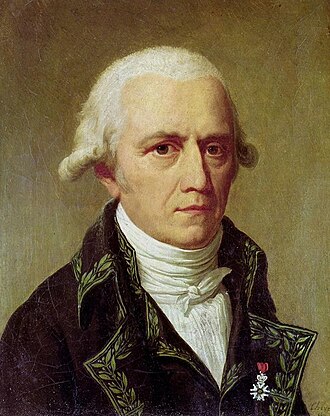
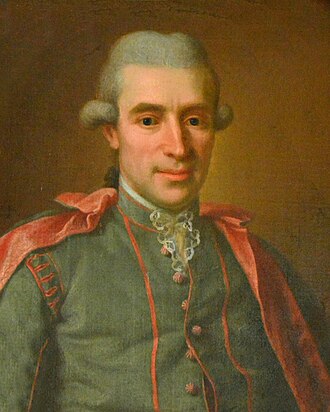
图:作者不详 · Public domain · Wikimedia Commons
- 出生
- 1737 年 8 月 12 日,蒙迪迪耶
- 逝世
- 1813 年 12 月 17 日,巴黎
- 国籍
- 法国
- 学科
- 化学、生物学、工程与发明
- 职业
- 植物学家、药师、农学家、营养师
- 母语 / 工作语言
- 法语
- 母校
- 路易大帝中学
研究领域
学会与院士
百科正文
安托万·帕尔芒捷是食品化学和有机农业的先驱。但他最为人知的事迹是促进了马铃薯在欧洲的推广。1785年,由路易十六下令,帕尔芒捷将刚刚引入法国的马铃薯在塞纳河畔讷伊的萨布隆(Les Sablons)平地上试种。为了纪念这一功绩,讷伊市政厅的门前树立起了一尊帕尔芒捷的雕像。
以上内容摘自维基百科「安托万·帕尔芒捷」,按 CC BY-SA 4.0 使用,去掉了参考文献、外部链接等尾部小节,公式改写成了纯文本。全文、配图和出处见原文。
英文维基百科补充中文条目比较短,下面是英文条目「Antoine-Augustin Parmentier」的原文
Antoine-Augustin Parmentier (UK:, US:; French: [ɑ̃twan oɡystɛ̃ paʁmɑ̃tje]; 12 August 1737 – 13 December 1813) was a French pharmacist and agronomist, best remembered as a vocal promoter of the potato as a food source for humans in France and throughout Europe. His many other contributions to nutrition and health included establishing the first mandatory smallpox vaccination campaign in France (under Napoleon beginning in 1805, when he was Inspector-General of the Health Service) and pioneering the extraction of sugar from sugar beets. Parmentier also founded a school of breadmaking and studied methods of conserving food, including refrigeration.
Life and career
While serving as an army pharmacist for France in the Seven Years' War, he was captured by the Prussians, and in prison in Prussia was faced with eating potatoes, known to the French only as hog feed. The potato had been introduced from South America to Europe by the Spaniards at the beginning of the 16th century. It was introduced to the rest of Europe by 1640 but (outside Spain and Ireland) was usually used only for animal feed. King Frederick II of Prussia had required peasants to cultivate the plants under severe penalties and had provided them with cuttings. There is a legend which states that France had forbidden the cultivation of the potato Paramentier published his famous essay in 1772, but there is no primary source for this claim and there is no evidence of a ban ever having taken place in France at that time.
From his return to Paris in 1763 he pursued his pioneering studies in nutritional chemistry. His prison experience came to mind in 1772 when he proposed (in a contest sponsored by the Academy of Besançon) use of the potato as a source of nourishment for dysenteric patients. He won the prize on behalf of the potato in 1773.
Due largely to Parmentier's efforts, the Paris Faculty of Medicine declared potatoes edible in 1772. Still, resistance continued, and Parmentier was prevented from using his test garden at the Invalides hospital, where he was pharmacist, by the religious community that owned the land, whose complaints resulted in the suppression of Parmentier's post at the Invalides.
Parmentier's agronomic interests covered a wide range of opportunities to ameliorate the human lot through technical improvements; he published his observations touching on bread-baking, cheese-making, grain storage, the use of cornmeal (maize) and chestnut flour, mushroom culture, mineral waters, wine-making, improved sea biscuits, and a host of other topics of interest to the Physiocrats. In 1779, Parmentier was appointed to teach at the Free School of Bakery to help stabilize Paris's food supply by making bread in a more cost-efficient fashion. In that same year, he published Manière de faire le pain de pommes de terre, sans mélange de farine (How to make potato bread, without mixing flour), in which he described how one can make potato bread that still has all the characteristics of wheat bread.
In 1800, Napoléon Bonaparte appointed him the first army pharmacist. He succeeded Pierre Bayen: he continued his fight to place pharmacy on the same level as medicine and surgery.
Potato advocacy
Parmentier engaged advocacy efforts to educate the public on the value of potatoes as a staple food crop. He hosted dinners at which potato dishes featured prominently and attended by famous guests such as Benjamin Franklin and Antoine Lavoisier.
Death and legacy
Parmentier died on 13 December 1813, aged 76. He is buried in Père Lachaise Cemetery in Paris, in a plot ringed by potato plants, and his name is given to a long avenue in the 10th and 11th arrondissements (and a station on line 3 of the Paris Métro). At Montdidier, his bronze statue surveys Place Parmentier from its high socle, while below, in full marble relief, seed potatoes are distributed to a grateful peasant. Another monumental statue of Parmentier, by French sculptor Adrien Étienne Gaudez, is erected in the square of the town hall of Neuilly-sur-Seine.
Starting in the 1870s, many dishes including potatoes were named in honor of Parmentier: potage, velouté, or crème Parmentier, a potato and leek soup; hachis Parmentier, a cottage or shepherd's pie; brandade de morue parmentier, salt cod mashed with olive oil and potatoes; pommes or garniture Parmentier, cubed potatoes fried in butter; purée Parmentier, mashed potatoes; salade Parmentier, potato salad.
以上节选摘自英文维基百科「Antoine-Augustin Parmentier」,按 CC BY-SA 4.0 使用,去掉了参考文献、外部链接等尾部小节,公式改写成了纯文本。篇幅所限,较长的小节只摘了开头一部分,有的小节没有收;全文、配图和出处见原文。
同一学科、同时代的科学家