格物
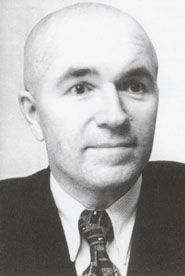
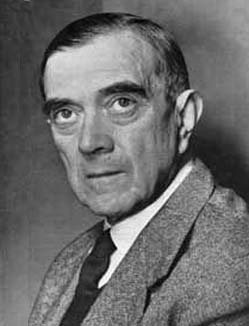
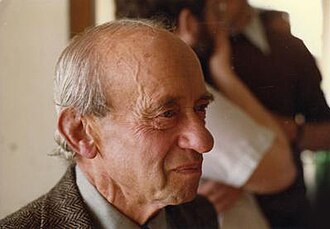
图:作者不详 · Public domain · Wikimedia Commons
伊万·维诺格拉多夫1891—1983
Ivan Vinogradov
Soviet mathematician (1891-1983)
伊万·马特维耶维奇·维诺格拉多夫,苏联数学家,专精于解析数论。
摘自维基百科「伊萬·維諾格拉多夫」,CC BY-SA 4.0
- 出生
- 1891 年 9 月 2 日
- 逝世
- 1983 年 3 月 20 日,莫斯科
- 国籍
- 俄罗斯帝国、苏联
- 学科
- 数学、博物与综合
- 职业
- 数学家、大学教师
- 母语 / 工作语言
- 俄语
- 母校
- 圣彼得堡国立大学(1914 年)
- 工作单位
- 彼尔姆国立大学(1918—1920)、圣彼得堡国立大学(1925—1934)、圣彼得堡彼得大帝理工大学(1920—1934)、斯捷克洛夫数学研究所(1934—1941)、斯捷克洛夫数学研究所(1944—1983)、托木斯克国立大学(1918—1920)、Physico-Mathematical Institute of the Russian Academy of Sciences(1932—1934)
研究领域
主要贡献
代表成就
以他 / 她命名
师承
来自 Wikidata 的「博士导师」「师从」「博士生」「学生」记录,可能不全。
所获奖项(20)
- 1941斯大林奖
- 1941State Stalin Prize, 1st degree
- 1942英国皇家学会外籍会员
- 1944列宁勋章
- 1945社会主义劳动英雄
- 1945列宁勋章
- 1945镰刀与槌子奖章
- 1953列宁勋章
- 1961列宁勋章
- 1970罗蒙诺索夫金质奖章
- 1971社会主义劳动英雄
- 1971列宁勋章
- 1972列宁奖
- 1975列宁勋章
- 1981十月革命勋章
- 1983苏联国家奖
- —退休劳动者奖章
- —1941-1945年大卫国战争中忘我劳动奖章
- —纪念列宁诞辰一百周年奖章
- —莫斯科建城八百周年纪念奖章
学会与院士
百科正文
生平
伊万·维诺格拉多夫出生于普斯科夫州洛瓦季河畔的大卢基,毕业于圣彼得堡国立大学,1920年成为教授。1929年当选为苏联科学院院士。1932年起担任苏联科学院数学研究所所长。他从1934年担任斯捷克洛夫数学研究所董事。1941年,他被授予了苏联国家奖。1945年和1971年两度获得社会主义劳动英雄称号。1972年获得列宁奖金。
成就
他于1937年在无需广义黎曼猜想介入的情形下,直接证明了充分大的奇数可以表示为三个质数之和,也被称为维诺格拉多夫定理。所著《数论基础》在国际上得到很高评价。
以上内容摘自维基百科「伊萬·維諾格拉多夫」,按 CC BY-SA 4.0 使用,去掉了参考文献、外部链接等尾部小节,公式改写成了纯文本。全文、配图和出处见原文。
英文维基百科补充中文条目比较短,下面是英文条目「Ivan Vinogradov」的原文
Ivan Matveevich Vinogradov (Russian: Ива́н Матве́евич Виногра́дов, IPA: [ɪˈvan mɐtˈvʲejɪvʲɪtɕ vʲɪnɐˈɡradəf]; 14 September 1891 – 20 March 1983) was a Soviet mathematician, who was one of the creators of modern analytic number theory, and also a dominant figure in mathematics in the USSR. He was born in the Velikiye Luki district, Pskov Oblast. He graduated from the University of St. Petersburg, where in 1920 he became a Professor. From 1934 he was a Director of the Steklov Institute of Mathematics, a position he held for the rest of his life, except for the five-year period (1941–1946) when the institute was directed by Academician Sergei Sobolev. In 1941 he was awarded the Stalin Prize. He was elected to the American Philosophical Society in 1942. In 1951 he became a foreign member of the Polish Academy of Sciences and Letters in Kraków.
Mathematical contributions
In analytic number theory, Vinogradov's method refers to his main problem-solving technique, applied to central questions involving the estimation of exponential sums. In its most basic form, it is used to estimate sums over prime numbers, or Weyl sums. It is a reduction from a complicated sum to a number of smaller sums which are then simplified. The canonical form for prime number sums is S=∑ _(p≤ P)exp(2π if(p)).
With the help of this method, Vinogradov tackled questions such as the ternary Goldbach problem in 1937 (using Vinogradov's theorem), and the zero-free region for the Riemann zeta function. His own use of it was inimitable; in terms of later techniques, it is recognised as a prototype of the large sieve method in its application of bilinear forms, and also as an exploitation of combinatorial structure. In some cases his results resisted improvement for decades.
He also used this technique on the Dirichlet divisor problem, allowing him to estimate the number of integer points under an arbitrary curve. This was an improvement on the work of Georgy Voronoy.
In 1918 Vinogradov proved the Pólya–Vinogradov inequality for character sums.
Personality and career
Vinogradov served as director of the Mathematical Institute for 49 years. For his long service he was twice awarded the order of The Hero of the Socialist Labour. The house where he was born was converted into his memorial – a unique honour among Russian mathematicians. As the head of a leading mathematical institute, Vinogradov enjoyed significant influence in the Academy of Sciences and was regarded as an informal leader of Soviet mathematicians, not always in a positive way: his anti-Semitic feelings led him to hinder the careers of many prominent Soviet mathematicians.
Although he was always faithful to the official line, he was never a member of the Communist Party and his overall mindset was nationalistic rather than communist. This can at least partly be attributed to his origins: his father was a priest of the Russian Orthodox Church. Vinogradov was enormously strong: in some recollections it is stated that he could lift a chair with a person sitting on it by holding the leg of the chair in his hands. He was never married and was very attached to his dacha in Abramtsevo, where he spent all his weekends and vacations (together with his sister Nadezhda, also unmarried) enjoying flower gardening. He had friendly relations with the president of the Russian Academy of Sciences Mstislav Keldysh and Mikhail Lavrentyev, both mathematicians whose careers started in his institute.
以上内容摘自英文维基百科「Ivan Vinogradov」,按 CC BY-SA 4.0 使用,去掉了参考文献、外部链接等尾部小节,公式改写成了纯文本。全文、配图和出处见原文。
同年获同一奖项
同一学科、同时代的科学家

同一学科的科学家
更多 ›