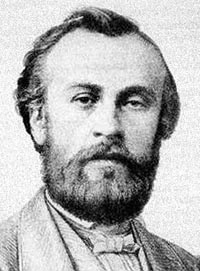
格物

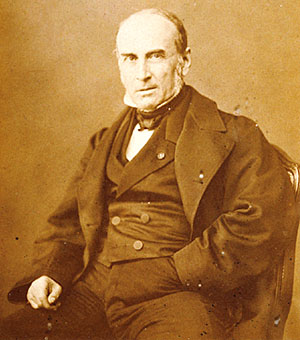
图:William Holl / Antoine Claudet · Public domain · Wikimedia Commons
- 出生
- 1803 年 10 月 16 日,威灵顿码头
- 逝世
- 1859 年 10 月 12 日,伦敦
- 国籍
- 大不列颠及爱尔兰联合王国、英国
- 学科
- 工程与发明
- 职业
- 土木工程师、政治人物、铁路工程师、工程师
- 母语 / 工作语言
- 英语、法语
- 母校
- 爱丁堡大学
研究领域
主要贡献
代表成就
所获奖项(3)
- —英国皇家学会院士
- —法国荣誉军团骑士勋章
- —美国文理科学院院士
学会与院士
百科正文
英文维基百科补充中文条目比较短,下面是英文条目「Robert Stephenson」的原文
Robert Stephenson (16 October 1803 – 12 October 1859) was an English civil engineer and designer of locomotives. The only son of George Stephenson, the "Father of Railways", he built on the achievements of his father.
Robert Stephenson became an apprentice under mining engineer Nicholas Wood after completing his education in 1819. In 1821, he and his father surveyed the Bishop Auckland area to help Edward Pease build a railway that would transport coal from the area to Darlington and Stockton-on-Tees. In 1823, the Stephensons and Pease founded Robert Stephenson and Company to manufacture locomotives; the company designed such locomotives as the Lancashire Witch in 1828 and the John Bull in 1831, the latter of which became the first steam locomotive to run in New Jersey.
Throughout the 1830s Robert oversaw the construction of several railways, including the Canterbury and Whitstable Railway, the Bolton & Leigh railway, the Warrington & Newton Railway and the Leicester and Swannington Railway. He drew the plans for the London and Birmingham Railway, which opened in 1838. In 1832 he was appointed surveyor for a project to build a railway between Lanehead Farmhouse and Consett in County Durham, but the railway line closed in 1840, six years after its completion. In 1839 he spent three months in France, Spain and Italy advising on railways, and after returning to England he advised Parliament and arbitrated in disputes between railway companies and contractors. He was made Knight of the Order of Leopold in 1841 for his improvements to locomotive engines.
In 1845 Robert designed an iron bridge that would cross the River Dee; the Dee bridge was completed in 1846 but collapsed under a locomotive, causing the deaths of five people. Robert was accused of manslaughter during the inquest, but a verdict of accidental death was ultimately returned. He also designed the Britannia Bridge, which crosses the Menai Strait and consists of four tubes; it was opened to public traffic in 1850. The High Level Bridge, another of his works, crosses the Tyne and was opened in 1849 by Queen Victoria. She offered Robert a knighthood, but he refused.
Robert, who was a member of the Conservative Party, was elected as the Member of Parliament for Whitby; he held the position until his death in 1859.
Robert has been called the greatest engineer of the 19th century. Stephenson's death was widely mourned, and his funeral afforded marks of public honour. He is buried in Westminster Abbey.
以上节选摘自英文维基百科「Robert Stephenson」,按 CC BY-SA 4.0 使用,去掉了参考文献、外部链接等尾部小节,公式改写成了纯文本。篇幅所限,较长的小节只摘了开头一部分,有的小节没有收;全文、配图和出处见原文。