格物
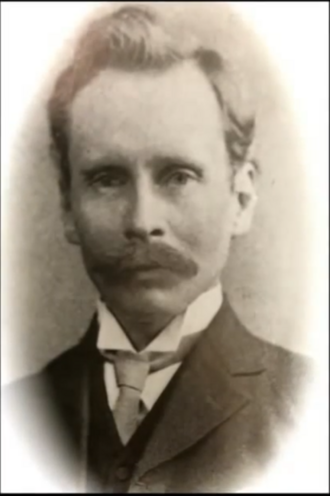
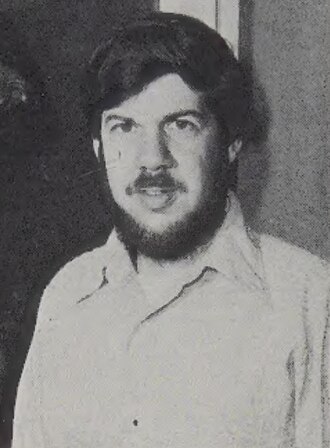
图:Kwameghana · CC BY-SA 4.0 · Wikimedia Commons
- 出生
- 1868 年 3 月 21 日,奥顿肖
- 逝世
- 1937 年 3 月 8 日,比肯斯菲尔特
- 国籍
- 尼日利亚、澳大利亚
- 学科
- 生物学、地球科学、博物与综合
- 职业
- 自然科学家、地质学家、植物学家
- 母语 / 工作语言
- 英语、尼日利亚皮钦语
- 母校
- 墨尔本大学
所获奖项(7)
- 1927莱伊尔奖章
- —大英帝国爵级司令勋章
- —圣米迦勒及圣乔治勋章三等勋爵士
- —沃拉斯顿奖章
- —Fellow of the Geological Society of London
- —大英帝国司令勋章
- —下级勋位爵士
百科正文
英文维基百科补充中文条目比较短,下面是英文条目「Albert Kitson」的原文
Sir Albert Ernest Kitson, (21 March 1868 – 8 March 1937) was a British-Australian geologist, naturalist, and winner of the Lyell Medal in 1927.
Early life
Kitson was born in North Street, Audenshaw, Cheshire, England, the son of John Kitson from Manchester and Margaret, née Neil, from Edinburgh, Scotland. On his father's side the family had been stonemasons, while his maternal grandfather was a Scottish Presbyterian minister. Albert's early childhood was spent in Nagpur in the Central Provinces of India where his family moved when he was a year old. Around 1876 they emigrated to Victoria. Here John and Margaret taught at a State School in the gold-mining settlement of Enoch's Point in the Victorian Alps before John was appointed as head teacher of the, recently created, North Winton State School near Benalla. John died of angina in 1879 and so until her death in 1898 Margaret took over the running of the school which was attended by both her surviving children – Albert and his younger brother (John) Sidney.
Career
Albert Kitson joined the Public Service in Victoria in 1886 as a clerk. Whilst still employed in this function he also carried out geological field work. This fired a passion and encouraged him to take up part-time studies in geology at the Working Men's College (now the Royal Melbourne Institute of Technology) and subsequently at the University of Melbourne. By 1903, he had risen to become second-in-command of the Geological Survey of Victoria of which he subsequently became senior geologist and for a time acting director. He contributed a number of studies on the mineral resources of Victoria and the Glacial beds of Tasmania. In 1907, Albert Kitson recommended that the Buchan Caves in Gippsland, Victoria be set aside as a reservation to protect them from vandalism.
After his initial work in Victoria, Kitson spent much of his subsequent professional life in Africa. Recognising his geological talents Professor J. W. Gregory recommended him for a post as Principal mineral surveyor in Southern Nigeria where he went on to discover coal and lignite.
Late life
After his retirement from the Gold Coast in 1930 Kitson moved to Beaconsfield, Buckinghamshire, where he called his house "Benalta" (a reference to the original name of Benalla), as an indication of his enduring passion for Australia. Here he continued to be consulted on geological questions connected to Africa. In particular he reported on goldfields in Kenya during the so-called Kakamega Gold Rush of the early 1930s where gold-mining once again showed its disrespect for the rights of local communities and the environment. In his report for the Colonial Office Kitson suggested that possibly as much as half of the gold being prospected was wasted by amateur techniques. In an article for the magazine The Spectator, Kitson compared the influx of amateur gold-prospectors to a similar situation in Klondike in Canada in 1897-8: "The road to Kakamega now resembles a miniature 'trail of 98' without the snow. Old mining men, from ex-Klondyke Pioneers to Australian backwoodsmen, are hurrying to the spot". But it seems that Kitson's initial report had helped create the rush in the first place by highlighting the rich pickings available.
Kitson's publications include
A. E. Kitson, "The Gold Coast", The Geographical Journal, vol XLVIII, no 5, November 1916, pp. 369–392;
A. E. Kitson, "Proposed reservation of limestone caves in the Buchan District, Eastern Gippland", Rec. geol. Surv. Vict., 1907, II(I):37–44;
Leonard Darwin, Tempest Anderson, A. E. Kitson, E. O. Thiele, 'Some New Zealand Volcanoes: Discussion', The Geographical Journal, Vol. 40, No. 1 (July 1912), pp. 23–25;
Major Darwin, Walter Egerton, Dr. Falconer & A. E. Kitson, "Southern Nigeria: Some Considerations of Its Structure, People, and Natural History: Discussion", The Geographical Journal, Vol. 41, No. 1 (Jan. 1913), pp. 34–38;
A. E. Kitson, "The Economic Minerals and Rocks of Victoria", Department of Mines, Special Report, Melbourne; J. Kemp, Acting Government Printer; 1906. pp. 517–536;
Percy Cox, K. S. Sandford, Vaughan Cornish, L. J. Spencer, Albert E. Kitson, R. A. Bagnold, "The Movement of Desert Sand: Discussion", The Geographical Journal, Vol. 85, No. 4 (April 1935), pp. 365–369;
A. Kitson, "First Report on Kakamega Goldfield, Kenya", Mining Journal, London, 12 November 1932, pp. 757–8;
以上节选摘自英文维基百科「Albert Kitson」,按 CC BY-SA 4.0 使用,去掉了参考文献、外部链接等尾部小节,公式改写成了纯文本。篇幅所限,较长的小节只摘了开头一部分,有的小节没有收;全文、配图和出处见原文。
同一学科、同时代的科学家




同一学科的科学家
更多 ›