格物

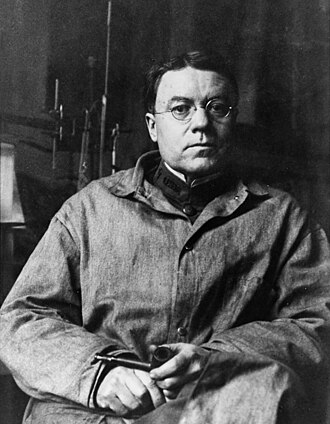
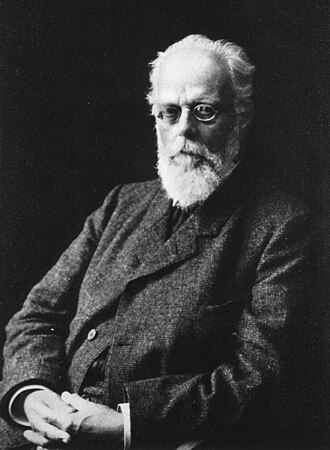
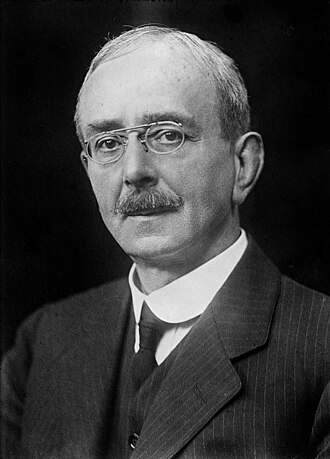
图:作者不详 · Public domain · Wikimedia Commons
亚瑟·史密斯·伍德沃德1864—1944
Arthur Smith Woodward
古生物学家
亚瑟·史密斯·伍德沃德爵士 是一位英国古生物学家,知名于对鱼化石的研究。
摘自维基百科「亚瑟·史密斯·伍德沃德」,CC BY-SA 4.0
- 出生
- 1864 年 5 月 23 日,麦克尔斯菲尔德
- 逝世
- 1944 年 9 月 2 日,海沃兹希思
- 国籍
- 英国
- 学科
- 生物学、地球科学、博物与综合
- 职业
- 古生物学家、历史学家、海军上将、地质学家
- 母语 / 工作语言
- 英语
- 工作单位
- 大英博物馆
研究领域
所获奖项(10)
- 1896莱伊尔奖章
- 1914威廉·布兰怀特·克拉克奖章
- 1917皇家奖章
- 1924沃拉斯顿奖章
- 1938海登纪念地质学奖
- 1940林奈奖章
- 1942玛丽·克拉克·汤普森奖章
- —英国皇家学会院士
- —伦敦动物学会会士
- —Fellow of the Geological Society of London
学会与院士
百科正文
荣誉
1901年当选皇家学会会士,1914至1916年任伦敦地质学会会长,1917年获得皇家奖章,1924年获沃拉斯顿奖章,1942年获玛丽·克拉克·汤普森奖章。
以上内容摘自维基百科「亚瑟·史密斯·伍德沃德」,按 CC BY-SA 4.0 使用,去掉了参考文献、外部链接等尾部小节,公式改写成了纯文本。全文、配图和出处见原文。
英文维基百科补充中文条目比较短,下面是英文条目「Arthur Smith Woodward」的原文
Sir Arthur Smith Woodward, FRS (23 May 1864 – 2 September 1944) was an English palaeontologist, known as a world expert in fossil fish. He also described the Piltdown Man fossils, which were later determined to be fraudulent. He is not related to Henry Woodward, whom he replaced as curator of the Geology Department of the British Museum of Natural History.
Biography
Woodward was born in Macclesfield, Cheshire, England and was educated there and at Owens College, Manchester. He joined the staff of the Department of Geology at the Natural History Museum in 1882. He became assistant Keeper of Geology in 1892, and Keeper in 1901. He was appointed Secretary of the Palaeontographical Society and in 1904, was appointed
President of the Geological Society. He was elected in June 1901 a Fellow of the Royal Society
He was the world expert on fossil fish, writing his Catalogue of the Fossil Fishes in the British Museum (1889–1901). His travels included journeys to South America and Greece. In 1901, for the trustees of the Natural History Museum, he made excavations of fossil bones from Pikermi (near Athens). His contribution to palaeoichthyology resulted in him receiving many awards, including a Royal Medal from the Royal Society in 1917, the Lyell and Wollaston Medals of the Geological Society, the Linnean Medal of the Linnean Society, the Bolitho Medal of the Royal Geological Society of Cornwall and the Clarke Medal of the Royal Society of New South Wales. He retired from the museum in 1924. In 1942 Woodward was awarded the Mary Clark Thompson Medal from the United States National Academy of Sciences.
Woodward's reputation suffered from his involvement in the Piltdown Man hoax where he gave a name to a new species of hominid from southern England, which was ultimately discovered (after Woodward's death) to have been a forgery.
Woodward was a leading advocate of orthogenesis. He believed there was a general trend in evolution from the fossil record and speculated that the human brain might have been the product of such a trend. He discussed his views on human evolution in his book The Earliest Englishman (1948).
He married Maud Leanora Ida Seeley, the daughter of zoologist Harry Govier Seeley, in 1894.
Woodward died in Haywards Heath, Sussex, in 1944 at the age of 80.
Legacy
On 21 May 2014 a one-day symposium was held at the Natural History Museum in London to commemorate the 150th anniversary of Woodward's birth. Speakers were selected to give not just historical accounts of the man and his science but also accounts of how current research connects back to his influence. The proceedings of this symposium were published in March 2016.
Collections
Woodward's library was purchased by University College London in 1945 with assistance from Marie Stopes. The collection spans c.2500 items; many books contain autograph letters to Woodward, including correspondence from Florentino Ameghino, Charles Barrois, Georg Baur, and Bashford Dean.
以上内容摘自英文维基百科「Arthur Smith Woodward」,按 CC BY-SA 4.0 使用,去掉了参考文献、外部链接等尾部小节,公式改写成了纯文本。全文、配图和出处见原文。
同一学科、同时代的科学家




同一学科的科学家
更多 ›