格物
- 出生
- 1928 年 4 月 18 日,东京
- 逝世
- 2023 年 1 月 9 日,京都市
- 国籍
- 日本、大日本帝国
- 学科
- 数学、博物与综合
- 职业
- 数学家、大学教师
- 母语 / 工作语言
- 英语
- 母校
- 东京大学(哲学博士,1963 年)、练马区立开进第一中学校(1949 年)
- 工作单位
- 京都大学(1970—1991)、大阪大学(1962—1964)、东京大学(1958—1960)、东京教育大学(1960—1960)、普林斯顿高等研究院(1960—1962)、哥伦比亚大学(1964—1966)
研究领域
主要贡献
代表成就
师承
博士生8
来自 Wikidata 的「博士导师」「师从」「博士生」「学生」记录,可能不全。
所获奖项(5)
- 1969朝日奖
- 1976日本学士院奖
- 1984文化功劳者
- 1997Rolf Schock Prize in Mathematics
- 2003沃尔夫数学奖
学会与院士
百科正文
生平
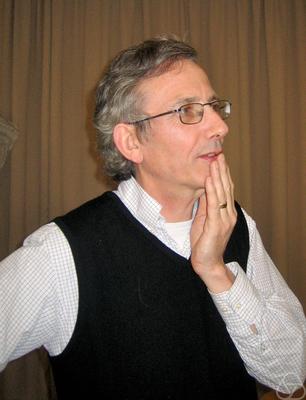
佐藤干夫毕业于东京大学,随后在朝永振一郎指导下做物理学研究生。从1970年起,他在京都大学数理解析研究所任教授。
他以在多个领域开创性工作而著名,比如准齐性向量空间和伯恩斯坦-佐藤多项式,特别是他的超函数理论。这最初以分布理论的推广而出现;随后与格罗滕迪克的局部上同调理论联系起来,后者具有独立的起源,用层理论的语言表述。更远的联系到微函数,关注线性偏微分方程的“微局部”,傅立叶理论(比如“波前”),最终与当前D-模理论的发展相通。其中一部分是调和系统的现代理论:PDE 超定(over-determined)到具有无穷维解空间的程度。
他在使用了无穷维格拉斯曼流形的非线性孤子理论中亦有基本贡献。在数论中他因L-函数的佐藤-泰特猜想而闻名。
荣誉
佐藤干夫于1993年成为美国科学院院士。1997年获得肖克奖,2003年获得沃尔夫奖。
以上内容摘自维基百科「佐藤幹夫」,按 CC BY-SA 4.0 使用,去掉了参考文献、外部链接等尾部小节,公式改写成了纯文本。全文、配图和出处见原文。
英文维基百科补充中文条目比较短,下面是英文条目「Mikio Sato」的原文
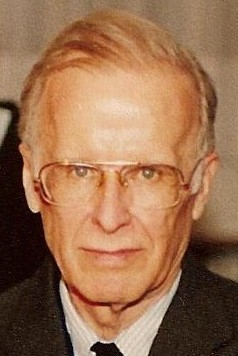
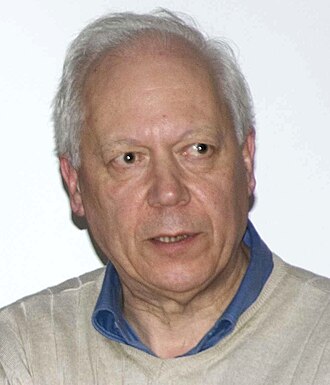
Mikio Sato (Japanese: 佐藤 幹夫, Hepburn: Satō Mikio; 18 April 1928 – 9 January 2023) was a Japanese mathematician known for founding the fields of algebraic analysis, hyperfunctions, and holonomic quantum fields. He was a professor at the Research Institute for Mathematical Sciences in Kyoto.
Biography
Born in Tokyo on 18 April 1928, Sato studied at the University of Tokyo, receiving his BSc in 1952 and PhD under Shokichi Iyanaga in 1963. He was a professor at Osaka University and the University of Tokyo before moving to the Research Institute for Mathematical Sciences (RIMS) attached to Kyoto University in 1970. He was director of RIMS from 1987 to 1991.
His disciples include Masaki Kashiwara, Takahiro Kawai, Tetsuji Miwa, as well as Michio Jimbo, who have been called the "Sato School".
Sato died at home in Kyoto on 9 January 2023, aged 94.
Research
Sato was known for his innovative work in a number of fields, such as prehomogeneous vector spaces and Bernstein–Sato polynomials; and particularly for his hyperfunction theory. This theory initially appeared as an extension of the ideas of distribution theory; it was soon connected to the local cohomology theory of Grothendieck, for which it was an independent realisation in terms of sheaf theory. Further, it led to the theory of microfunctions and microlocal analysis in linear partial differential equations and Fourier theory, such as for wave fronts, and ultimately to the current developments in D-module theory. Part of Sato's hyperfunction theory is the modern theory of holonomic systems: PDEs overdetermined to the point of having finite-dimensional spaces of solutions (algebraic analysis).
In theoretical physics, Sato wrote a series of papers in the 1970s with Michio Jimbo and Tetsuji Miwa that developed the theory of holonomic quantum fields. When Sato was awarded the 2002–2003 Wolf Prize in Mathematics, this work was described as "a far-reaching extension of the mathematical formalism underlying the two-dimensional Ising model, and introduced along the way the famous tau functions." Sato also contributed basic work to non-linear soliton theory, with the use of Grassmannians of infinite dimension.
In number theory, he and John Tate independently posed the Sato–Tate conjecture on L-functions around 1960.
Pierre Schapira remarked, "Looking back, 40 years later, we realize that Sato's approach to mathematics is not so different from that of Grothendieck, that Sato did have the incredible temerity to treat analysis as algebraic geometry and was also able to build the algebraic and geometric tools adapted to his problems."
Awards and honours
Sato received the 1969 Asahi Prize of Science, the 1976 Japan Academy Prize, the 1984 Person of Cultural Merits award of the Japanese Education Ministry, the 1997 Schock Prize, and the 2002–2003 Wolf Prize in Mathematics.
Sato was a plenary speaker at the 1983 International Congress of Mathematicians in Warsaw. He was elected a foreign member of the National Academy of Sciences in 1993.
以上内容摘自英文维基百科「Mikio Sato」,按 CC BY-SA 4.0 使用,去掉了参考文献、外部链接等尾部小节,公式改写成了纯文本。全文、配图和出处见原文。
同一学科、同时代的科学家


同一学科的科学家
更多 ›