格物
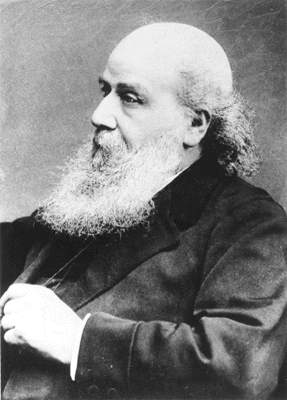
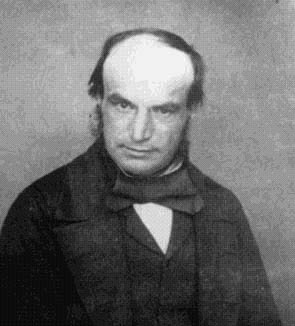
图:from:http://en.wikipedia.org/wiki/Image:Untitled04.jpg · Public domain · Wikimedia Commons
詹姆斯·约瑟夫·西尔维斯特1814—1897
James Joseph Sylvester
英国数学家(1814-1897)
詹姆斯·约瑟夫·西尔维斯特 是一名英国数学家。
摘自维基百科「詹姆斯·約瑟夫·西爾維斯特」,CC BY-SA 4.0
- 出生
- 1814 年 9 月 3 日,伦敦
- 逝世
- 1897 年 3 月 15 日,伦敦
- 国籍
- 大不列颠及爱尔兰联合王国
- 学科
- 数学、博物与综合
- 职业
- 数学家、精算师、大学教师、大律师
- 母语 / 工作语言
- 英语
- 母校
- 剑桥大学圣约翰学院(1837 年)、都柏林三一学院(1841 年)、伦敦大学学院(1829 年)、Liverpool Royal Institution(1831 年)
- 工作单位
- 约翰·霍普金斯大学(1877—1883)、伦敦大学(1837—1840)、弗吉尼亚大学(1841—1842)、乌烈芝皇家军事学院(1855—1870)、牛津大学(1883—1894)、Equity and Law Life Assurance Society(1844—1855)
研究领域
主要贡献
代表成就
以他 / 她命名
师承
师从1
博士生8
来自 Wikidata 的「博士导师」「师从」「博士生」「学生」记录,可能不全。
所获奖项(4)
- 1839英国皇家学会院士
- 1861皇家奖章
- 1880科普利奖章
- 1887德摩根奖章
学会与院士
百科正文
生平
西尔维斯特从1833年开始在剑桥大学圣约翰学院就读,但由于他是犹太人他没有毕业,但他参加了剑桥著名的数学考试并获第二名。1841年他短暂在美国逗留并成为弗吉尼亚大学的教授。此后他回到英国。
1877年西尔维斯特获得约翰斯·霍普金斯大学的一个职位再渡大西洋。1878年他创办了《美国数学期刊》(American Journal of Mathematics)。
1883年西尔维斯特最终回到英国,他被授命为牛津大学几何教授,在此供职直至逝世。
1880年英国皇家学会授予西尔维斯特它对科学研究最高的奖章科普利奖章。1901年它又为了纪念西尔维斯特设立了授予数学研究的西尔维斯特奖章。
约翰斯·霍普金斯大学今天有一座学生宿舍是以西尔维斯特命名的。
以上内容摘自维基百科「詹姆斯·約瑟夫·西爾維斯特」,按 CC BY-SA 4.0 使用,去掉了参考文献、外部链接等尾部小节,公式改写成了纯文本。全文、配图和出处见原文。
英文维基百科补充中文条目比较短,下面是英文条目「James Joseph Sylvester」的原文
James Joseph Sylvester (3 September 1814 – 15 March 1897) was an English mathematician. He made fundamental contributions to matrix theory, invariant theory, number theory, partition theory, and combinatorics. He played a leadership role in American mathematics in the later half of the 19th century as a professor at the Johns Hopkins University and as founder of the American Journal of Mathematics. At his death, he was a professor at Oxford University.
Early life, family and education
James Joseph was born in London on 3 September 1814, the son of Abraham Joseph, a Jewish merchant. James later adopted the surname Sylvester when his older brother did so upon emigration to the US. At age 14, Sylvester was a student of Augustus De Morgan at the University of London (now University College London). His family withdrew him from the university after he was accused of stabbing a fellow student with a knife. Subsequently, he attended the Liverpool Royal Institution.
Sylvester began his study of mathematics at St John's College, Cambridge in 1831, where his tutor was John Hymers. Although his studies were interrupted for almost two years due to a prolonged illness, he nevertheless ranked second in Cambridge's famous mathematical examination, the tripos, for which he sat in 1837. However, Sylvester was not issued a degree, because graduates at that time were required to state their acceptance of the Thirty-nine Articles of the Church of England, and he could not do so because he was Jewish. For the same reason, he was unable to compete for a Fellowship or obtain a Smith's prize.
Career
In 1841, Sylvester moved to the US to become a professor of mathematics at the University of Virginia, the first Jewish professor at any American college or university. He left his appointment after only four months after a classroom incident in which a student he had criticized hit him with a bludgeon and he struck back with a sword-cane. The student collapsed in shock and Sylvester believed (wrongly) that he had killed him. Sylvester resigned when he felt that the university authorities had not sufficiently disciplined the student. He moved to New York City and began friendships with the Harvard mathematician Benjamin Peirce and the Princeton physicist Joseph Henry. However, he left in November 1843 after being denied appointment as Professor of Mathematics at Columbia College (now University), again for his Judaism, and returned to England.
In England, he was hired in 1844 by the Equity and Law Life Assurance Society for which he developed successful actuarial models and served as de facto CEO, a position that required a law degree.
Honors and awards
In 1861, Sylvester was elected an honorary member of the Manchester Literary and Philosophical Society and in 1872, he finally received his B.A. and M.A. from Cambridge, having been denied the degrees due to his being a Jew. In 1877, he was elected as a member to the American Philosophical Society. In 1880, the Royal Society of London awarded Sylvester the Copley Medal, its highest award for scientific achievement.
Personal life and demise
Sylvester never married and is not known to have had any children; biographical sources do not record any romantic relationships. Throughout his career, he formed lasting friendships with leading scientific figures. In New York he became close to the mathematician Benjamin Peirce and the physicist Joseph Henry, and in England he developed a long and productive friendship with Arthur Cayley, with whom he shared both personal ties and major mathematical collaborations.
One of Sylvester's lifelong passions was for poetry; he read and translated works from the original French, German, Italian, Latin and Greek, and many of his mathematical papers contain illustrative quotes from classical poetry. Following his early retirement, Sylvester published The Laws of Verse, a book in which he attempted to codify a set of laws for prosody in poetry.
Sylvester died at 5 Hertford Street, London on 15 March 1897. He is buried in Balls Pond Road Cemetery on Kingsbury Road in London.
Legacy
In 1901, Royal Society of London instituted the Sylvester Medal in his memory, to encourage mathematical research after his death in Oxford.
Sylvester House, a portion of an undergraduate dormitory at Johns Hopkins University, is named in his honour. Several professorships there are named in his honour also.
以上节选摘自英文维基百科「James Joseph Sylvester」,按 CC BY-SA 4.0 使用,去掉了参考文献、外部链接等尾部小节,公式改写成了纯文本。篇幅所限,较长的小节只摘了开头一部分,有的小节没有收;全文、配图和出处见原文。
同一学科、同时代的科学家