格物
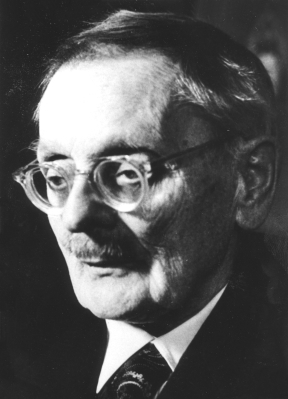
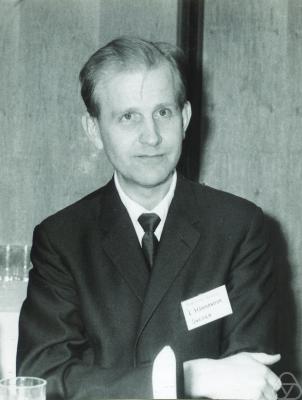
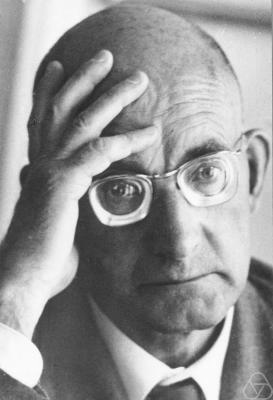
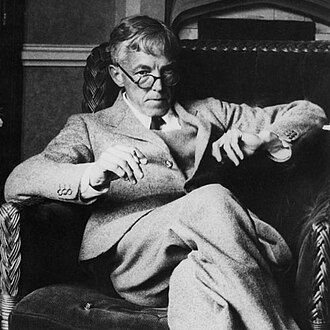
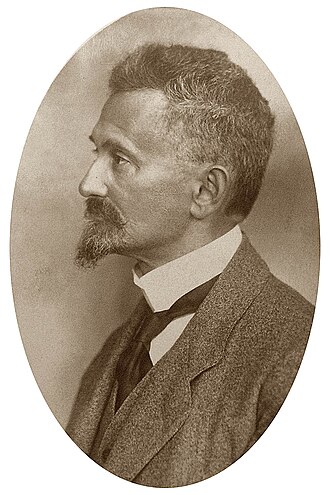
图:Konrad Jacobs · CC BY-SA 2.0 de · Wikimedia Commons
- 出生
- 1871 年 7 月 27 日,柏林
- 逝世
- 1953 年 5 月 21 日,布赖斯高地区弗赖堡
- 国籍
- 德国
- 学科
- 数学、博物与综合
- 职业
- 数学家、哲学家、大学教师
- 母语 / 工作语言
- 德语
- 母校
- 弗里德里希·威廉大学(博士,1894 年)、哥廷根大学(特许任教资格,1897 年)、弗赖堡大学、哈雷-维滕贝格大学、Heinrich-Schliemann-Gymnasium(1889 年)
- 工作单位
- 弗赖堡大学(1926—1935)、哥廷根大学(1897—1910)、苏黎世大学(1910—1916)、弗里德里希·威廉大学(1894—1897)
研究领域
主要贡献
代表成就
本站收录的发现与发明
师承
博士生6
来自 Wikidata 的「博士导师」「师从」「博士生」「学生」记录,可能不全。
所获奖项(1)
- 1916阿克曼-托伊布纳纪念奖
学会与院士
百科正文
生平
1889年,他毕业于柏林Luisenstädtisches Gymnasium。他然后在柏林大学、哈雷-维滕贝格大学和弗莱堡大学研究数学、物理和哲学。他于1894年在柏林大学完成博士学位,其博士论文是关于变分法的(Untersuchungen zur Variationsrechnung)。策梅洛留在柏林大学,他被聘为普朗克的助手,在其指导下,他开始研究流体力学。在1897年,策梅洛去了哥廷根,那里当时是整个世界的数学研究的中心,在那里他于1899年完成了教员资格论文。
策海洛于1953年5月21日在弗赖堡逝世。
以上内容摘自维基百科「恩斯特·策梅洛」,按 CC BY-SA 4.0 使用,去掉了参考文献、外部链接等尾部小节,公式改写成了纯文本。全文、配图和出处见原文。
英文维基百科补充中文条目比较短,下面是英文条目「Ernst Zermelo」的原文
Ernst Friedrich Ferdinand Zermelo (; German: [tsɛɐ̯ˈmeːlo]; 27 July 1871 – 21 May 1953) was a German logician and mathematician, whose work has major implications for the foundations of mathematics. He is known for his role in developing Zermelo–Fraenkel axiomatic set theory and his proof of the well-ordering theorem. Furthermore, his 1929 work on ranking chess players is the first description of a model for pairwise comparison that continues to have a profound impact on various applied fields utilizing this method.
Life
Ernst Zermelo graduated from Berlin's Luisenstädtisches Gymnasium (now Heinrich-Schliemann-Oberschule) in 1889. He then studied mathematics, physics and philosophy at the University of Berlin, the University of Halle, and the University of Freiburg. He finished his doctorate in 1894 at the University of Berlin, awarded for a dissertation on the calculus of variations (Untersuchungen zur Variationsrechnung). Zermelo remained at the University of Berlin, where he was appointed assistant to Planck, under whose guidance he began to study hydrodynamics. In 1897, Zermelo went to the University of Göttingen, at that time the leading centre for mathematical research in the world, where he completed his habilitation thesis in 1899.
In 1910, Zermelo left Göttingen upon being appointed to the chair of mathematics at the University of Zurich, which he resigned in 1916.
He was appointed to an honorary chair at the University of Freiburg in 1926, which he resigned in 1935 because he disapproved of Adolf Hitler's regime. At the end of World War II and at his request, Zermelo was reinstated to his honorary position in Freiburg.
Research in set theory
In 1900, in the Paris conference of the International Congress of Mathematicians, David Hilbert challenged the mathematical community with his famous Hilbert's problems, a list of 23 unsolved fundamental questions which mathematicians should attack during the coming century. The first of these, a problem of set theory, was the continuum hypothesis introduced by Cantor in 1878, and in the course of its statement Hilbert also mentioned the need to prove the well-ordering theorem.
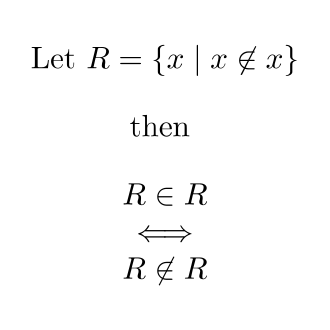
Zermelo began to work on the problems of set theory under Hilbert's influence and in 1902 published his first work concerning the addition of transfinite cardinals. By that time he had also discovered the so-called Russell paradox as evidenced by Husserl’s Nachlass. In 1904, he succeeded in taking the first step suggested by Hilbert towards the continuum hypothesis when he proved the well-ordering theorem (every set can be well ordered). This result brought fame to Zermelo, who was appointed Professor in Göttingen, in 1905. His proof of the well-ordering theorem, based on the powerset axiom and the axiom of choice, was not accepted by all mathematicians, mostly because the axiom of choice was a paradigm of non-constructive mathematics. In 1908, Zermelo succeeded in producing an improved proof making use of Dedekind's notion of the "chain" of a set, which became more widely accepted; this was mainly because that same year he also offered an axiomatization of set theory.
Zermelo began to axiomatize set theory in 1905; in 1908, he published his results despite his failure to prove the consistency of his axiomatic system. See the article on Zermelo set theory for an outline of this paper, together with the original axioms, and the original numbering.
In 1922, Abraham Fraenkel and Thoralf Skolem independently expanded Zermelo's axiom system, adding the axioms of replacement and regularity. The resulting system, now called Zermelo–Fraenkel axioms (ZF), is now the most commonly used system for axiomatic set theory.
Zermelo's navigation problem
Proposed in 1931, Zermelo's navigation problem is a classic optimal control problem. The problem deals with a boat navigating on a body of water, originating from a point O to a destination point D. The boat is capable of a certain maximum speed, and we want to derive the best possible control to reach D in the least possible time.
Without considering external forces such as current and wind, the optimal control is for the boat to always head towards D. Its path then is a line segment from O to D, which is trivially optimal. With consideration of current and wind, if the combined force applied to the boat is non-zero, the control for no current and wind does not yield the optimal path.
以上内容摘自英文维基百科「Ernst Zermelo」,按 CC BY-SA 4.0 使用,去掉了参考文献、外部链接等尾部小节,公式改写成了纯文本。全文、配图和出处见原文。
同一学科、同时代的科学家
同一学科的科学家
更多 ›