格物

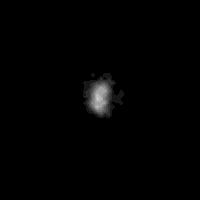
图:IPAC/Caltech; composite made by Nrco0e · Public domain · Wikimedia Commons
- 类型
- 不规则卫星
- 发现 / 发明时间
- 1938 年
- 发现者 / 提出者
- 赛斯·尼克尔森
- 命名来源
- Lysithea
- 学科
- 天文学
相关科学家

百科正文
木卫十与木星的其它五颗卫星一起属于希玛利亚群,它们的轨道类似。
以上内容摘自维基百科「木卫十」,按 CC BY-SA 4.0 使用,去掉了参考文献、外部链接等尾部小节,公式改写成了纯文本。全文、配图和出处见原文。
英文维基百科补充中文条目比较短,下面是英文条目「Lysithea (moon)」的原文
Lysithea, also known as Jupiter X, is one of the larger irregular satellites of Jupiter.
Discovery and naming
Lysithea was discovered by Seth Barnes Nicholson in 1938 at Mount Wilson Observatory.
It is named after the mythological Lysithea, daughter of Oceanus and one of Zeus' lovers. Lysithea did not receive its present name until 1975; before then, it was simply known as Jupiter X. It was sometimes called "Demeter" from 1955 to 1975.
Orbit
Lysithea orbits Jupiter at an average distance of 11,700,710 km in 258.57 days, at an inclination of about 27° to the ecliptic, in a prograde direction and with an eccentricity of 0.148. Its orbit is continuously changing due to solar and planetary perturbations.
Lysithea belongs to the Himalia group, a prograde group of moons orbiting between 11 and 13 Gm from Jupiter at an inclinations between 27 and 30°, and eccentricities between 0.11 and 0.24.
Physical characteristics
Lysithea has a diameter of about 42 kilometers, with a measured albedo of about 3.6%, making it the fifth largest irregular moon of Jupiter.
Like the other members of the Himalia group, the satellite appears gray (B−V=0.72, V−R=0.36, V−I=0.74) and intermediate between C-type and P-type asteroids.
The rotation period was found to be approximately 12 hours and 45,6 min. This was regarded by a later paper as uncertain due to the short observation periods.
Origin
Lysithea probably did not form near Jupiter but was captured by Jupiter later. Like the other members of the Himalia group, which have similar orbits, Lysithea is probably the remnant of a broken, captured heliocentric asteroid.
以上内容摘自英文维基百科「Lysithea (moon)」,按 CC BY-SA 4.0 使用,去掉了参考文献、外部链接等尾部小节,公式改写成了纯文本。全文、配图和出处见原文。