格物

图:CARLOS TEIXIDOR CADENAS · CC BY-SA 4.0 · Wikimedia Commons
- 类型
- 摄影技术、摄影处理
- 发现 / 发明时间
- 1839 年
- 发现者 / 提出者
- 路易·达盖尔
- 学科
- 化学
- 上级概念
- 摄影、direct positive process
相关科学家
百科正文
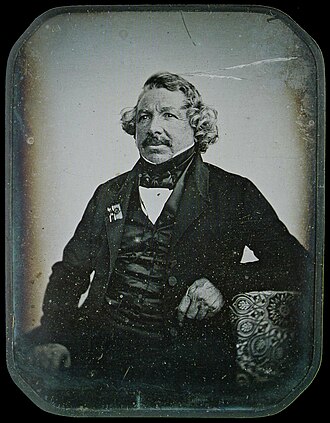
用这种方法拍摄出的照片具有影纹细腻、色调均匀、不易褪色、复制困难、影像左右相反等特点。这种摄影方法是用达盖尔自己的名字命名的,所以又称为达盖尔银版法。
银版摄影法的优点是照片逼真,富立体感,而且是正像。缺点是从不同的角度观看,照片会由正像变成负像。此外,由于影像是在一层很薄的银上形成,因此容易受损,用手指轻擦也可能会令照片受损,现时存世的早期银版照片,有不少都出现破损。后来法国物理学家斐索想出为照片镀金,并在1844年公开“镀金法”这种保护措施,方法是把氯化金加进硫代硫酸钠的水溶液,再洒在照片上形成黄金保护层。一众摄影师则想出更直接的方法,把照片镶在玻璃镜框中。还有,由于使用水银蒸汽显影,有可能导致摄影师水银中毒。其他缺点包括复制照片困难,及拍摄成本高昂。
不过,由于技术已公开,银版摄影法在世界各地广为流传,更一度成为主流的摄影方法,至1850年代始由湿版火棉胶摄影法等新方法取代。
- 银版法的具体步骤为:
- 准备一块镀有薄银的铜板;
- 洗净,抛光;
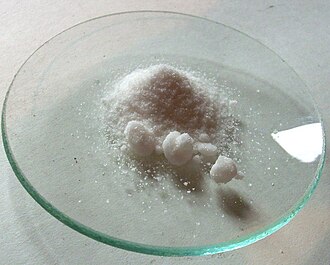
置入装有碘溶液或碘晶体的小箱内,碘蒸汽与银发生反应,生成碘化银。时间是30分钟;
转入暗盒;
暗盒一起放入暗箱进行拍摄,时间是15~30分钟。在光线的作用下,碘化银依光线的强弱还原为不同密度的金属银,形成“潜影”;
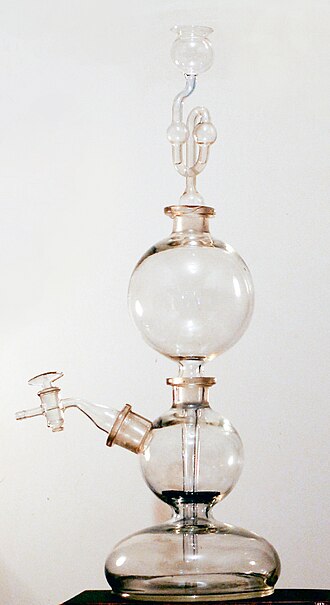
先以水银(汞)蒸汽显影;
再放入浓热食盐溶液中,通过氯化钠的作用,即“定影”;
水洗,晾干。
这样就得到一幅由霜白色的汞合金形成的影像。阴影部分透明,可以看到黑暗色的镀银铜板表面,便成为一幅正像的照片。
以上内容摘自维基百科「银版摄影法」,按 CC BY-SA 4.0 使用,去掉了参考文献、外部链接等尾部小节,公式改写成了纯文本。全文、配图和出处见原文。
英文维基百科补充中文条目比较短,下面是英文条目「Daguerreotype」的原文
Daguerreotype was the first publicly available photographic process, widely used from the 1830s to 1850s. "Daguerreotype" also refers to an image created through this process.
Invented by Louis Daguerre and introduced worldwide in 1839, the daguerreotype was almost completely superseded by 1856 with new, less expensive processes, such as the ambrotype (collodion process), that yield more readily viewable images. Since the late 20th century, some photographers interested in making artistic use of early photographic processes have revived the daguerreotype process.
To make the image, a daguerreotypist polished a sheet of silver-plated copper to a mirror finish; treated it with fumes that made its surface light-sensitive; exposed it in a camera for as long as was judged to be necessary, which could be as little as a few seconds for brightly sunlit subjects or much longer with less intense lighting; made the resulting latent image on it visible by fuming it with mercury vapor; removed its sensitivity to light by liquid chemical treatment; rinsed and dried it; and then sealed the easily marred result behind glass in a protective enclosure.
The image is on a mirror-like silver surface and will appear either positive or negative, depending on the angle at which it is viewed, how it is lit and whether a light or dark background is being reflected in the metal. The darkest areas of the image are simply bare silver; lighter areas have a microscopically fine light-scattering texture. The surface is very delicate, and even the lightest wiping can permanently scuff it. Some tarnish around the edges is normal.
Several types of antique photographs, most often ambrotypes and tintypes, but sometimes even old prints on paper, are commonly misidentified as daguerreotypes, especially if they are in the small, ornamented cases in which daguerreotypes made in the US and the UK were usually housed. The name "daguerreotype" correctly refers only to one very specific image type and medium, the product of a process that was in wide use only from the early 1840s to the late 1850s.
以上节选摘自英文维基百科「Daguerreotype」,按 CC BY-SA 4.0 使用,去掉了参考文献、外部链接等尾部小节,公式改写成了纯文本。篇幅所限,较长的小节只摘了开头一部分,有的小节没有收;全文、配图和出处见原文。