格物
- 类型
- 定理
- 命名来源
- 尼尔斯·阿贝尔
- 研究学科
- 数学分析
- 学科
- 数学
相关科学家
百科正文
它被用来证明积分第二中值定理。
分部求和公式也可被写成比较对称的方式: (公式略)
注意: 用于证明狄利克雷判别法、阿贝尔判别法的分部求和公式需要调整角标,以凑出和式。 ∑ ᵢ₌ₘ₊₁ⁿ(bᵢ-bᵢ₋₁)aᵢ+∑ ᵢ₌ₘ₊₁ⁿ⁻¹(aᵢ₊₁-aᵢ)bᵢ=aₙbₙ-aₘ₊₁bₘ
以上内容摘自维基百科「分部求和法」,按 CC BY-SA 4.0 使用,去掉了参考文献、外部链接等尾部小节,公式改写成了纯文本。全文、配图和出处见原文。
英文维基百科补充中文条目比较短,下面是英文条目「Summation by parts」的原文
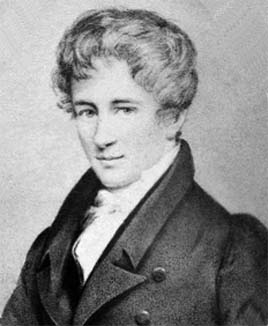
In mathematics, summation by parts transforms the summation of products of sequences into other summations, often simplifying the computation or (especially) estimation of certain types of sums. It is also called Abel's lemma or Abel transformation, named after Niels Henrik Abel who introduced it in 1826.
Statement
Suppose (公式略) and (公式略) are two sequences. Then, ∑ ₖ₌ₘⁿfₖ(gₖ₊₁-gₖ)=(fₙ₊₁gₙ₊₁-fₘgₘ)-∑ ₖ₌ₘⁿgₖ₊₁(fₖ₊₁-fₖ).
Using the forward difference operator Δ, it can be stated more succinctly as ∑ ₖ₌ₘⁿfₖΔ gₖ=(fₙ₊₁gₙ₊₁-fₘgₘ)-∑ ₖ₌ₘⁿgₖ₊₁Δ fₖ,
Or, equivalently, using backward difference operator ∇: ∑ ₖ₌ₘⁿfₖ∇ gₖ=(fₙgₙ-fₘ₋₁gₘ₋₁)-∑ ₖ₌ₘⁿgₖ₋₁∇ fₖ,
- Both can be used to obtain a more symmetric version: ∑ ₖ₌ₘⁿ(fₖΔ gₖ+gₖ∇ fₖ)=fₙgₙ₊₁-fₘ₋₁gₘ
- Summation by parts is an analogue to integration by parts: ∫ f dg=fg-∫ g df,
- or to Abel's summation formula: (公式略)
- An alternative statement is fₙgₙ-fₘgₘ=∑ ₖ₌ₘⁿ⁻¹fₖΔ gₖ+∑ ₖ₌ₘⁿ⁻¹gₖΔ fₖ+∑ ₖ₌ₘⁿ⁻¹Δ fₖΔ gₖ
which is analogous to the integration by parts formula for semimartingales.
Although applications almost always deal with convergence of sequences, the statement is purely algebraic and will work in any field. It will also work when one sequence is in a vector space, and the other is in the relevant field of scalars.
Newton series
The formula is sometimes given in one of these - slightly different - forms (公式略)
which represent a special case ( M=1) of the more general rule (公式略)
both result from iterated application of the initial formula. The auxiliary quantities are Newton series: (公式略)
and (公式略)
(公式略)
A particular ( M=n+1) result is the identity ∑ ₖ₌₀ⁿfₖgₖ=∑ ᵢ₌₀ⁿf₀⁽ⁱ⁾Gᵢ⁽ⁱ⁺¹⁾=∑ ᵢ₌₀ⁿ(-1)ⁱfₙ₋ᵢ⁽ⁱ⁾Gₙ₋ᵢ⁽ⁱ⁺¹⁾.
Here, (公式略) is the binomial coefficient.
Method
For two given sequences (aₙ) and (bₙ), with n∈ N, one wants to study the sum of the following series: S_(N)=∑ ₙ₌₀^(N)aₙbₙ
If we define Bₙ=∑ ₖ₌₀ⁿbₖ, then for every n>0,
bₙ=Bₙ-Bₙ₋₁ and S_(N)=a₀b₀+∑ ₙ₌₁^(N)aₙ(Bₙ-Bₙ₋₁),
S_(N)=a₀b₀-a₁B₀+a_(N)B_(N)+∑ ₙ₌₁^(N-1)Bₙ(aₙ-aₙ₊₁).
Finally S_(N)=a_(N)B_(N)-∑ ₙ₌₀^(N-1)Bₙ(aₙ₊₁-aₙ).
This process, called an Abel transformation, can be used to prove several criteria of convergence for S_(N).
Similarity with an integration by parts
The formula for an integration by parts is ∫ ₐ^(b)f(x)g'(x) dx=[f(x)g(x)]ₐ^(b)-∫ ₐ^(b)f'(x)g(x) dx.
Beside the boundary conditions, we notice that the first integral contains two multiplied functions, one which is integrated in the final integral ( g' becomes g) and one which is differentiated ( f becomes f').
The process of the Abel transformation is similar, since one of the two initial sequences is summed ( bₙ becomes Bₙ) and the other one is differenced ( aₙ becomes aₙ₊₁-aₙ).
Applications
It is used to prove Kronecker's lemma, which in turn, is used to prove a version of the strong law of large numbers under variance constraints.
It may be used to prove Nicomachus's theorem that the sum of the first n cubes equals the square of the sum of the first n positive integers.
Summation by parts is frequently used to prove Abel's theorem and Dirichlet's test.
One can also use this technique to prove Abel's test: If ∑ ₙbₙ is a convergent series, and aₙ a bounded monotone sequence, then S_(N)=∑ ₙ₌₀^(N)aₙbₙ converges.
Proof of Abel's test. Summation by parts gives (公式略)
where a is the limit of aₙ. As ∑ ₙbₙ is convergent, B_(N) is bounded independently of N, say by B. As aₙ-a go to zero, so go the first two terms. The third term goes to zero by the Cauchy criterion for ∑ ₙbₙ. The remaining sum is bounded by ∑ _(n=N)^(M-1)|Bₙ||aₙ₊₁-aₙ|≤ B∑ _(n=N)^(M-1)|aₙ₊₁-aₙ|=B|a_(N)-a_(M)|
by the monotonicity of aₙ, and also goes to zero as N→ ∞.
Using the same proof as above, one can show that if
the partial sums B_(N) form a bounded sequence independently of N; ∑ ₙ₌₀^(∞)|aₙ₊₁-aₙ|<∞ (so that the sum ∑ _(n=N)^(M-1)|aₙ₊₁-aₙ| goes to zero as N goes to infinity) lim aₙ=0
then S_(N)=∑ ₙ₌₀^(N)aₙbₙ converges.
In both cases, the sum of the series satisfies: |S|=|∑ ₙ₌₀^(∞)aₙbₙ|≤ B∑ ₙ₌₀^(∞)|aₙ₊₁-aₙ|.
Summation-by-parts operators for high order finite difference methods
A summation-by-parts (SBP) finite difference operator conventionally consists of a centered difference interior scheme and specific boundary stencils that mimics behaviors of the corresponding integration-by-parts formulation. The boundary conditions are usually imposed by the Simultaneous-Approximation-Term (SAT) technique. The combination of SBP-SAT is a powerful framework for boundary treatment. The method is preferred for well-proven stability for long-time simulation, and high order of accuracy.
以上内容摘自英文维基百科「Summation by parts」,按 CC BY-SA 4.0 使用,去掉了参考文献、外部链接等尾部小节,公式改写成了纯文本。全文、配图和出处见原文。