格物
- 类型
- 审敛法、定理
- 命名来源
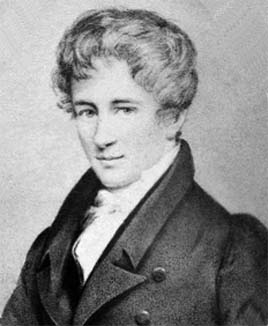
- 尼尔斯·阿贝尔
- 研究学科
- 微积分
- 学科
- 数学
相关科学家
百科正文
实数项级数的阿贝尔判别法
给定两个实数项数列 (公式略) 和 (公式略),如果数列满足 ∑ ₙ₌₁^(∞)aₙ 收敛 (公式略) 是单调且有界的
则级数 ∑ ₙ₌₁^(∞)aₙbₙ
收敛。
复数项级数的阿贝尔判别法
一个相关的审敛法,也称为阿贝尔判别法,通常用来判断幂级数在收敛圆的边界上的收敛性。如果 lim _(n→ ∞)aₙ=0
而级数 f(z)=∑ ₙ₌₀^(∞)aₙzⁿ
在|z| < 1是收敛,而在|z| > 1时发散,系数{an}是正的实数,当n > m时单调递减并收敛于零,则f(z)的幂级数在单位圆上处处收敛,除了z = 1以外。当z = 1时,不能使用阿贝尔判别法,所以那个点的收敛性必须另外讨论。注意,利用变量代换ζ = z/R,阿贝尔判别法也可以用来判断收敛半径R ≠ 1的幂级数的收敛性。
证明
假设z是单位圆上的一个点,z ≠ 1。则 z=e^(iθ) ⇒ z^(1/2)-z^(-1/2)=2isin (θ)/2≠ 0
所以,对于任何两个正整数p > q > m,我们有 (公式略)
其中Sp和Sq是部分和: Sₚ=∑ ₙ₌₀^(p)aₙzⁿ.
但是,由于|z| = 1,而当n > m时,an是单调递减的正实数,我们又有 (公式略)
现在我们可以使用柯西判别法来证明f(z)的幂级数在z ≠ 1时收敛,因为sin(½θ) ≠ 0是一个定值,而我们可以通过选择足够大的q,来使aq+1小于任何给定的ε > 0。
以上内容摘自维基百科「阿贝尔判别法」,按 CC BY-SA 4.0 使用,去掉了参考文献、外部链接等尾部小节,公式改写成了纯文本。全文、配图和出处见原文。
英文维基百科补充中文条目比较短,下面是英文条目「Abel's test」的原文
In mathematics, Abel's test (also known as Abel's criterion) is a method of testing for the convergence of an infinite series. The test is named after mathematician Niels Henrik Abel, who proved it in 1826. There are two slightly different versions of Abel's test – one is used with series of real numbers, and the other is used with power series in complex analysis. Abel's uniform convergence test is a criterion for the uniform convergence of a series of functions dependent on parameters.
Abel's test in real analysis
Suppose the following statements are true: ∑ aₙ is a convergent series, bₙ is a monotone sequence, and bₙ is bounded.
Then ∑ aₙbₙ is also convergent.
The test is mainly pertinent and useful in the context of non-absolutely convergent series ∑ aₙ. It can be proved directly using summation by parts.
Abel's test in complex analysis
A closely related convergence test, also known as Abel's test, can often be used to establish the convergence of a power series on the boundary of its circle of convergence. Specifically, Abel's test states that if a sequence (aₙ) of positive real numbers is decreasing monotonically with lim _(n→ ∞)aₙ=0,
then the power series f(z)=∑ ₙ₌₀^(∞)aₙzⁿ
converges everywhere on the closed unit circle, except possibly at z = 1. Abel's test cannot be applied when z = 1, so convergence at that single point must be investigated separately.
Abel's test implies in particular that the radius of convergence is at least 1. It can also be applied to a power series with radius of convergence R ≠ 1 by a simple change of variables ζ =z/R. Abel's test is a generalization of the alternating series test, which is the special case z = −1.
Proof of Abel's test: Suppose that z is a point on the unit circle, z ≠ 1. For each n≥ 1, we define fₙ(z):=∑ ₖ₌₀ⁿaₖz^(k).
By multiplying this function by (1 − z), we obtain (公式略)
The first summand is constant, the second converges uniformly to zero (since by assumption the sequence (aₙ) converges to zero). It only remains to show that the series converges. We will show this by showing that it even converges absolutely: ∑ ₖ₌₁^(∞)|(aₖ-aₖ₋₁)z^(k)|=∑ ₖ₌₁^(∞)|aₖ-aₖ₋₁|· |z|^(k)≤ ∑ ₖ₌₁^(∞)(aₖ₋₁-aₖ)
where the last sum is a converging telescoping sum. The absolute value vanished because the sequence (aₙ) is decreasing by assumption.
Hence, the sequence (1-z)fₙ(z) converges (even uniformly) on the closed unit disc. If (公式略), we may divide by (1 − z) and obtain the result.
Another way to obtain the result is to apply the Dirichlet's test. Indeed, for z≠ 1, |z|=1 holds (公式略), hence the assumptions of the Dirichlet's test are fulfilled.
The following strengthening of the test is also valid: one may replace the condition that (aₙ) is decreasing with the condition that it is decreasing for sufficiently large n, that is, that there is some natural number m for which aₙ≥ aₙ₊₁ whenever n > m.
Abel's uniform convergence test
Abel's uniform convergence test is a criterion for the uniform convergence of a series of functions or an improper integration of functions dependent on parameters. It is related to Abel's test for the convergence of an ordinary series of real numbers, and the proof relies on the same technique of summation by parts.
The test is as follows. Let (公式略) be a uniformly bounded sequence of real-valued continuous functions on a set E such that gₙ₊₁(x)≤ gₙ(x) for all x∈ E and positive integers n, and let (公式略) be a sequence of real-valued functions such that the series ∑ fₙ(x) converges uniformly on E. Then ∑ fₙ(x)gₙ(x) converges uniformly on E.
以上内容摘自英文维基百科「Abel's test」,按 CC BY-SA 4.0 使用,去掉了参考文献、外部链接等尾部小节,公式改写成了纯文本。全文、配图和出处见原文。