格物

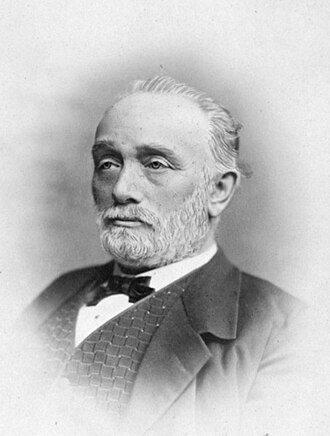
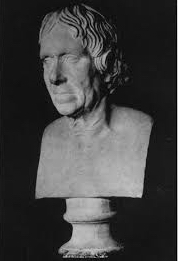
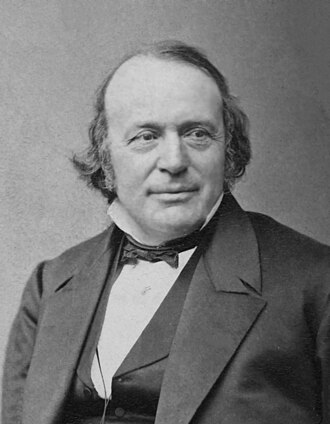
图:Unbekannt · Public domain · Wikimedia Commons
- 出生
- 1809 年 8 月 31 日,Henau
- 逝世
- 1883 年 9 月 27 日,洛桑
- 国籍
- 瑞士
- 学科
- 生物学、地球科学、博物与综合
- 职业
- 策展人、古生物学家、昆虫学家、植物学家
- 母语 / 工作语言
- 德语、法语
- 母校
- 哈雷-维滕贝格大学、苏黎世大学
- 工作单位
- 苏黎世大学、苏黎世联邦理工学院
研究领域
师承
博士生2
来自 Wikidata 的「博士导师」「师从」「博士生」「学生」记录,可能不全。
所获奖项(3)
- 1873Murchison Fund
- 1874沃拉斯顿奖章
- 1877皇家奖章
学会与院士
百科正文
生平
早年在哈雷-维滕贝格大学接受培养神职人员的教育,还曾获得理学和医学学位。为古植物学的开拓者之一,主要研究中新世植物。卒于洛桑。
以上内容摘自维基百科「奥斯瓦尔德·黑尔」,按 CC BY-SA 4.0 使用,去掉了参考文献、外部链接等尾部小节,公式改写成了纯文本。全文、配图和出处见原文。
英文维基百科补充中文条目比较短,下面是英文条目「Oswald Heer」的原文
Oswald Heer (or Oswald von Heer) (31 August 1809 – 27 September 1883), Swiss geologist and naturalist, was born at Niederuzwil in Canton of St. Gallen and died in Lausanne.
Biography
Oswald Heer was educated as a clergyman at Halle and took holy orders, and he also graduated as Doctor of Philosophy and medicine. Early in life his interest was aroused in entomology, on which subject he acquired special knowledge, and later he took up the study of plants and became one of the pioneers in paleobotany, distinguished for his researches on the Miocene flora.
In 1837, Carl Daniel Friedrich Meissner (1800–1874) a Swiss botanist named a genus of flowering plants (in the family of Anacardiaceae) from South Africa after him, Heeria.
In 1851, Heer became professor of botany in the university of Zürich, and for some time he was the director of what is now the Old Botanical Garden in that city. He directed his attention to the Tertiary plants and insects of Switzerland. In 1863 (with William Pengelly, Phil. Trans., 1862) he investigated the plant-remains from the lignite-deposits of Bovey Tracey in Devon, regarding them as of Miocene age; but they are now classed as Eocene.
Heer also reported on the Miocene flora of Arctic regions (fossil plant remains brought back from Northwest Greenland by K. J. V. Steenstrup), on the plants of the Pleistocene lignites of Dürnten, and on the cereals of some of the lake-dwellings (Die Pflanzen der Pfahlbauten, 1866).
In 1862, Heer was elected as a member to the American Philosophical Society.
Charles Darwin regarded Heer as an authority on fossil plants, and corresponded with him. The two men disagreed over evolution, but were on cordial terms. In a letter in 1875, Heer described to Darwin in some detail a new dicotyledonous angiosperm fossil that he had identified in the lower Cretaceous in the arctic, which appeared to allow slightly more time for the evolution of dicots than Darwin had previously been aware of. Heer published a critique of Darwinism in volume 2 of his 1867 book The Primaeval World of Switzerland, concluding "All these facts afford arguments against a slow and uniformly progressive transformation of species, and lead to the conclusion that the transformation of organic nature took place in a period of comparatively limited duration" (p. 288). He believed in progressive creation: "Times of creation occurred during which was accomplished a remoulding of organic types, and there was a primaeval epoch during which the first species were brought into being. Even if the first species were extremely simple, for them an act of creation must be admitted, an act without example in modern times; for in our days plants and animals of decidedly low forms proceed from species already in existence" (p. 291, The Primaeval World of Switzerland).
During a great part of his career Heer was hampered by slender means and ill-health, but his services to science were acknowledged in 1874 when the Geological Society of London awarded to him the Wollaston medal. He died at Lausanne on 27 September 1883.
Heer published Flora Tertiaria Helvetiae (3 vols., 1855–1859); Die Urwelt der Schweiz (1865), and Flora fossilis Arctica (1868–1883) and with Eduard Heinrich Graeffe. The cape Heerodden in Nordenskiöld Land on Spitsbergen is named after him, as well as the Bear Island mountain Oswaldfjellet.
以上内容摘自英文维基百科「Oswald Heer」,按 CC BY-SA 4.0 使用,去掉了参考文献、外部链接等尾部小节,公式改写成了纯文本。全文、配图和出处见原文。
同一学科、同时代的科学家





同一学科的科学家
更多 ›