格物
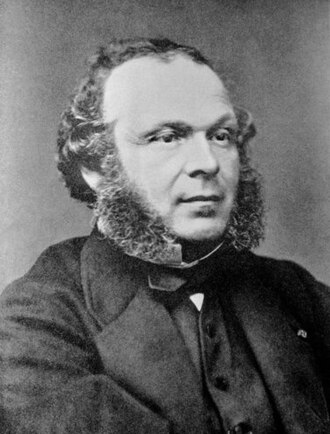
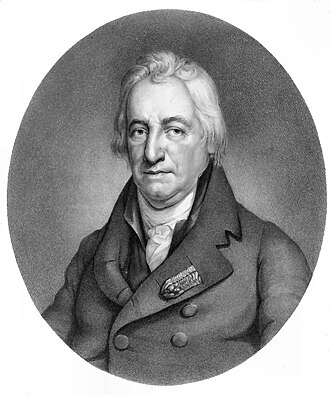
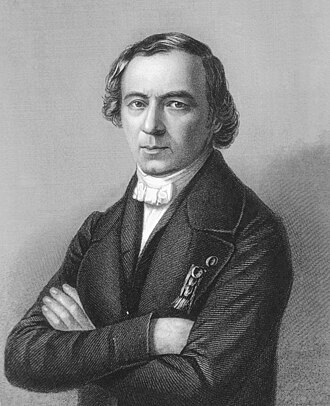
图:Unknown artist · Public domain · Wikimedia Commons
- 出生
- 1817 年 3 月 26 日,基希伯格
- 逝世
- 1891 年 5 月 10 日,慕尼黑
- 国籍
- 瑞士
- 学科
- 化学、生物学、医学、博物与综合
- 职业
- 植物学家、大学教师、生物学家、真菌学家
- 母语 / 工作语言
- 德语
- 母校
- 日内瓦大学、苏黎世大学
- 工作单位
- 慕尼黑大学、弗赖堡大学、苏黎世大学、苏黎世联邦理工学院
研究领域
师承
来自 Wikidata 的「博士导师」「师从」「博士生」「学生」记录,可能不全。
所获奖项(2)
- 1877巴伐利亚马克西米兰科学与艺术勋章
- 1881英国皇家学会外籍会员
学会与院士
百科正文
早年
内格里生于苏黎世附近的基尔希贝格,曾于苏黎世大学念医学。1839年起,他在日内瓦大学跟奥古斯丁·彼拉姆斯·德堪多学习植物学,1840年在苏黎世以一篇植物学论文毕业。他被马蒂亚斯·雅各布·施莱登所引导,关注植物的显微镜研究。
学术生涯
毕业后,他成为苏黎世大学无薪教师,后来当上了特职教授。1852年他填上了弗里堡大学植物学系主任的职位,1857年被提升为慕尼黑大学教授,在那儿任职直到去世。
贡献
据称是内格里于1842年首先在花粉形成过程中观察到细胞分裂。 不过,亨利·哈里斯对此表示质疑,他认为内格里并未观察到核分裂,并且直到1844年还未认识到细胞核在细胞生命中的重要性。1857年内格里首先描述了微孢子虫。(Texier et al, 2010, p.443).
以上内容摘自维基百科「卡尔·威廉·冯·内格里」,按 CC BY-SA 4.0 使用,去掉了参考文献、外部链接等尾部小节,公式改写成了纯文本。全文、配图和出处见原文。
英文维基百科补充中文条目比较短,下面是英文条目「Carl Nägeli」的原文
Carl Wilhelm von Nägeli (26 or 27 March 1817 – 10 May 1891) was a Swiss botanist. He studied cell division and pollination but became known as the man who discouraged Gregor Mendel from further work on genetics. He rejected natural selection as a mechanism of evolution, favouring orthogenesis, though the term was only coined in 1893, two years after his death, driven by a supposed "inner perfecting principle".
Career
Carl Nägeli was born the son of a physician in Kilchberg near Zürich. He began studying medicine at the University of Zürich in 1836, but soon switched to botany, studying among others under naturalists Lorenz Oken and Oswald Heer. From 1839, he studied at the University of Geneva under Swiss botanist A. P. de Candolle. In 1840, he received his doctorate in Zürich with a dissertation on the Cirsium species of Switzerland. From 1842 Nägeli worked with German botanist Matthias Schleiden at the University of Jena. After Schleiden directed his attention to the microscopic study of plants, he focused his research on that area. After first becoming Privatdozent, and in 1849 extraordinary professor (a position somewhere between that of an associate professor and a full professor) at the University of Zürich, he held the chair of botany at the University of Freiburg from 1852 to 1856, then ended his career as professor of general botany and microscopy at the Ludwig-Maximilians-Universität München (LMU) from 1857 until his retirement in 1889.
Scientific contributions
Cell division
It was thought that Nägeli had first observed cell division during the formation of pollen, in 1842. However, this is disputed by Australian geneticist Henry Harris, who writes: "What Nägeli saw and did not see in plant material at about the same time [as Robert Remak] is somewhat obscure... I conclude... that, unlike Remak, he did not observe nuclear division... it is clear that Nägeli did not in 1844 have any idea of the importance of the nucleus in the life of the cell."
"Meristem", "xylem", and "phloem"
In 1846, Nägeli and German botanist Hugo von Mohl were the first scientists to distinguish the plant cell wall from the cell's inner contents, for which Mohl used the term "protoplasm". Also in 1846, Nägeli and German botanist Wilhelm Hofmeister advanced their "apical cell theory", which aimed to explain the origin and functioning of the shoot apical meristem in plants. In 1857, Nägeli first described microsporidia, the causative agent of pebrine disease in silkworms, which has historically devastated the silk industry in Europe. In 1858, he coined the terms "meristem", "meristematic tissue", "xylem", and "phloem".
Mendel, Nägeli, and orthogenesis
Nowadays Nägeli is perhaps best known for his unproductive correspondence (1866–1873) with Austrian geneticist and friar Gregor Mendel concerning the latter's celebrated work on Pisum sativum, the garden pea. British writer Simon Mawer, in his book Gregor Mendel: planting the seeds of genetics (2006), gives an account of Nägeli's correspondence with Mendel, underlining that, at the time Nägeli was writing to the friar from Moravia, Nägeli "must have been preparing his great work entitled A mechanico-physiological theory of organic evolution (published in 1884, the year of Mendel's death) in which he proposes the concept of the 'idioplasm' as the hypothetical transmitter of inherited characters". Mawer notes that, in this book, there is not a single mention of the work of Gregor Mendel. That prompted him to write:
We can forgive von Nägeli for being obtuse and supercilious. We can forgive him for being ignorant, a scientist of his time who did not really have the equipment to understand the significance of what Mendel had done despite the fact that he (von Nägeli) speculated extensively about inheritance. But omitting an account of Mendel's work from his book is, perhaps, unforgivable.
Nägeli believed that cells receive their hereditary characters from a part of the protoplasm which he called the "idioplasma". Nägeli was an advocate of orthogenesis and an opponent of Darwinism. He developed an "inner perfecting principle" which he believed directed evolution. He wrote that many evolutionary developments were nonadaptive and variation was internally programmed.
以上内容摘自英文维基百科「Carl Nägeli」,按 CC BY-SA 4.0 使用,去掉了参考文献、外部链接等尾部小节,公式改写成了纯文本。全文、配图和出处见原文。
同一学科、同时代的科学家