格物
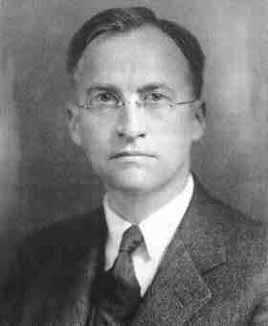
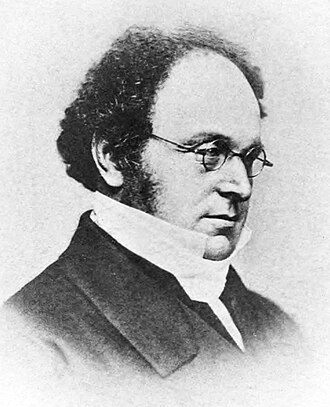
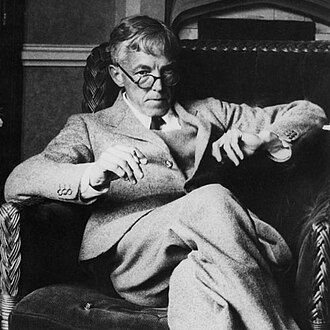
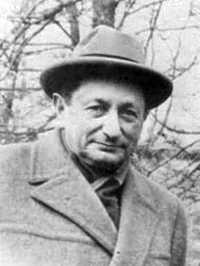
图:作者不详 · Public domain · Wikimedia Commons
- 出生
- 1884 年 3 月 21 日,奥维塞尔镇区
- 逝世
- 1944 年 11 月 12 日,剑桥
- 国籍
- 美国
- 学科
- 数学、博物与综合
- 职业
- 数学家、拓扑学家、大学教师
- 母语 / 工作语言
- 英语
- 母校
- 哈佛大学(1905 年)、芝加哥大学
- 工作单位
- 普林斯顿大学(1909—1912)、哈佛大学(1912—1944)、威斯康星大学麦迪逊分校(1907—1909)
研究领域
主要贡献
代表成就
师承
博士生45
来自 Wikidata 的「博士导师」「师从」「博士生」「学生」记录,可能不全。
所获奖项(5)
- 1923博修奖
- 1926纽科姆·克利夫兰奖
- 1933honorary doctor of the University of Poitiers
- 1936doctor honoris causa from the University of Paris
- 1943爱丁堡皇家学会会员
学会与院士
百科正文
外部
约翰·J·奥康纳; 埃德蒙·F·罗伯逊, Birkhoff, MacTutor数学史档案 (英语)
乔治·戴维·伯克霍夫在数学谱系计划的资料。
以上内容摘自维基百科「乔治·戴维·伯克霍夫」,按 CC BY-SA 4.0 使用,去掉了参考文献、外部链接等尾部小节,公式改写成了纯文本。全文、配图和出处见原文。
英文维基百科补充中文条目比较短,下面是英文条目「George David Birkhoff」的原文
George David Birkhoff (March 21, 1884 – November 12, 1944) was an American mathematician. He is considered one of the top American mathematicians of his generation. He made valuable contributions to the theory of differential equations, dynamical systems, the four-color problem, the three-body problem, and general relativity. Today, Birkhoff is best remembered for the ergodic theorem. The George D. Birkhoff House, his residence in Cambridge, Massachusetts, has been designated a National Historic Landmark.
Early life
He was born in Overisel Township, Michigan, the son of two Dutch immigrants, David Birkhoff, who arrived in the United States in 1870, and Jane Gertrude Droppers. Birkhoff's father worked as a physician in Chicago while he was a child. From 1896 to 1902, he would attend the Lewis Institute as a teenager.
Career
Birkhoff was part of a generation of American mathematicians who were the first to study entirely within the United States and not participate in academics within Europe. Following his time at the Lewis Institute, Birkhoff would spend a year at the University of Chicago. He then obtained his A.B. and A.M. from Harvard University, returned to the University of Chicago in 1905, and at the age of twenty-three, graduated summa cum laude with his Ph.D. in 1907 in differential equations. While E. H. Moore was his supervisor, he was most influenced by the writings of Henri Poincaré. After teaching at the University of Wisconsin–Madison from 1907 to 1909 and at Princeton University from 1909 to 1912, he taught at Harvard from 1912 until his death. Being the only American familiar with the three main mathematical institutions within the United States—Chicago, Harvard and Princeton—he was held in high regard by his colleagues.
Work
In 1912, attempting to solve the four color problem, Birkhoff introduced the chromatic polynomial. Even though this line of attack did not prove fruitful, the polynomial itself became an important object of study in algebraic graph theory.
In 1913, he proved Poincaré's "Last Geometric Theorem," a special case of the three-body problem, a result that made him world-famous and improved the international recognition of American mathematics.
Birkhoff was also a contributor to the development of general relativity. He wrote on the foundations of relativity and quantum mechanics, publishing (with R. E. Langer) the monograph Relativity and Modern Physics in 1923. In 1923, Birkhoff also proved that the Schwarzschild geometry is the unique spherically symmetric solution of the Einstein field equations. A consequence is that black holes are not merely a mathematical curiosity, but could result from any spherical star having sufficient mass.
Influence on selection process
Birkhoff believed that fellowships from foreign nations would improve the mathematic standards in the United States, though he wanted to raise the standards for fellowships, believing that the qualifications in less-developed countries were different and that access should be limited. He also was adamant that foreign fellows be able to meet language requirements.
Albert Einstein and Norbert Wiener, among others, accused Birkhoff of advocating antisemitic selection processes. During the 1930s, when many Jewish mathematicians fled Europe and tried to obtain positions in the United States, Birkhoff is alleged to have influenced the selection process at American institutions to exclude Jews.
Recognition
In 1923, he was awarded the inaugural Bôcher Memorial Prize by the American Mathematical Society for his paper in 1917 containing, among other things, what is now called the Birkhoff curve shortening process.
He was elected to the National Academy of Sciences, the American Philosophical Society, the American Academy of Arts and Sciences, the Académie des Sciences in Paris, the Pontifical Academy of Sciences, and the London and Edinburgh Mathematical Societies.
The George David Birkhoff Prize in applied mathematics is awarded jointly by the American Mathematical Society and the Society for Industrial and Applied Mathematics in his honor.
Personal life
Birkhoff married Margaret Elizabeth Graftus in 1908. They had three children, Barbara, mathematician Garrett Birkhoff (1911–1996) and Rodney.
以上节选摘自英文维基百科「George David Birkhoff」,按 CC BY-SA 4.0 使用,去掉了参考文献、外部链接等尾部小节,公式改写成了纯文本。篇幅所限,较长的小节只摘了开头一部分,有的小节没有收;全文、配图和出处见原文。
同一学科、同时代的科学家

同一学科的科学家
更多 ›