格物

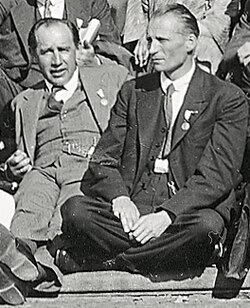
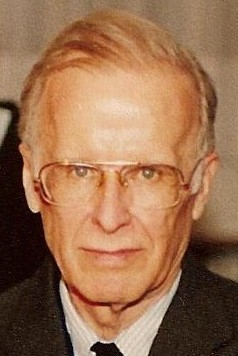
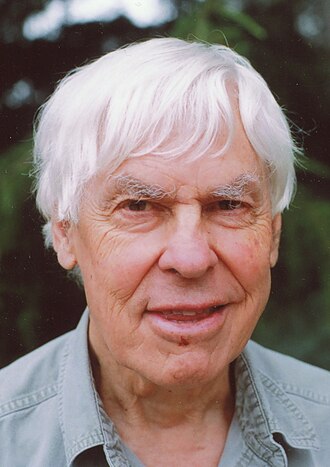
图:http://www.uia.no/no/portaler/aktuelt/nyhetsarkiv/goesta_mit… · Public domain · Wikimedia Commons
- 出生
- 1846 年 3 月 16 日,斯德哥尔摩
- 逝世
- 1927 年 7 月 7 日,于什霍尔姆
- 国籍
- 瑞典
- 学科
- 数学、博物与综合
- 职业
- 数学家、大学教师、科学家、编辑
- 母语 / 工作语言
- 瑞典语、法语、德语
- 母校
- 乌普萨拉大学(博士,1872 年)、Klara skola(1861 年)、Stockholm gymnasium(1865 年)
- 工作单位
- 斯德哥尔摩大学(1881—1916)、乌普萨拉大学(1872—1876)、赫尔辛基大学(1876—1881)
研究领域
主要贡献
代表成就
师承
博士导师1
博士生5
来自 Wikidata 的「博士导师」「师从」「博士生」「学生」记录,可能不全。
所获奖项(1)
- 1896英国皇家学会外籍会员
学会与院士
百科正文
英文维基百科补充中文条目比较短,下面是英文条目「Gösta Mittag-Leffler」的原文
Magnus Gustaf "Gösta" Mittag-Leffler (16 March 1846 – 7 July 1927) was a Swedish mathematician. His mathematical contributions are connected chiefly with the theory of functions that today is called complex analysis. He founded the prestigious mathematical periodical Acta Mathematica and was its editor for 40 years.
Mittag-Leffler was known as an advocate for female intellectual workers in an era when contributions by women were often overlooked or miscredited to men. He took great trouble in procuring Sofia Kovalevskaya a position of full professor of mathematics in Stockholm University. Mittag-Leffler was responsible for inducing the Nobel committee to recognize Marie Curie as an equal contributor to the discoveries "on the radiation phenomena" along with her husband Pierre Curie. Mittag-Leffler also began the process of nominating Henrietta Swan Leavett for the Nobel Prize in Physics for her identification of Cepheid variable stars, crucial to Edwin Hubble's work on the true size of the universe, however this had to be abandoned due to the astronomer's untimely death from stomach cancer in 1921.:118
After World War I, Mittag-Leffler gave his estate in Djursholm and its remarkable library of books on mathematics to the Royal Swedish Academy of Sciences; it became the foundation of the modern Mittag-Leffler Institute.
Biography
Early years and education
Mittag-Leffler was born in Stockholm and became the first son of the school teacher John Olof Leffler and Gustava Wilhelmina, née Mittag. Soon after Gustav's birth his father was promoted to a school principal. The family lived in the school building then and their address was simply "Katarina Schoolhouse". Only a few years later they managed to purchase their own house. Soon, three Gustav's siblings were born: Anna-Maria, Frits, and Arthur. Anna-Maria grew into a famous writer, Frits became a linguist, and Arthur became a civil engineer. As all children recalled, Olof and Gustava held an open and hospitable house, they often were visited by mutual friends. As an adult, Gustav claimed that a significant part of his early education he received at home by listening to their guests. For all his life, he also remembered his maternal grandparents with great affection. He used to stay in their Fågelås house every summer. As a tribute to his maternal relatives, at the age of 20, Gustav added his mother's maiden name to his paternal surname.
In 1855, Gustav went to Klara Elementary School in Stockholm. The school was respectable and upper class families brought their children there. Still, in recollections of August Strindberg it was "a setting straight out of Dickens novels" with severe fights between students, frequent beatings by teachers, and very strict atmosphere. Still, Gustav showed himself a gifted student. In Klara school Gustav met Viktor Rydberg.
Mittag-Leffler entered the Uppsala University when Göran Dillner was in charge of its mathematical research and teaching. Under his guidance Mittag-Leffler wrote and defended a thesis, which was described by his biographers as "less than remarkable". Nevertheless, he completed his PhD in 1872 and became docent at the university the same year.
In 1873, Mittag-Leffler won a Byzantine stipend. Given by a Swede donor who lived in Constantinople, it had a condition: that a receiver must study abroad for three years. Thus, in the years 1873-1876 Mittag-Leffler was studying in the three most important XIXth century centers of mathematics: University of Paris, Humboldt University of Berlin, and University of Göttingen. In October 1873, he arrived in Paris, where he soon acquainted Darboux, Joseph Liouville, Charles Auguste Briot, Jean Claude Bouquet, and several other prominent mathematicians of the time. In Paris, Mittag-Leffler attended lectures of Charles Hermite on elliptic functions, but found Hermite's style old-fashioned and the lectures very difficult to follow. In Spring 1874, he moved to Berlin and started attending Karl Weierstrass's lectures on elliptic functions. Weierstrass influenced Mittag-Leffler greatly, his views and methods shaped all future courses of Mittag-Leffler's studies. During this period he edited a weekly newspaper, Ny Illustrerad Tidning, which was based in Stockholm.
Works and accomplishments
- Mittag-Leffler distribution
- Mittag-Leffler function
- Mittag-Leffler polynomials
- Mittag-Leffler star
- Mittag-Leffler summation
- Mittag-Leffler theorem
- Mittag-Leffler condition of an inverse limit
以上节选摘自英文维基百科「Gösta Mittag-Leffler」,按 CC BY-SA 4.0 使用,去掉了参考文献、外部链接等尾部小节,公式改写成了纯文本。篇幅所限,较长的小节只摘了开头一部分,有的小节没有收;全文、配图和出处见原文。
同一学科、同时代的科学家


同一学科的科学家
更多 ›