格物
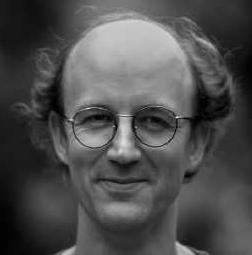
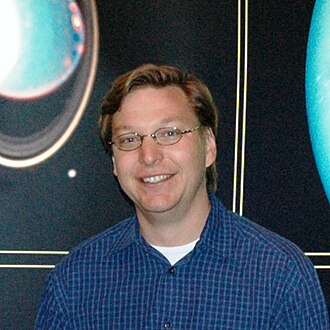
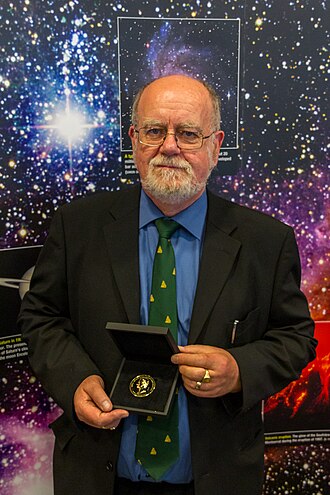
图:NASA · Public domain · Wikimedia Commons
- 出生
- 1958 年,伦敦
- 国籍
- 美国
- 学科
- 天文学、博物与综合
- 职业
- 天文学家、大学教师
- 母语 / 工作语言
- 英语
- 母校
- 伦敦大学学院
- 工作单位
- 加州大学洛杉矶分校、夏威夷大学马诺阿分校
研究领域
主要贡献
本站收录的发现与发明
师承
博士生1
来自 Wikidata 的「博士导师」「师从」「博士生」「学生」记录,可能不全。
所获奖项(4)
- 2005美国科学促进会会士
- 2012Kavli Prize in Astrophysics
- 2012邵逸夫天文学奖
- —邵逸夫奖
学会与院士
百科正文
经历
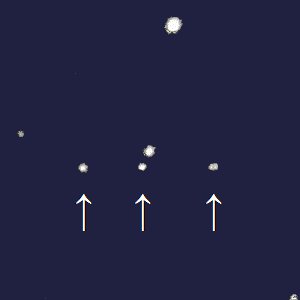
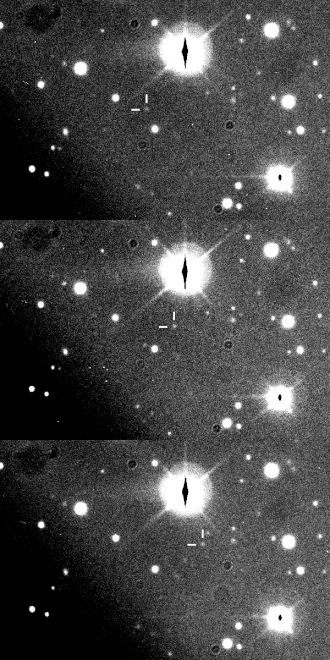
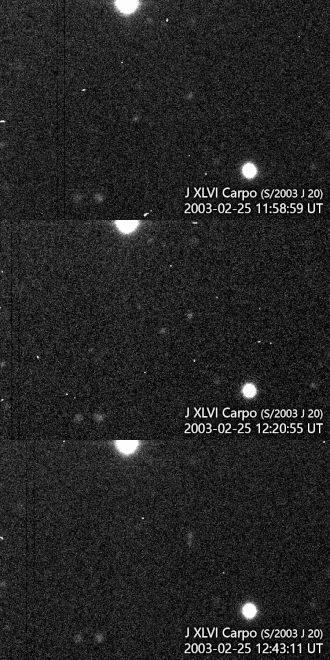
朱维特于1958年生于英国伦敦。于1979年获得伦敦大学学院学士学位,之后分别于1980和1983年获得加州理工学院天文学硕士和博士学位。他的研究兴趣包含柯伊伯带、太阳系形成、彗星物理性质等。他和天文学家刘丽杏一起于1992年发现了继冥王星与查龙之后(当时冥王星仍被视为行星)首个海王星外天体1992 QB1。另外他和斯科特·谢帕德一起发现了多颗外行星的卫星。
荣誉与奖项
2012年邵逸夫天文学奖。
2012年科维理天体物理学奖。
以上内容摘自维基百科「大衛·朱維特」,按 CC BY-SA 4.0 使用,去掉了参考文献、外部链接等尾部小节,公式改写成了纯文本。全文、配图和出处见原文。
英文维基百科补充中文条目比较短,下面是英文条目「David C. Jewitt」的原文
David Clifford Jewitt (born 1958) is a British astronomer who studies the Solar System, especially its minor bodies. He is based at the University of California, Los Angeles, where he is a Member of the Institute for Geophysics and Planetary Physics, the Director of the Institute for Planets and Exoplanets, Professor of Astronomy in the Department of Physics and Astronomy and Professor of Astronomy in the Department of Earth, Planetary and Space Sciences. He is best known for being the first person (along with Jane Luu) to discover a body beyond Pluto and Charon in the Kuiper belt.
Early life
Jewitt was born in London, England, in 1958. His mother was a telephonist, and his father worked on an assembly line making industrial steel cutters. The family lived with Jewitt's grandmother in a social housing project in the north London suburb of Tottenham.
Jewitt's interest in astronomy was kindled in 1965, when he chanced to see some bright meteors. Media coverage of NASA's Apollo 8 and Apollo 11 lunar missions in 1968 and 1969 added to his enthusiasm.
Education
Jewitt was educated at local authority primary and secondary schools. He was also an autodidact, borrowing books from a travelling library to supplement the few that his parents could afford to buy for him. His interest in physics began when a teacher introduced him to the subject, of which he had never previously heard, when he was twelve or thirteen.
Career
In 1983, Jewitt became an assistant professor at the Massachusetts Institute of Technology in Cambridge, Massachusetts. In 1988, attracted by the powerful telescopes sited on Mauna Kea, he moved to the University of Hawaiʻi, becoming an Associate Astronomer in its Institute of Astronomy and an associate professor in its Department of Physics and Astronomy. In 1993, the Institute promoted him to the rank of Astronomer tout court.
Research
Jewitt's research interests have embraced many topics in planetary science, including the Kuiper belt, circumstellar discs, planetary ring systems, the physical properties of comets, frozen volatiles in asteroids, the moons of the gas giant planets and the formation and evolution of the Solar System.
In 1992, after five years of searching, Jewitt and the Vietnamese-American astronomer Jane X.
Controversies
When Pluto was first discovered, it was added to the canonical list of major planets. After Jewitt and Luu's discovery of 15760 Albion and the subsequent finding of many more Kuiper belt objects, it became apparent that Pluto had more in common with these objects than it did with its supposed planetary peers. Some astronomers suggested that Pluto should be demoted.
Outreach
In October 1982, Patrick Moore interviewed Jewitt about his recovery of Halley's Comet in a special episode of BBC TV's The Sky at Night. In November 1985, as the comet neared the Sun, Jewitt again described how he had recovered it in an episode of BBC TV's Horizon titled Halley's Comet – the Apparition (Season 22, Episode 17). A quarter of a century later, Horizon returned to Jewitt to interview him for Asteroids: the Good, the Bad and the Ugly (Season 47, Episode 6).
Honours
In 1994, Jewitt was awarded the University of Hawaiʻi's Regent's Medal for excellence in research. In 1996, the ARCS (Achievement Rewards for College Scientists) Foundation's Honolulu chapter named him the Hawaii Scientist of the Year, and NASA gave him their Exceptional Scientific Achievement Medal. In 1998, he was made an Honorary Fellow of University College London.
Personal life
In 1991, Jewitt met Jing Li (a Chinese-American born in Beijing, China), a Ph.D. student of solar physics at the University of Paris, while she was visiting the University of Hawaiʻi. Jewitt and Jing married in 1993. Their daughter, Suu Suu, was born in 2000.
As a child, Jewitt's extra-astronomical interests included writing, history, music, machines, animals, trees, rocks and fossils.
以上节选摘自英文维基百科「David C. Jewitt」,按 CC BY-SA 4.0 使用,去掉了参考文献、外部链接等尾部小节,公式改写成了纯文本。篇幅所限,较长的小节只摘了开头一部分,有的小节没有收;全文、配图和出处见原文。
同一学科、同时代的科学家

同一学科的科学家
更多 ›