格物
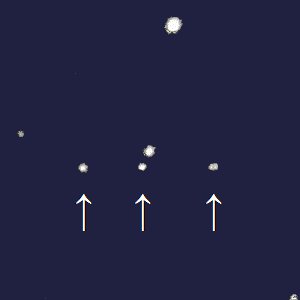
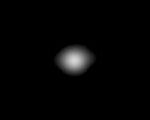
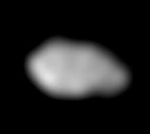
图:IMCCE (Institut de mécanique céleste et de calcul des éphémé… · CC BY-SA 2.0 fr · Wikimedia Commons
- 类型
- 不规则卫星
- 发现 / 发明时间
- 1975 年
- 发现者 / 提出者
- 查尔斯·科瓦尔、伊丽莎白·罗默尔、斯科特·谢泼德、大卫·朱维特、Yanga R. Fernández
- 命名来源
- Themisto
- 学科
- 天文学
相关科学家

百科正文
发现和命名
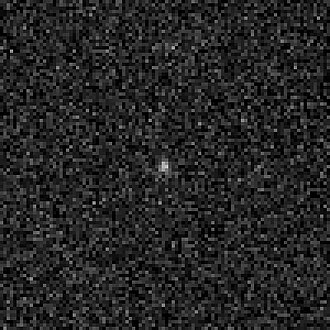
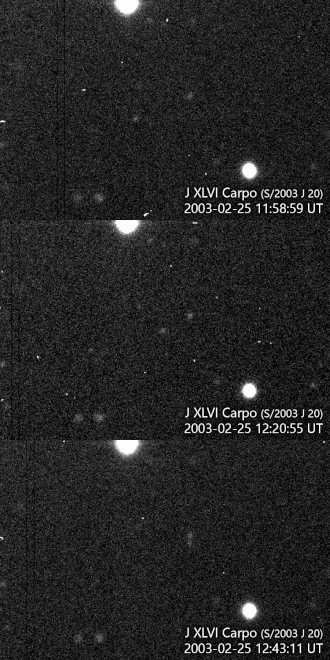
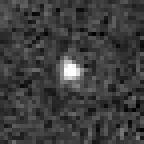
木卫十八是在1975年被查尔斯·科瓦尔和伊丽莎白·罗默尔发现,予以临时编号S/1975 J 1,由于对其轨道特性不清楚,因此这颗卫星随后便失踪了。
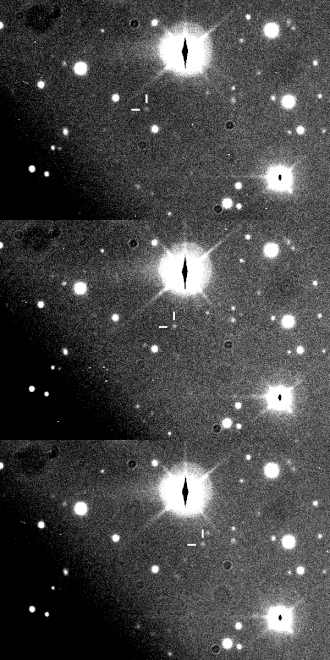
木卫十八曾出现在1980年代天文书籍的注解里。到2000年才被斯科特·谢帕德、大卫·朱维特、Yanga R. Fernández、Eugene A. Magnier等人发现,刚开始他们以为是一个新天体所以给一个S/2000 J 1的临时编号,但之后证明跟1975年失踪的卫星是同一个卫星。
轨道
木卫十八的轨道很特殊,介于希玛利亚群和伽利略卫星之间,它既不是逆行卫星,在距离上又没有邻近的卫星,因此在分类上自成一组。
以上内容摘自维基百科「木卫十八」,按 CC BY-SA 4.0 使用,去掉了参考文献、外部链接等尾部小节,公式改写成了纯文本。全文、配图和出处见原文。
英文维基百科补充中文条目比较短,下面是英文条目「Themisto (moon)」的原文
Themisto , also known as Jupiter XVIII, is the innermost and one of the medium-sized irregular satellites of Jupiter.
Discovery and naming
Themisto was first discovered by Charles T. Kowal and Elizabeth Roemer on 30 September 1975, reported on 3 October 1975, and designated S/1975 J 1. However, not enough observations were made to establish an orbit and it was subsequently lost.
Then, on 21 November 2000, a seemingly new satellite was discovered by Scott S. Sheppard, David C. Jewitt, Yanga R. Fernández and Eugene A. Magnier and was designated S/2000 J 1. It was soon confirmed from computing the past trajectory of the satellite that this was the same as the one observed in 1975. This observation was immediately correlated with an earlier observation on 6 August 2000 by the team of Brett J. Gladman, John J. Kavelaars, Jean-Marc Petit, Hans Scholl, Matthew J. Holman, Brian G. Marsden, Philip D. Nicholson and Joseph A. Burns, which was reported to the Minor Planet Center but not published as an IAU Circular (IAUC).
In October 2002, it was officially named after Themisto, daughter of the river god Inachus and lover of Zeus (Jupiter) in Greek mythology.
Orbit
Themisto orbits Jupiter at an average distance of 7.4 million km in 130 days, at an inclination of about 45° to the ecliptic, in a prograde direction and with an eccentricity of 0.252. Its orbit is continuously changing due to solar and planetary perturbations.
This means that Themisto has the shortest orbital period of all irregular moons, apart from Triton.
Themisto's orbit is unusual: unlike most of Jupiter's moons, which orbit in distinct groups, Themisto orbits alone. The moon is located midway between the Galilean moons and the first group of prograde irregular moons, the Himalia group.
Physical characteristics
Themisto is about 9 km (5.6 mi) in diameter (assuming an albedo of 0.04). While its true albedo could not be measured by NEOWISE due to poor timing of observations, It is known that Themisto is colored red in the visible spectrum. (B−V=0.83, V−R=0.46, and V−I=0.94) similar to D-type asteroids.
Origin
Themisto probably did not form near Jupiter but was captured by Jupiter later. Themisto is probably the remnant of a broken, captured heliocentric asteroid.
以上内容摘自英文维基百科「Themisto (moon)」,按 CC BY-SA 4.0 使用,去掉了参考文献、外部链接等尾部小节,公式改写成了纯文本。全文、配图和出处见原文。