格物
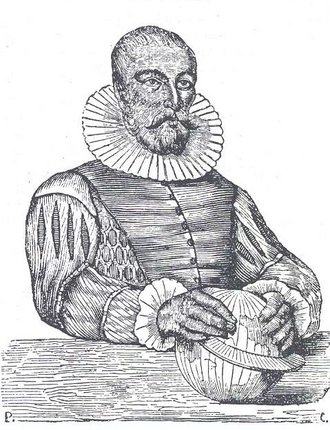
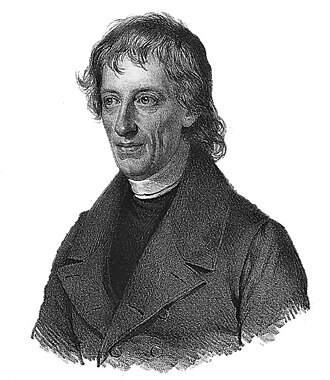
图:作者不详 · Public domain · Wikimedia Commons
- 出生
- 1502 年,萨尔堡
- 逝世
- 1578 年 8 月 11 日,科英布拉
- 国籍
- 葡萄牙王国
- 学科
- 数学、天文学、医学、博物与综合
- 职业
- 数学家、地理学家、天文学家
- 母语 / 工作语言
- 葡萄牙语
- 母校
- 萨拉曼卡大学(1523 年)、里斯本大学(1532 年)
- 工作单位
- 科英布拉大学(1544—1562)、萨拉曼卡大学、里斯本大学(1529—1537)
研究领域
主要贡献
代表成就
本站收录的发现与发明
以他 / 她命名
师承
学生4
来自 Wikidata 的「博士导师」「师从」「博士生」「学生」记录,可能不全。
百科正文
英文维基百科补充中文条目比较短,下面是英文条目「Pedro Nunes」的原文
Pedro Nunes (Portuguese: [ˈpeðɾu ˈnunɨʃ]; Latin: Petrus Nonius; 1502 – 11 August 1578) was a Portuguese mathematician, cosmographer, and professor, probably from a New Christian (of Jewish origin) family.
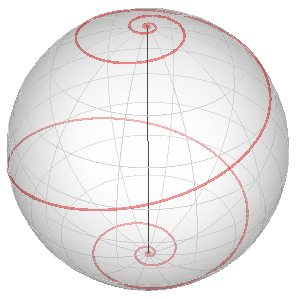
Considered one of the greatest mathematicians of his time, Nunes is best known for being the first to approach navigation and cartography with mathematical tools. Among other accomplishments, he was the first to propose the idea of a loxodrome (a rhumb line), and was the inventor of several measuring devices, including the nonius (from which the Vernier scale was derived), named after his Latin surname.
Life
Little is known about Nunes' early education, life or family background, only that he was born in Alcácer do Sal in Portugal, his origins are possibly Jewish and that his grandchildren spent a few years behind bars after they were accused by the Portuguese Inquisition of professing and secretly practicing Judaism. He studied at the University of Salamanca, maybe from 1517 until 1522. He returned to Lisbon c. 1529 and started teaching at the university.
He continued his medical studies but held various teaching posts within the University of Lisbon, including Moral, Philosophy, Logic and Metaphysics. He obtained his doctorate in medicine in 1532. When, in 1537, the Portuguese University located in Lisbon returned to Coimbra, he moved to the re-founded University of Coimbra to teach mathematics, a post he held until 1562. This was a new post in the University of Coimbra and it may have been established to provide instruction in the technical requirements for navigation: clearly a topic of great importance in Portugal at this period, when the control of sea trade was the primary source of Portuguese wealth. Mathematics became an independent post in 1544.
Work
Pedro Nunes lived in a transition period, during which science was changing from valuing theoretical knowledge (which defined the main role of a scientist/mathematician as commenting on previous authors), to providing experimental data, both as a source of information and as a method of confirming theories. Nunes was, above all, one of the last great commentators, as is shown by his first published work “Tratado da Esfera”, enriched with comments and additions that denote a profound knowledge of the difficult cosmography of the period. He also acknowledged the value of experimentation.
In his Tratado da sphera he argued for a common and universal diffusion of knowledge. Accordingly, he not only published works in Latin, at that time science's lingua franca, aiming for an audience of European scholars, but also in Portuguese, and Spanish (Livro de Algebra).
Navigation
Much of Nunes' work related to navigation. He was the first to understand why a ship maintaining a steady course would not travel along a great circle, the shortest path between two points on Earth, but would instead follow a spiral course, called a loxodrome. These lines —also called rhumb lines— maintain a fixed angle with the meridians.
Influence
Nunes was very influential internationally, e.g. on the work of John Dee and Edward Wright.
Honours
One of the best known Lisbon public Secondary/High Schools is named after Pedro Nunes, Escola Secundária de Pedro Nunes (teaching 7th to 12th grade). It was founded, in 1906, as Lyceu Central da 3ª Zona Escolar de Lisboa (Central Liceum of the 3rd School Area of Lisbon). Over the years had known several designations: Lyceu Central de Pedro Nunes (1911–1930), Liceu Normal de Lisboa (1930–1937), Liceu Pedro Nunes (1937–1956), Liceu Normal de Pedro Nunes (1956–1978) and Escola Secundária de Pedro Nunes (1978–present), but is still known as Liceu Pedro Nunes. Multiple Portuguese personalities have studied in Pedro Nunes. The current headquarters commemorated its centenary in 2011, after being refurbished and modernized between 2008 and 2010.
He was featured on 100 escudos coins.
The Instituto Pedro Nunes in Coimbra, a business incubator and a center of innovation and technology transfer founded by the University of Coimbra, is named after Pedro Nunes.
Asteroid 5313 Nunes is named after him
TAP Air Portugal has named an Airbus A330-202 airplane after him, registered CS-TOP.
Since 2023, the Europlanet Society Iberia has annually awarded the "Pedro Nunes" award to the best Iberian Master's Dissertation in Planetary Science and Exploration.
以上节选摘自英文维基百科「Pedro Nunes」,按 CC BY-SA 4.0 使用,去掉了参考文献、外部链接等尾部小节,公式改写成了纯文本。篇幅所限,较长的小节只摘了开头一部分,有的小节没有收;全文、配图和出处见原文。