格物
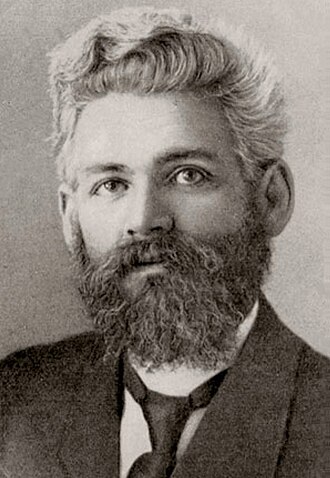
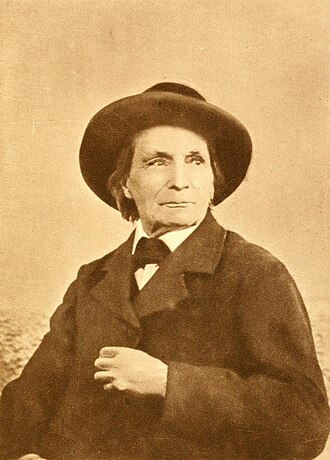
图:作者不详 · Public domain · Wikimedia Commons
- 出生
- 1876 年 3 月 2 日,宾杰里
- 逝世
- 1950 年 12 月 24 日,Komarovo
- 国籍
- 俄罗斯帝国、俄罗斯共和国、苏维埃俄国、苏联
- 学科
- 生物学
- 职业
- 探险家、地理学家、动物学家、鱼类学家
- 母语 / 工作语言
- 俄语
- 母校
- 帝国莫斯科大学(1898 年)、莫斯科国立大学(1898 年)
- 工作单位
- 圣彼得堡帝国大学、俄罗斯地理学会(1940—1950)、俄罗斯科学院动物研究所(1904—1913)、俄罗斯科学院动物研究所(1934—1950)
研究领域
主要贡献
代表成就
师承
博士导师1
师从1
博士生3
来自 Wikidata 的「博士导师」「师从」「博士生」「学生」记录,可能不全。
所获奖项(6)
- 1951State Stalin Prize, 1st degree
- —红旗劳动勋章
- —保卫列宁格勒奖章
- —Constantin Medal
- —1941-1945年大卫国战争中忘我劳动奖章
- —俄罗斯苏维埃联邦社会主义共和国功勋科学工作者
学会与院士
百科正文
贝格被认为是俄罗斯湖沼学的奠基者。他的一些学术研究结果,如有关环境对鱼类行为的影响、七鳃鳗与鲑鱼的共生关系、鱼类的分类与进化等,在相关领域都获得国际关注。
主要学术著作
- 《直向演化》(Nomogenesis),1922年
- 《气候与生命》,1922年
- 《苏联地理区域》,1947-1952年
- 《苏联及周边国家淡水鱼类》,1948-1949年
- 《现代和化石鱼形动物及鱼类分类学》,1944年及1955年
以上内容摘自维基百科「列夫·贝格」,按 CC BY-SA 4.0 使用,去掉了参考文献、外部链接等尾部小节,公式改写成了纯文本。全文、配图和出处见原文。
英文维基百科补充中文条目比较短,下面是英文条目「Lev Berg」的原文
Lev Semyonovich Berg, also known as Leo S. Berg (Russian: Лев Семёнович Берг; 14 March 1876 – 24 December 1950) was a leading Russian geographer, biologist and ichthyologist who served as President of the Soviet Geographical Society between 1940 and 1950.
He is known for his own evolutionary theory, nomogenesis (a form of orthogenesis incorporating mutationism) as opposed to the theories of Darwin and Lamarck.
Life
Lev Berg was born in Bessarabia in a Jewish family, the son of Simon Gregoryevich Berg, a notary, and Klara Lvovna Bernstein-Kogan. He graduated from the Second Kishinev Gymnasium in 1894. Like some of his relatives, Berg converted to Christianity in order to pursue his studies at Moscow State University.
At Moscow University, Berg studied hydrobiology and geography. He later studied ichthyology and in 1928 was awarded he was also a member of the Russian Academy of Sciences.
Lev Berg graduated from the Moscow State University in 1898. Between 1903 and 1914, he worked in the Museum of Zoology in Saint Petersburg. He was one of the founders of the Geographical Institute, now a Faculty of Geography of the Saint Petersburg State University.
Berg studied and determined the depth of the lakes of Central Asia, including Balkhash and Issyk-Kul. He developed Dokuchaev's doctrine of natural zones, which became one of the foundations of the Soviet biology. Among his pioneering monographs on climatology were "Climate and Life" (1922) and "Foundations of Climatology" (1927).
During his lifetime, Berg was a towering presence in the science of ichthyology. In 1916, he published four volumes of the study of Fishes of Russia.
Nomogenesis
Berg is best known for his evolutionary theory called nomogenesis, which was a type of orthogenesis or mutationism. Berg's ideas were collected in his book Nomogenesis; or, Evolution Determined by Law and was first published in 1922 in Russia; it was later translated into English in two editions the first appearing in 1926 and the later edition appearing in 1969. In the book Berg collected a large amount of empirical data which offered a strong criticism of Darwin's theory of evolution.
Berg's theory of nomogenesis combined arguments from paleontology, zoology and botany to claim that evolution is not a random process. The theory emphasized the limitations of natural selection which determine the directionality of evolution.
Berg claimed that the variation of characters in species is confined within certain limits due to both internal and external factors. The limitation of the variability, Berg argued, left hardly any space for natural selection; he claimed this was supported by the paleontological record because all the phylogenetic branches look more or less like straight lines. Berg distanced himself from both Darwinism and Lamarckism. Instead he proposed the mutationist concept of directed mass mutations as the main mechanism for directing evolution.
Personal life
In 1910, Berg married fellow Bendery native Polina Abramovna Kotlovker. They separated shortly after the birth of their second child and though Polina sued, the Russian Orthodox Church granted custody to her Christian husband. Berg's mother helped raise the children, Simon (born 1911) and Raissa (born 1913). Berg married Maria Mikhailovna Ivanova, the daughter of a ship's commander, in 1923.
Honours
Berg was honored for a lifetime of scientific achievement by the Imperial Russian Geographical Society and presented with the P. P. Semyonov-Tyan-Shansky Gold Medal.
The Berg Mountains in Antarctica, Cape Berg in Severnaya Zemlya and Cape Berg in Zemlya Georga were named after him.
The research ship Lev Berg, named after him, currently rests on the dried bottom of the Aral Sea. In 1971, it was involved in the Aral smallpox incident.
Taxon named in his honor
Bathyraja bergi, the bottom skate, is a species of skate in the family Arhynchobatidae found in the north-western Pacific Ocean.
Leobergia, an extinct fossil relative of the pikeperch from the late Neogene of eastern Europe
Taxa described by him
See Category:Taxa named by Lev Berg
Eponymous taxa
The Tropical lanternbelly, Acropoma leobergi is a species of the genus Acropoma described as having a luminous behind the anus that resembles a "U" in shape. The species is native to the Arafura Sea.
The Bottom skate, Bathyraja bergi Dolganov, 1983, is a species of skate in the family Arhynchobatidae found in the Northwest Pacific Ocean.
以上节选摘自英文维基百科「Lev Berg」,按 CC BY-SA 4.0 使用,去掉了参考文献、外部链接等尾部小节,公式改写成了纯文本。篇幅所限,较长的小节只摘了开头一部分,有的小节没有收;全文、配图和出处见原文。
同一学科、同时代的科学家




同一学科的科学家
更多 ›