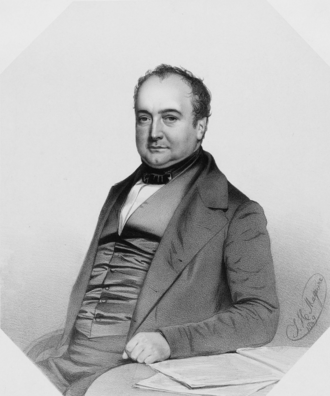
格物

图:作者不详 · Public domain · Wikimedia Commons
约翰·亨特 (外科医师)1728—1793
John Hunter
Scottish surgeon (1728-1793)
约翰·亨特 是一位苏格兰外科医生,1767年当选英国皇家学会会士,1787年获科普利奖章。
摘自维基百科「约翰·亨特 (外科医生)」,CC BY-SA 4.0
- 出生
- 1728 年 2 月 13 日,东奇尔布莱德
- 逝世
- 1793 年 10 月 16 日,伦敦
- 国籍
- 大不列颠王国
- 学科
- 生物学、医学
- 职业
- 军医、医生、大学教师、外科医生
- 母语 / 工作语言
- 英语
- 母校
- 伦敦大学圣乔治学院、伦敦医学院
- 工作单位
- 伦敦大学
师承
学生2
来自 Wikidata 的「博士导师」「师从」「博士生」「学生」记录,可能不全。
所获奖项(3)
- 1775克鲁内演讲
- 1787科普利奖章
- —英国皇家学会院士
学会与院士
百科正文
英文维基百科补充中文条目比较短,下面是英文条目「John Hunter (surgeon)」的原文
John Hunter (13 February 1728 – 16 October 1793) was a Scottish surgeon, one of the most distinguished scientists and surgeons of his day. He was an early advocate of careful observation and scientific methods in medicine. He was a teacher of, and collaborator with, Edward Jenner, pioneer of the smallpox vaccine. His wife, Anne Hunter (née Home), was a poet, some of whose poems were set to music by Joseph Haydn.
He learned anatomy by assisting his elder brother William with dissections in William's anatomy school in Central London, starting in 1748, and quickly became an expert in anatomy. He spent some years as an Army surgeon, worked with the dentist James Spence conducting tooth transplants, and in 1764 set up his own anatomy school in London. He built up a collection of living animals whose skeletons and other organs he prepared as anatomical specimens, eventually amassing nearly 14,000 preparations demonstrating the anatomy of humans and other vertebrates, including 3,000+ animals.
Hunter became a Fellow of the Royal Society in 1767. He was elected to the American Philosophical Society in 1787. The Hunterian Society of London was named in his honour, and the Hunterian Museum in London preserves his name and his collection of anatomical specimens.
Early life
Hunter was born at Long Calderwood to Agnes Paul (c.1685–1751) and John Hunter (1662/3–1741), the youngest of their ten children. Three of Hunter's siblings (one of whom had also been named John) died of illness before he was born. An elder brother was William Hunter, the anatomist. As a youth, he showed little talent, and helped his brother-in-law as a cabinet-maker.
Education and training
When nearly 21 years old, he visited William in London, where his brother had become an admired teacher of anatomy. Hunter started as his assistant in dissections (1748), and was soon running the practical classes on his own. It has recently been alleged that Hunter's brother William, and his brother's former tutor William Smellie, were responsible for the deaths of many women whose corpses were used for their studies on pregnancy. Hunter is alleged to have been connected to these deaths since at the time he was acting as his brother's assistant.
Post-Army career
Hunter left the Army in 1763, and spent at least five years working in partnership with James Spence, a well-known London dentist.
Hunter set up his own anatomy school in London in 1764 and started in private surgical practice.
Self-experimentation
Hunter was elected as a Fellow of the Royal Society in 1767. At this time he was considered the leading authority on venereal diseases, and believed that gonorrhoea and syphilis were caused by a single pathogen. Living in an age when physicians frequently experimented on themselves, he was the subject of an often-repeated legend claiming that he had inoculated himself with gonorrhea, using a needle that was unknowingly contaminated with syphilis. When he contracted both syphilis and gonorrhoea, he claimed it proved his erroneous theory that they were the same underlying venereal disease.
Family
In 1771, he married Anne Home, daughter of Robert Boyne Home and sister of Sir Everard Home. They had four children, two of whom died before the age of five. One of his infant children is buried in the churchyard in Kirkheaton, Northumberland, and the gravestone is Grade II listed. Their fourth child, Agnes, married General Sir James Campbell of Inverneill.
Legacy
In 1799, the government purchased Hunter's collection of papers and specimens, which it presented to the Company of Surgeons.
Contributions to medicine
Hunter helped to improve understanding of human teeth, bone growth and remodelling, inflammation, gunshot wounds, venereal diseases, digestion, the functioning of the lacteals, child development, the separateness of maternal and foetal blood supplies, and the role of the lymphatic system. He carried out the first recorded artificial insemination in 1790 on a linen draper's wife. The adductor canal in the thigh is also known by its eponym "Hunter's canal" after John Hunter.
Literary references
Samuel Taylor Coleridge, a key figure in Romantic thought, science, and medicine, saw in Hunter's work the seeds of Romantic medicine, namely as regards his principle of life, which he felt had come from the mind of genius.
以上节选摘自英文维基百科「John Hunter (surgeon)」,按 CC BY-SA 4.0 使用,去掉了参考文献、外部链接等尾部小节,公式改写成了纯文本。篇幅所限,较长的小节只摘了开头一部分,有的小节没有收;全文、配图和出处见原文。
同一学科、同时代的科学家




同一学科的科学家
更多 ›