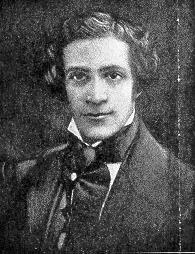
格物

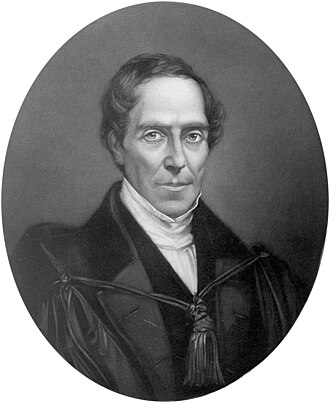
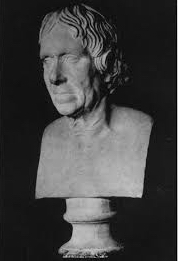
图:Jacob Fredrik Ek · Public domain · Wikimedia Commons
- 出生
- 1743 年 11 月 11 日,延雪平
- 逝世
- 1828 年 8 月 8 日,Uppsala Cathedral Assembly
- 国籍
- 瑞典
- 学科
- 生物学、医学、博物与综合
- 职业
- 植物学家、探险家、蕨类植物学家、苔藓学家
- 母语 / 工作语言
- 荷兰语、瑞典语、拉丁语
- 母校
- 乌普萨拉大学
- 工作单位
- 乌普萨拉大学
研究领域
师承
博士导师2
学生3
来自 Wikidata 的「博士导师」「师从」「博士生」「学生」记录,可能不全。
所获奖项(1)
- —英国皇家学会院士
学会与院士
百科正文
生平
出生于延雪平,在乌普萨拉大学学习自然哲学和医学,师从著名植物学家卡尔·林奈,1767年完成博士论文答辩。
1770年起,他先后在巴黎,阿姆斯特丹和莱顿从事研究工作。
1771年他受荷兰植物学家约翰内斯·伯曼的委托,前往荷兰殖民地和日本去采集植物。
1772年4月,通贝里抵达开普敦,同年他获得了医学博士学位。
1775年,他前往爪哇,在巴达维亚停留了2个月,之后前往日本,在出岛的荷兰东印度公司担任外科医生,因而成为最早抵达日本的瑞典人。
此间,他收集了八百余种植物,并在1784年发表《日本植物志》。
1778年,通贝里回到阿姆斯特丹,次年回到瑞典。
1784年,他被乌普萨拉大学任命为植物学讲师和自然哲学和医学教授,直至去世。
他在植物学和昆虫学上都有很大贡献,描述了许多物种,被称为南非和日本的植物学之父。山牵牛属的学名Thunbergia即是以他的姓所命名。
以上内容摘自维基百科「卡尔·彼得·通贝里」,按 CC BY-SA 4.0 使用,去掉了参考文献、外部链接等尾部小节,公式改写成了纯文本。全文、配图和出处见原文。
英文维基百科补充中文条目比较短,下面是英文条目「Carl Peter Thunberg」的原文
Carl Peter Thunberg, also known as Karl Peter von Thunberg, Carl Pehr Thunberg, or Carl Per Thunberg (11 November 1743 – 8 August 1828), was a Swedish naturalist and an "apostle" of Carl Linnaeus. After studying under Linnaeus at Uppsala University, he spent seven years travelling in southern Africa and Asia, collecting and describing many plants and animals new to European science, and observing local cultures. He has been called "the father of South African botany", "pioneer of Occidental Medicine in Japan", and the "Japanese Linnaeus".
Early life
Thunberg was born and grew up in Jönköping, Sweden. At the age of 18, he entered Uppsala University where he was taught by Carl Linnaeus, regarded as the "father of modern taxonomy". Thunberg graduated in 1767 after 6 years of studying. To deepen his knowledge in botany, medicine and natural history, he was encouraged by Linnaeus in 1770 to travel to Paris and Amsterdam. In Amsterdam and Leiden Thunberg met the Dutch botanist and physician Johannes Burman and his son Nicolaas Burman, who himself had been a disciple of Linnaeus.
South Africa
During his three-year stay, Thunberg perfected his Dutch and studied the culture of the Khoikhoi, (known to the Dutch as "Hottentotten"), the native people of western South Africa. The Khoikhoi were the first non-European culture he encountered. Their customs and traditions elicited both his disgust and admiration. For example, he considered their custom to grease their skin with fat and dust as an obnoxious habit about which he wrote in his travelogue: "For uncleanliness, the Hottentots have the greatest love.
Japan
In August 1775, he arrived at the Dutch factory of the V.O.C. at Dejima, a small artificial island (120 m by 75 m) in the Bay of Nagasaki connected to the city by a single small bridge. However, like the Dutch merchants, Thunberg was at first rarely allowed to leave the island. These restrictions had been imposed by the successor to the Japanese shogun Tokugawa Ieyasu in 1639 after the Portuguese, who had been the first Europeans to arrive in Japan in 1543, persisted in missionary activity. The only locals who were allowed regular contact with the Dutch were the interpreters of Nagasaki and the relevant authorities of the city.
Return to Europe
In 1778, Thunberg left Ceylon for Amsterdam, with a two week stay at the Cape. He finally arrived at Amsterdam in October 1778. He made a short trip to London where he met Joseph Banks. He saw there the Japanese collection from the 1680s of the German naturalist Engelbert Kaempfer (1651–1716), who had preceded him at Dejima. He also met Forster, who showed him his collections from Cook's second voyage.
On arrival in Sweden in March 1779, he learned of the death of Linnaeus one year earlier. Thunberg was first appointed botanical demonstrator in 1777, and in 1781 professor of medicine and natural philosophy at the University of Uppsala. His publications and specimens resulted in the description of many new taxa.
Reasons for his travels
It was common for Enlightenment scholars to travel throughout Europe and to more distant regions, and to write subsequent travelogues. However, Thunberg was notable in his travel destination and the popularity of his account of his travels, which was translated into German, English and French. Three main reasons for this have been proposed:
Besides being encouraged by Linnaeus and Gronovius to travel to Japan, the fact that, for half a century, no new information on the country had reached Europe attracted Thunberg to travel there. In 1690, Engelbert Kaempfer, a German traveller, had sailed to Japan and spent two years on the island of Deshima.
Namesake plants
A genus of tropical plants, Thunbergia, family Acanthaceae, which are cultivated as evergreen climbers, is named after him.
Thunberg is cited in naming some 254 species of both plants and animals (though significantly more plants than animals). Notable examples of plants referencing Thunberg in their specific epithets include:
以上节选摘自英文维基百科「Carl Peter Thunberg」,按 CC BY-SA 4.0 使用,去掉了参考文献、外部链接等尾部小节,公式改写成了纯文本。篇幅所限,较长的小节只摘了开头一部分,有的小节没有收;全文、配图和出处见原文。
同一学科、同时代的科学家



同一学科的科学家
更多 ›