格物
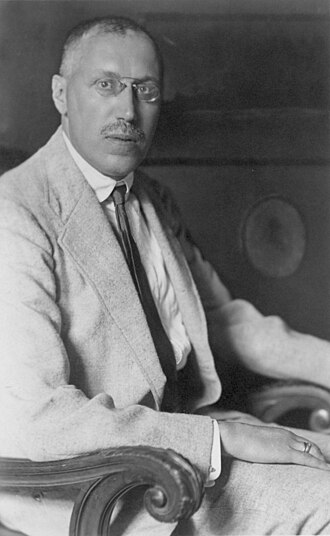
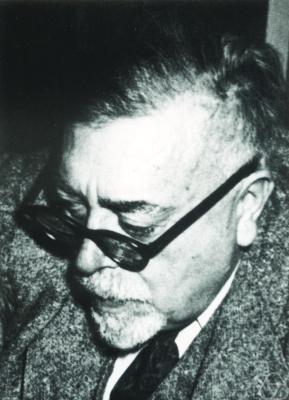
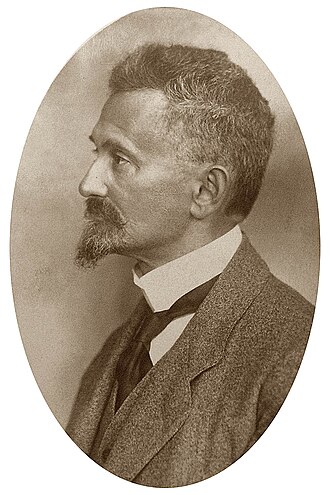
图:Theo Bauer · CC BY-SA 4.0 · Wikimedia Commons
- 出生
- 1879 年 9 月 27 日,维也纳
- 逝世
- 1934 年 7 月 24 日,维也纳
- 国籍
- 奥地利
- 学科
- 数学、博物与综合
- 职业
- 数学家、哲学家、拓扑学家、大学教师
- 母语 / 工作语言
- 德语
- 母校
- 维也纳大学、哥廷根大学、慕尼黑大学、维也纳科技大学、斯特拉斯堡大学
- 工作单位
- 维也纳大学(1921—1934)、波恩大学(1916—1920)、因斯布鲁克大学(1905—1906)、切尔诺夫策国立大学(1909—1914)
研究领域
主要贡献
以他 / 她命名
师承
博士导师1
博士生13
来自 Wikidata 的「博士导师」「师从」「博士生」「学生」记录,可能不全。
所获奖项(1)
- 1921利本奖
学会与院士
百科正文
哈恩对数学的成就包括著名的哈恩-巴拿赫定理,及(独立地由巴拿赫和斯坦豪斯得出)一致有界性原理。其他定理包括哈恩分离定理、维他利—哈恩—萨克斯定理、哈恩—马祖凯维奇定理和哈恩嵌入定理。
以上内容摘自维基百科「漢斯·哈恩」,按 CC BY-SA 4.0 使用,去掉了参考文献、外部链接等尾部小节,公式改写成了纯文本。全文、配图和出处见原文。
英文维基百科补充中文条目比较短,下面是英文条目「Hans Hahn (mathematician)」的原文
Hans Hahn (; German: [haːn]; 27 September 1879 – 24 July 1934) was an Austrian mathematician and philosopher who made contributions to functional analysis, topology, set theory, the calculus of variations, real analysis, and order theory. In philosophy he was among the main logical positivists of the Vienna Circle.
Biography
Hahn was born in Vienna, the son of Ludwig Benedikt Hahn, head of the Telegraphen-Korrespondenz Bureau, and Emma Hahn (née Blümel). His father converted from Judaism to Catholicism in 1877; his mother was Catholic. He was the brother of the painter Louise Fraenkel-Hahn and the philosopher and mathematician Olga Hahn-Neurath.
In 1898, Hahn became a student at the Universität Wien starting with a study of law. In 1899 he switched over to mathematics and spent some time at the universities of Strasbourg, Munich and Göttingen. In 1902 he took his Ph.D. in Vienna, on the subject "Zur Theorie der zweiten Variation einfacher Integrale". He was a student of Gustav von Escherich.
He was appointed to the teaching staff (habilitation) in Vienna in 1905. After 1905/1906 as a stand-in for Otto Stolz at the University of Innsbruck and some further years as a Privatdozent in Vienna, he was nominated in 1909 Professor extraordinarius in Czernowitz, at that time a town within the empire of Austria. After joining the Austrian army in 1915, he was badly wounded in 1916 and became again Professor extraordinarius, now in Bonn. In 1917 he was nominated a regular Professor there and in 1921 he returned to Vienna with this title, where he stayed until his rather early death in 1934 at the age of 54, following cancer surgery.
He had married Eleonore ("Lilly") Minor in 1909, and they had a daughter, Nora (born 1910), who became an actress.
He was also interested in philosophy, and was part of a discussion group concerning Mach's positivism with Otto Neurath (who had married Hahn’s sister, Olga, in 1912) and Phillip Frank prior to the First World War. In 1922, he helped arrange Moritz Schlick's entry into the group, which led to the founding of the Vienna Circle, the group that was at the center of logical positivist thought in the 1920s. His most famous student was Kurt Gödel, whose Ph.D. thesis was completed in 1929. After the Anschluss, the fact that Hans Hahn had been of partial Jewish origin caused Gödel's difficulties with getting a position at the University of Vienna. Within the Vienna Circle, Hahn was also known (and controversial) for using his mathematical and philosophical work to study psychic phenomena; according to Karl Menger, he sometimes openly advocated further research into extrasensory perception while lecturing.
Politically Hahn was a socialist and was chairman of the Association of Socialist University Teachers. He contributed to the Social Democrat magazine Der Kampf.
Hahn's contributions to mathematics include the Hahn–Banach theorem and (independently of Banach and Steinhaus) the uniform boundedness principle. Other theorems include:
- the Hahn decomposition theorem;
- the Hahn embedding theorem;
- the Hahn–Kolmogorov theorem;
- the Hahn–Mazurkiewicz theorem;
the Vitali–Hahn–Saks theorem.
Hahn authored the book (Hahn 1921): according to Arthur Rosenthal, "... (it) formed a great advance in the Theory of Real functions and had a great influence on the further development of this theory." He was also a co-author of the book Set Functions, published in 1948 by Arthur Rosenthal, fourteen years after his death in Vienna in 1934.
In 1921 he received the Richard Lieben Prize. In 1926 he was the president of the German Mathematical Society. In 1928 he was an Invited Speaker at the International Congress of Mathematicians in Bologna.
Hahn died in 1934 following surgery for a newly diagnosed cancer. He was only 54 and his death came as a shock to friends and colleagues.
以上内容摘自英文维基百科「Hans Hahn (mathematician)」,按 CC BY-SA 4.0 使用,去掉了参考文献、外部链接等尾部小节,公式改写成了纯文本。全文、配图和出处见原文。
同一学科、同时代的科学家