格物
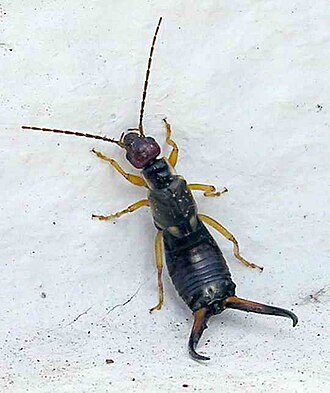
图:Luis Miguel Bugallo Sánchez (Lmbuga) Copyright: GFDL (GNU Fr… · CC BY-SA 3.0 · Wikimedia Commons
- 学名
- Dermaptera
- 分类等级
- 目
- 上级类群
- 多新翅类
- 大类
- 昆虫
- 命名
- 查尔斯·德·盖尔,1773 年
- 主要食物
- 蚜总科
- 用途
- 生物虫害防治
- 数据库
- NCBI 分类 · GBIF
下级类群(1)
- 新螋亚目 Neodermaptera 亚目
百科正文
特征
蠼螋目前已记录的有12科,约2000种。该目相较其他昆虫的目来说成员较少,最显著的特征是特化成尾钳的尾毛。
蠼螋其拥有飞行能力,但一般飞不远,以爬行为主,并且是衣鱼有名的天敌。其为不完全变态类的昆虫,体长约小于一厘米到五厘米不等,腹部伸缩自如,因此有人深信它们会爬入人耳,但事实上不常发生。其末端有由尾毛特化成的尾钳,雌虫尾钳平直,雄虫弯曲,生长在土壤中,落叶堆或岩石下,为杂食性昆虫。
此类昆虫具有育幼行为,雌性的蠼螋在产卵后会像鸟类一样伏在虫卵上等待孵化,并不时将卵表面清理干净,避免卵受真菌危害,甚至照顾幼虫至离巢。
在食物不足时,蠼螋会让后代吃掉自己。
分类
蠼螋亚目 Forficulina
- 大尾蠼螋科 Pygidicranidae
- 丝尾螋科 Diplatyidae
- 肥蠼螋科 Anisolabididae
- 球蠼螋科 Labiduridae
- 扁螋科 Apachyidae
- 绵螋科 Spongiphoridae
- 垫跗蠼螋科 Chelisochidae
- 蠼螋科 Forficulidae
鼠螋亚目 Hemimerina
鼠螋科 Hemimeridae
蝠螋亚目 Arixenina
蝠螋科 Arixeniidae
分布
蠼螋分布比较丰富,可以在大半个美洲和欧亚大陆中被发现。蠼螋在1907年从欧洲引入北美,但在南部和西南部各地更常见。在北部发现的蠼螋是仅在遥远加拿大上的本土物种,它多隐藏在湿地中的新兴植物的叶腋中。在中国南方各地均有分布,沿海地区能在住房中发现该物种。
以上内容摘自维基百科「蠼螋」,按 CC BY-SA 4.0 使用,去掉了参考文献、外部链接等尾部小节,公式改写成了纯文本。全文、配图和出处见原文。
英文维基百科补充中文条目比较短,下面是英文条目「Earwig」的原文
Earwigs make up the insect order Dermaptera. With about 2,000 species in 12 families, they are one of the smaller insect orders. Earwigs have characteristic cerci, a pair of forceps-like pincers on their abdomen, and membranous wings folded underneath short, rarely used forewings, hence the scientific order name, "skin wings". Some groups are tiny parasites on mammals and lack the typical pincers. Earwigs are found on all continents except Antarctica.
Earwigs are mostly nocturnal and often hide in small, moist crevices during the day, and are active at night, feeding on a wide variety of insects and plants. Damage to foliage, flowers, and various crops is commonly blamed on earwigs, especially the common earwig Forficula auricularia.
Earwigs have five molts in the year before they become adults. Many earwig species display maternal care, which is uncommon among insects. Female earwigs may care for their eggs; the ones that do will continue to watch over nymphs until their second molt. As the nymphs molt, sexual dimorphism such as differences in pincer shapes begins to show.
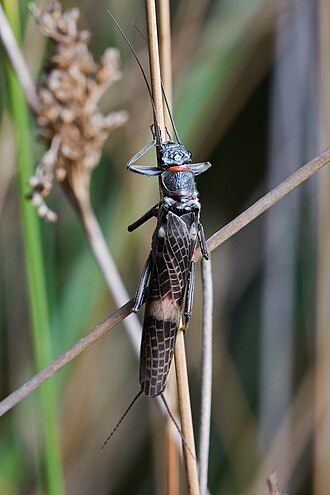
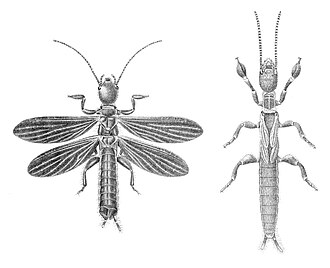
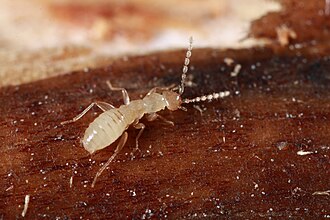
Extant Dermaptera belong to the suborder Neodermaptera, which first appeared during the Cretaceous. Some earwig specimen fossils are placed with extinct suborders Archidermaptera or Eodermaptera, the former dating to the Late Triassic and the latter to the Middle Jurassic. Dermaptera belongs to the major grouping Polyneoptera, and are amongst the earliest diverging members of the group, alongside angel insects (Zoraptera), and stoneflies (Plecoptera), but the exact relationship among the three groups is uncertain.
以上节选摘自英文维基百科「Earwig」,按 CC BY-SA 4.0 使用,去掉了参考文献、外部链接等尾部小节,公式改写成了纯文本。篇幅所限,较长的小节只摘了开头一部分,有的小节没有收;全文、配图和出处见原文。