 格物
生命之树 › 真核生物 › 动物总界 › 动物界 › 真后生动物亚界 › 两侧对称动物 › 后口动物总门 › 脊索动物门 › 脊椎动物亚门 › 有颌下门 › 肉鳍鱼总纲 › 四足形类 › 希望螈目 › 四足总纲 › 爬行动物 › 坚尾龙类 › 鸟纲 › 今鸟亚纲 › 今颚下纲 › 新鸟总目 › 雀形目 › 霸鹟亚目
八色鸫科科
Pittidae
八色鸫科 是鸟纲雀形目中的一个科,包括大约30多种鸟类,大多分布在亚洲和澳洲,少数分布在非洲。不同物种的八色鸫的形态和栖息地都十分类似,通常会被归入单一的八色鸫属中。但在2009年,该科物种被重新划为了三属:八色鸫属(Pitta)、红胸八色鸫属(Erythropitta)和蓝八色鸫属(Hydrornis)。
摘自维基百科「八色鸫科」,CC BY-SA 4.0
- 学名
- Pittidae
- 分类等级
- 科
- 上级类群
- 霸鹟亚目
- 大类
- 鸟类
- 数据库
- NCBI 分类 · GBIF
分类阶元
- 域真核生物
- 未标等级无定形生物 Amorphea
- 演化支后鞭毛生物 Opisthokonta
- 总界动物总界 Holozoa
- 未标等级蜷丝生物 Filozoa
- 未标等级领鞭毛动物 Choanozoa
- 界动物界 Animalia
- 亚界真后生动物亚界 Eumetazoa
- 未标等级副同源异形基因动物 Parahoxozoa
- 亚界两侧对称动物 Bilateria
- 总门后口动物总门 Deuterostomia
- 门脊索动物门 Chordata
- 亚门脊椎动物亚门 Vertebrata
- 下门有颌下门 Gnathostomata
- 未标等级正真口类 Euteleostomi
- 总纲肉鳍鱼总纲 Sarcopterygii
- 未标等级扇鳍鱼类 Rhipidistia
- 亚纲四足形类 Tetrapodomorpha
- 未标等级始四足目 Eotetrapodiformes
- 下纲希望螈目 Elpistostegalia
- 未标等级坚头类 Stegocephalia
- 总纲四足总纲 Tetrapoda
- 未标等级爬行形类 Reptiliomorpha
- 未标等级羊膜动物 Amniota
- 未标等级蜥形纲 Sauropsida
- 纲爬行动物 Reptilia
- 未标等级真爬行动物类 Eureptilia
- 未标等级卢默龙类 Romeriida
- 未标等级双孔亚纲 Diapsida
- 未标等级新双弓类 Neodiapsida
- 未标等级蜥蜴亚目 Sauria
- 未标等级主龟龙类 Archelosauria
- 未标等级主龙形下纲 Archosauromorpha
- 未标等级主龙型类 Archosauriformes
- 未标等级镶嵌踝类主龙 Crurotarsi
- 未标等级主龙类 Archosauria
- 未标等级鸟跖类 Avemetatarsalia
- 未标等级鸟颈类主龙 Ornithodira
- 未标等级恐龙形类 Dinosauromorpha
- 未标等级恐龙型类 Dinosauriformes
- 未标等级龙群类 Dracohors
- 演化支恐龙 Dinosauria
- 未标等级蜥臀目 Saurischia
- 演化支兽脚亚目 Theropoda
- 未标等级新兽脚类 Neotheropoda
- 未标等级鸟吻类 Averostra
- 下目坚尾龙类 Tetanurae
- 演化支俄里翁龙类 Orionides
- 未标等级鸟兽脚类 Avetheropoda
- 演化支虚骨龙类 Coelurosauria
- 未标等级暴盗龙类 Tyrannoraptora
- 未标等级手盗龙形态类 Maniraptoromorpha
- 纲鸟纲 Aves
- 亚纲今鸟亚纲 Neornithes
- 下纲今颚下纲 Neognathae
- 总目新鸟总目 Neoaves
- 未标等级雀类 Passerea
- 未标等级陆鸟类 Telluraves
- 未标等级南鸟类 Australavis
- 未标等级真隼形类 Eufalconimorphae
- 未标等级鹦雀总目 Psittacopasserae
- 目雀形目 Passeriformes
- 演化支真雀类 Eupasseres
- 亚目霸鹟亚目 Tyranni
- 科八色鸫科 Pittidae
下级类群(3)
百科正文
英文维基百科补充中文条目比较短,下面是英文条目「Pitta」的原文
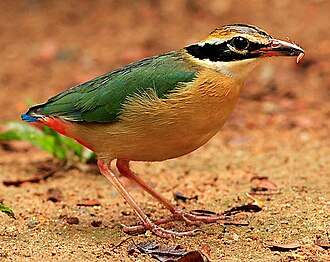
Pittas are a family, Pittidae, of passerine birds found in Asia, Australasia and Africa. There are 46 species of pittas, all similar in general appearance and habits. The pittas are suboscines from the Old World, and their closest relatives among other birds are in the genera Smithornis and Calyptomena. Initially placed in a single genus, as of 2009 they have been split into three genera: Pitta, Erythropitta and Hydrornis. Pittas are medium-sized by passerine standards, at 15 to 25 cm (6–10 in) in length, and stocky, with strong, longish legs and long feet. They have very short tails and stout, slightly decurved bills. Many have brightly coloured plumage.
Most pitta species are tropical; a few species can be found in temperate climates. They are mostly found in forests, but some live in scrub and mangroves. They are highly terrestrial and mostly solitary, and usually forage on wet forest floors in areas with good ground cover. They eat earthworms, snails, insects and similar invertebrate prey, as well as small vertebrates. Pittas are monogamous and females lay up to six eggs in a large domed nest in a tree or shrub, or sometimes on the ground. Both parents care for the young. Four species of pittas are fully migratory, and several more are partially so, though their migrations are poorly understood.
Four species of pitta are listed as endangered by the International Union for Conservation of Nature; a further nine species are listed as vulnerable and several more are near-threatened. The main threat to pittas is habitat loss in the form of rapid deforestation, but they are also targeted by the cage-bird trade. They are popular with birdwatchers because of their bright plumage and the difficulty in seeing them.
Taxonomy and systematics
The first pitta to be described scientifically was the Indian pitta, which was described and illustrated by George Edwards in 1764. Carl Linnaeus included the species in his revised 12th edition (1766–1768) of the Systema Naturae based on Edwards' descriptions and illustrations as well as other accounts, placing it with the Corvidae as Corvus brachyurus. Ten years later Statius Müller moved it and three other pittas to the thrush family Turdidae and the genus Turdus, due to similarities of morphology and behaviour.
Description
The pittas are small to medium-sized passerines, ranging in size from the blue-banded pitta at 15 cm (5.9 in) to the giant pitta, which can be up to 29 cm (11 in) in length. In weight they range from 42 to 210 g (1.5–7.4 oz). Pittas are stout-bodied birds with long, strong tarsi (lower leg bones) and long feet. The colour of the legs and feet can vary dramatically even within a species. This may be a characteristic used by females in judging the quality of a prospective mate.
Distribution and habitat
The pittas are generally birds of tropical forests, semi-forests and scrub. Most species need forests with much cover, a rich understory, and leaf litter for feeding, and they are often found near waterways as well. Some species inhabit swamps and bamboo forests, and the mangrove pitta, as its name suggests, is a mangrove specialist. Several species are lowland forest specialists. For example, the rainbow pitta is not found above 400 m (1,300 ft).
Behaviour and ecology
Sociality and calls
Pittas are diurnal, requiring light to find their often cryptic prey. They are nevertheless often found in darker areas and are highly secretive, though they will respond to imitations of their calls. They are generally found as single birds, even young birds not associating with their parents unless they are being fed. The only exception to their solitary lifestyle is small groups that have been observed forming during migration.
Relationship with humans
The brilliant plumage of many pittas has resulted in considerable interest in pittas from people living within their range, scientists, aviculturists and birdwatchers, and has led to the colloquial name jewel-thrushes. Such is their attractiveness that, in Borneo, even the body of a dead pitta can be a favoured toy for local children. They have proven difficult to maintain and breed in captivity, requiring large amounts of space, humidity and sufficient vegetation of the right kind.
Species of pitta
There are 46 species of pitta in three genera according to the International Ornithological Congress' (IOC) Birds of the World: Recommended English Names.
以上节选摘自英文维基百科「Pitta」,按 CC BY-SA 4.0 使用,去掉了参考文献、外部链接等尾部小节,公式改写成了纯文本。篇幅所限,较长的小节只摘了开头一部分,有的小节没有收;全文、配图和出处见原文。