 格物
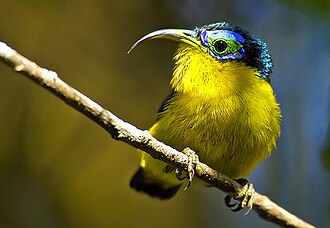
图:Dubi Shapiro · CC BY-SA 3.0 · Wikimedia Commons
- 学名
- Philepittidae
- 分类等级
- 科
- 上级类群
- 霸鹟亚目
- 大类
- 鸟类
- 命名
- 理查德·鲍德勒·夏普,1870 年
- 数据库
- NCBI 分类 · GBIF
分类阶元
- 域真核生物
- 未标等级无定形生物 Amorphea
- 演化支后鞭毛生物 Opisthokonta
- 总界动物总界 Holozoa
- 未标等级蜷丝生物 Filozoa
- 未标等级领鞭毛动物 Choanozoa
- 界动物界 Animalia
- 亚界真后生动物亚界 Eumetazoa
- 未标等级副同源异形基因动物 Parahoxozoa
- 亚界两侧对称动物 Bilateria
- 总门后口动物总门 Deuterostomia
- 门脊索动物门 Chordata
- 亚门脊椎动物亚门 Vertebrata
- 下门有颌下门 Gnathostomata
- 未标等级正真口类 Euteleostomi
- 总纲肉鳍鱼总纲 Sarcopterygii
- 未标等级扇鳍鱼类 Rhipidistia
- 亚纲四足形类 Tetrapodomorpha
- 未标等级始四足目 Eotetrapodiformes
- 下纲希望螈目 Elpistostegalia
- 未标等级坚头类 Stegocephalia
- 总纲四足总纲 Tetrapoda
- 未标等级爬行形类 Reptiliomorpha
- 未标等级羊膜动物 Amniota
- 未标等级蜥形纲 Sauropsida
- 纲爬行动物 Reptilia
- 未标等级真爬行动物类 Eureptilia
- 未标等级卢默龙类 Romeriida
- 未标等级双孔亚纲 Diapsida
- 未标等级新双弓类 Neodiapsida
- 未标等级蜥蜴亚目 Sauria
- 未标等级主龟龙类 Archelosauria
- 未标等级主龙形下纲 Archosauromorpha
- 未标等级主龙型类 Archosauriformes
- 未标等级镶嵌踝类主龙 Crurotarsi
- 未标等级主龙类 Archosauria
- 未标等级鸟跖类 Avemetatarsalia
- 未标等级鸟颈类主龙 Ornithodira
- 未标等级恐龙形类 Dinosauromorpha
- 未标等级恐龙型类 Dinosauriformes
- 未标等级龙群类 Dracohors
- 演化支恐龙 Dinosauria
- 未标等级蜥臀目 Saurischia
- 演化支兽脚亚目 Theropoda
- 未标等级新兽脚类 Neotheropoda
- 未标等级鸟吻类 Averostra
- 下目坚尾龙类 Tetanurae
- 演化支俄里翁龙类 Orionides
- 未标等级鸟兽脚类 Avetheropoda
- 演化支虚骨龙类 Coelurosauria
- 未标等级暴盗龙类 Tyrannoraptora
- 未标等级手盗龙形态类 Maniraptoromorpha
- 纲鸟纲 Aves
- 亚纲今鸟亚纲 Neornithes
- 下纲今颚下纲 Neognathae
- 总目新鸟总目 Neoaves
- 未标等级雀类 Passerea
- 未标等级陆鸟类 Telluraves
- 未标等级南鸟类 Australavis
- 未标等级真隼形类 Eufalconimorphae
- 未标等级鹦雀总目 Psittacopasserae
- 目雀形目 Passeriformes
- 演化支真雀类 Eupasseres
- 亚目霸鹟亚目 Tyranni
- 科裸眉鸫科 Philepittidae
下级类群(2)
百科正文
分类
- 裸眉鸫属 Philepitta
- 紫黑裸眉鸫 Philepitta castanea
- 施氏裸眉鸫 Philepitta schlegeli
- 弯嘴裸眉鸫属 Neodrepanis
- 弯嘴裸眉鸫 Neodrepanis coruscans
- 小弯嘴裸眉鸫 Neodrepanis hypoxanthus
以上内容摘自维基百科「裸眉鸫科」,按 CC BY-SA 4.0 使用,去掉了参考文献、外部链接等尾部小节,公式改写成了纯文本。全文、配图和出处见原文。
英文维基百科补充中文条目比较短,下面是英文条目「Asity」的原文
The asities are a family of birds, Philepittidae, that are endemic to Madagascar. The asities consist of four species in two genera. The Neodrepanis species are known as sunbird-asities and were formerly known as false sunbirds.
Philepitta is now the type-genus of a new bird family, the Philepittidae, into which the asities of Madagascar have been placed.
Description
Asities are small forest birds with sexually dichromic plumage and brightly coloured wattles around the eyes of the males. These wattles, which are most conspicuous during the breeding season, get their colour from arrays of collagen fibres. This method of pigmentation is unique in the animal kingdom. Several other features separate them from the broadbills, also in the infraorder Eurylaimides: asities possess twelve tail feathers on their extremely short (virtually non-existent in the Philepitta species) tails, their syrinx is encased with a large bronchial ring, and they have forked tongues specially adapted to nectivory. Asities also have a long outer primary feather which buzzes in flight, possibly used in signalling during courtship. The two genera of asities are quite distinct.
Behavior and ecology
Diet and feeding
The major component of the diet of asities is fruit. A wide range of different fruit is taken by the family, and they are among the most important avian dispersers of seeds, as there are very few other frugivorous birds in the forests of Madagascar. They will also take insects. The Neodrepanis sunbird-asities will take nectar, but do so with a long tongue rather than inserting their curved bills far into flowers.
Breeding
Rainforest asities breed during the Malagasy rainy season, beginning just before the rains in September to November. The velvet asity begins breeding slightly sooner in the north of its range. That species is the only one for which detailed information about breeding is available. It has a polygynous breeding system, with males holding small territories or leks where they display to passing females. Nest building, incubation, and raising the young is done solely by the females. There are reports of male yellow-bellied sunbird-asities feeding young in the nest and recently fledged chicks, so there is clearly some variation in breeding strategies in the family. The nests of the family are elaborate; pear-shaped woven structures hanging from branches, similar to those of broadbills, although uniquely amongst birds which weave nests the entrance to the nest is created by pushing through the wall after constructed (instead of the usual scenario where the entrance is weaved into the fabric of the nest).
Status and conservation
One species, the yellow-bellied sunbird-asity, is listed as vulnerable by BirdLife International and the IUCN. It was once considered to be an endangered species, and even possibly extinct; however this was due to a lack of ornithological surveys in its high-altitude range. Subsequent research has found it to be more abundant than previously suspected, although it is still considered threatened due to habitat loss and fragmentation. Schlegel's asity is considered near threatened; it has a highly fragmented distribution but numerous strongholds in inaccessible ravines.
Taxonomy and systematics
They were thought to have been related to the pittas, hence the scientific name of the family, but a 1993 study suggested that they are actually just a subfamily of Eurylaimidae. The morphology of the syrinx is very similar to the Grauer's broadbill of Africa. Here they are considered traditionally as a separate family. Some authors have placed the sapayoa of South America in the family, although it is now considered by many to be in its own family, the Sapayoidae.
以上内容摘自英文维基百科「Asity」,按 CC BY-SA 4.0 使用,去掉了参考文献、外部链接等尾部小节,公式改写成了纯文本。全文、配图和出处见原文。