格物
- 类型
- 素性测试
- 发现 / 发明时间
- 1202 年
- 发现者 / 提出者
- 斐波那契
- 学科
- 数学
相关科学家
百科正文
给定一个待分解的正整数n,试除法是用小于等于 √n 的每个素数去试除。如果找到一个数能够整除除尽,这个数就是可分解整数的因数。若n为合数,则试除法一定能够找到n的素因数,因为n最小的素因数不大于其平方根,所以如果这个算法“失败”,也就证明了n是个素数。
某种意义上说,试除法是个效率非常低的算法,如果从2开始,一直算到 √n 需要 π (√n) 次试除,这里 π (x) 是小于x的素数的个数。这是不包括素性测试的。如果稍做变通——还是不包括素性测试——用小于 √n 的奇数去简单的试除,则需要 (公式略) 次。这意味着,如果n有大小接近的素因数(例如公钥密码学中用到的),试除法是不太可能实行的。但是,当n有至少一个小因数,试除法可以很快找到这个小因数。值得注意的是,对于随机的n,2是其因数的概率是50%,3是33%,等等,88%的正整数有小于100的因数,91%的正整数有小于1000的因数。
以上内容摘自维基百科「试除法」,按 CC BY-SA 4.0 使用,去掉了参考文献、外部链接等尾部小节,公式改写成了纯文本。全文、配图和出处见原文。
英文维基百科补充中文条目比较短,下面是英文条目「Trial division」的原文
Trial division is the most laborious but easiest to understand of the integer factorization algorithms. The essential idea behind trial division tests to see if an integer n, the integer to be factored, can be divided by each number in turn that is less than or equal to the square root of n.
For example, to find the prime factors of n = 70, one can try to divide 70 by successive primes: first, 70 / 2 = 35; next, neither 2 nor 3 evenly divides 35; finally, 35 / 5 = 7, and 7 is itself prime. So 70 = 2 × 5 × 7.
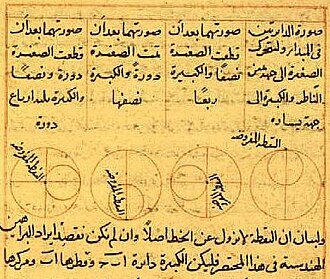
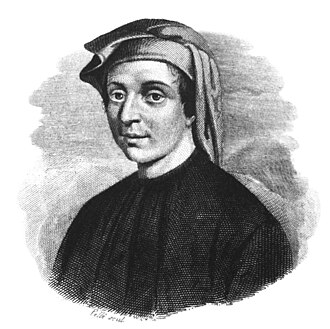
Trial division was first described by Fibonacci in his book Liber Abaci (1202).
Method
Given an integer n (n refers to "the integer to be factored"), the trial division consists of systematically testing whether n is divisible by any smaller number. Clearly, it is only worthwhile to test candidate factors less than n, and in order from two upwards because an arbitrary n is more likely to be divisible by two than by three, and so on. With this ordering, there is no point in testing for divisibility by four if the number has already been determined not divisible by two, and so on for three and any multiple of three, etc. Therefore, the effort can be reduced by selecting only prime numbers as candidate factors, provided they are repeatedly tested until they fail. Furthermore, the trial factors need go no further than √n because if n is composite, it must have at least one factor ≤ √(n), which would have been detected earlier; having all factors > √(n) is impossible because the product of any two would be > n.
When a trial division is successful, the process is applied recursively to the resulting quotient.
A definite bound on the prime factors is possible. Suppose Pi is the i'th prime, so that P1 = 2, P2 = 3, P3 = 5, etc. Then the last prime number worth testing as a possible factor of n is Pi where P2i + 1 > n; equality here would mean that Pi + 1 is a factor. Thus, testing with 2, 3, and 5 suffices up to n = 48 not just 25 because the square of the next prime is 49, and below n = 25 just 2 and 3 are sufficient. Should the square root of n be an integer, then it is a factor and n is a perfect square.
- The trial division algorithm in pseudocode:
- algorithm trial-division is √n
- F ← empty list of factors
- for each prime p in P do
- while n mod p is 0
- Add factor p to list F
- n ← n/p
- if F is empty (Original n is prime?)
- Add factor n to list F
Speed
In the worst case, trial division is a laborious algorithm. For a base-2 n digit number a, if it starts from two and works up only to the square root of a, the algorithm requires (公式略)
trial divisions, where π (x) denotes the prime-counting function, the number of primes less than x. This does not take into account the overhead of primality testing to obtain the prime numbers as candidate factors. A useful table need not be large: P(3512) = 32749, the last prime that fits into a sixteen-bit signed integer and P(6542) = 65521 for unsigned sixteen-bit integers. That would suffice to test primality for numbers up to 655372 = 4,295,098,369. Preparing such a table (usually via the Sieve of Eratosthenes) would only be worthwhile if many numbers were to be tested. If instead a variant is used without primality testing, but simply dividing by every odd number less than the square root the base-2 n digit number a, prime or not, it can take up to about: 2^(n/2)
In both cases, the required time grows exponentially with the digits of the number.
Even so, this is a quite satisfactory method, considering that even the best-known algorithms have exponential time growth. For a chosen uniformly at random from integers of a given length, there is a 50% chance that 2 is a factor of a and a 33% chance that 3 is a factor of a, and so on. It can be shown that 88% of all positive integers have a factor under 100 and that 92% have a factor under 1000. Thus, when confronted by an arbitrary large a, it is worthwhile to check for divisibility by the small primes, since for a=1000, in base-2 n=10.
However, many-digit numbers that do not have factors in the small primes can require days or months to factor with trial division. In such cases other methods are used such as the quadratic sieve and the general number field sieve (GNFS). Because these methods also have superpolynomial time growth a practical limit of n digits is reached very quickly.
以上节选摘自英文维基百科「Trial division」,按 CC BY-SA 4.0 使用,去掉了参考文献、外部链接等尾部小节,公式改写成了纯文本。篇幅所限,较长的小节只摘了开头一部分,有的小节没有收;全文、配图和出处见原文。