格物
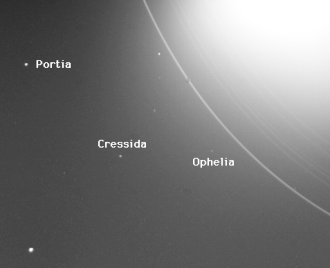
图:Public domain · Wikimedia Commons
- 类型
- 天王星的卫星、牧羊卫星
- 发现 / 发明时间
- 1986 年
- 发现者 / 提出者
- 理查德·特里尔、旅行者2号
- 命名来源
- 欧菲莉亚
- 学科
- 天文学
相关科学家
百科正文
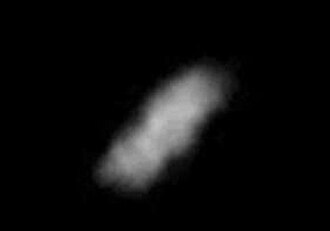
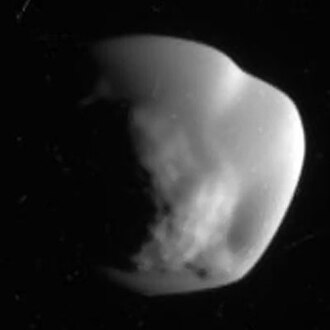
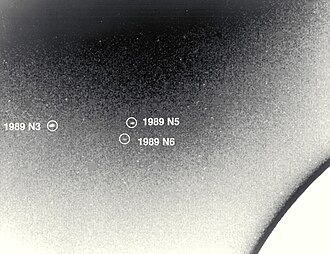
天卫七是位于天王星第11行星环边缘以外的卫星,它的轨道在天王星的同步轨道半径之内,因此受潮汐力的影响会逐渐接近天王星。
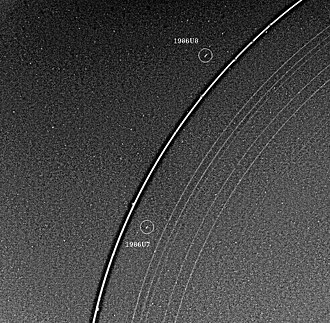
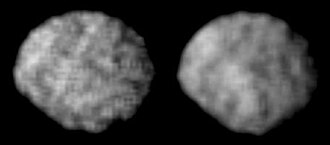
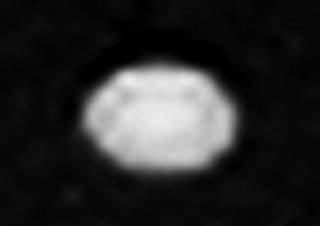
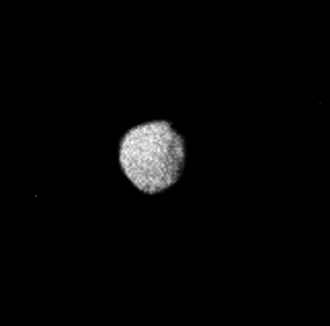
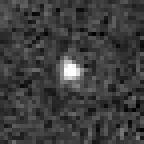
1986年1月20日,天卫七被美国的旅行者2号发现,当时临时命名为S/1986 U 8 2003年,通过哈勃望远镜才被正式看到。
以上内容摘自维基百科「天卫七」,按 CC BY-SA 4.0 使用,去掉了参考文献、外部链接等尾部小节,公式改写成了纯文本。全文、配图和出处见原文。
英文维基百科补充中文条目比较短,下面是英文条目「Ophelia (moon)」的原文
Ophelia is a moon of Uranus. It was discovered from the images taken by Voyager 2 on January 20, 1986, and was given the temporary designation S/1986 U 8. It was not seen again until the Hubble Space Telescope recovered it in 2003. Ophelia was named after the daughter of Polonius, Ophelia, in William Shakespeare's play Hamlet. It is also designated Uranus VII.
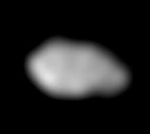
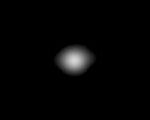
Other than its orbit, size of 54 km × 38 km (34 mi × 24 mi), and geometric albedo of 0.062, little is known about it. In images taken by Voyager 2, Ophelia appears as an elongated object, with its major axis pointing towards Uranus. The ratio of axes of Ophelia's prolate spheroid is 0.7 ± 0.3.
Ophelia acts as the outer shepherd satellite for Uranus's ε ring. The orbit of Ophelia is within the synchronous orbit radius of Uranus, and is therefore slowly decaying due to tidal forces.
以上内容摘自英文维基百科「Ophelia (moon)」,按 CC BY-SA 4.0 使用,去掉了参考文献、外部链接等尾部小节,公式改写成了纯文本。全文、配图和出处见原文。