格物
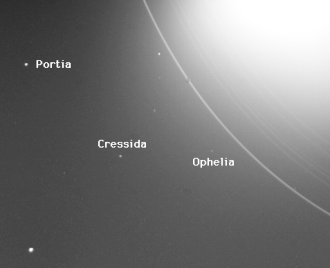
图:Public domain · Wikimedia Commons
- 类型
- 天王星的卫星、规则卫星
- 发现 / 发明时间
- 1986 年
- 发现者 / 提出者
- 斯蒂芬·辛诺特、旅行者2号
- 命名来源
- 波西亚
- 属于
- Portia Group
- 学科
- 天文学
相关科学家
百科正文
概述
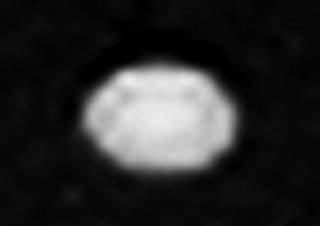
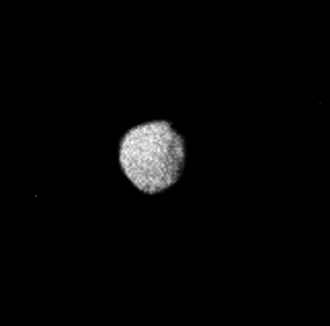
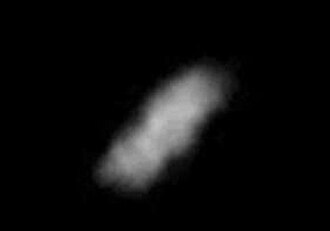
天卫十二是1986年被旅行者2号发现的。国际天文联合会授予它的名称来自于威廉·莎士比亚的话剧威尼斯商人中的女主角的名字。对于天卫十二人们至今为止所知甚少,它的轨道离天王星很近,它的公转周期比天王星的自转周期还要短,因此它受到摩擦力的影响轨道不断缩小,有朝一日它将碎裂为天王星的一个环或坠落到天王星上。
基本参数
- 轨道半径:66,097公里
- 平均直径:135.2公里
- 质量:不详
- 公转周期:0.513196日
- 反光率:0.07
- 轨道倾斜率:0.09°
以上内容摘自维基百科「天卫十二」,按 CC BY-SA 4.0 使用,去掉了参考文献、外部链接等尾部小节,公式改写成了纯文本。全文、配图和出处见原文。
英文维基百科补充中文条目比较短,下面是英文条目「Portia (moon)」的原文
Portia is an inner satellite of Uranus. It was discovered from the images taken by Voyager 2 on 3 January 1986, and was given the temporary designation S/1986 U 1. The moon is named after Portia, the heroine of William Shakespeare's play The Merchant of Venice. It is also designated Uranus XII.
Portia is the second-largest inner satellite of Uranus after Puck. The Portian orbit, which lies inside Uranus's synchronous orbital radius, is slowly decaying due to tidal deceleration. The moon will one day either break up into a planetary ring or hit Uranus.
It is the largest member and the namesake of a group of satellites called the Portia group, which includes Bianca, Cressida, Desdemona, Juliet, Rosalind, Cupid, Belinda, and Perdita. These satellites have similar orbits and photometric properties.
Little is known about Portia beyond its dimensions of about 156 km × 126 km (97 mi × 78 mi), orbit, and geometric albedo of about 0.069.
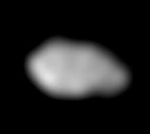
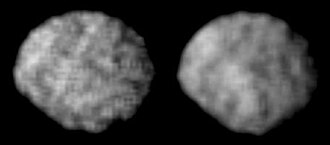
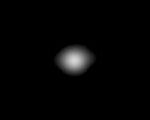
In Voyager 2 imagery, Portia appears as an elongated object whose major axis points towards Uranus. The ratio of axes of Portia's prolate spheroid is 0.8 ± 0.1. Its surface is grey or slightly reddish in color. Fellow Portia group members Juliet, Belinda, Cressida, Desdemona, and Rosalind have particularly similar spectra to Portia.
Studies have come to mixed conclusions on the presence of water ice on Portia. Observations with the Hubble Space Telescope in 1997 found a small dip in the spectra of the Portia group moons, tentatively suggested to be of water ice. Another group reported results on Portia individually, observing with the Hubble Space Telescope in 1998. Portia's orbital motion moved it out of the camera's view before observations were complete. However, they found that Portia's partial results were similar to that of Puck, which showed an absorption feature matching water ice, so by extrapolating they concluded that this was likely the case for Portia as well. 2003 observations with the W.M. Keck II telescope failed to find any water ice absorption features. Later observations in 2019 with the Keck telescope suggested the absence of water ice on the surface, though they acknowledged that they could have missed a small water ice absorption feature. Observations with James Webb Space Telescope in 2023 found evidence for water ice or hydrated minerals on Portia's surface.
以上内容摘自英文维基百科「Portia (moon)」,按 CC BY-SA 4.0 使用,去掉了参考文献、外部链接等尾部小节,公式改写成了纯文本。全文、配图和出处见原文。