格物
- 发现 / 发明时间
- 1842 年
- 发现者 / 提出者
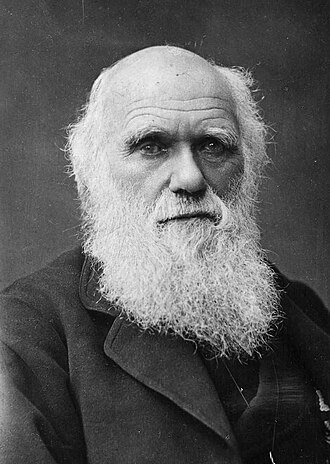
- 查尔斯·达尔文
- 研究学科
- 地貌学
- 学科
- 生物学
- 上级概念
- 岛屿
- 组成部分
- coral reef lagoon、珊瑚礁
相关科学家
百科正文
大部分的环礁分布于太平洋与印度洋,而大西洋的环礁数量相对少了许多。
形成过程
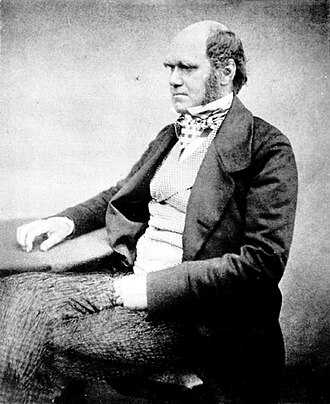
1842年,达尔文根据他在小猎犬号5年的航行中所作的观察研究资料,提出南太平洋环礁形成的理论。依据他的理论,环礁的形成与火山岛有关。在海底火山喷发后所形成的火山岛周围,因环境适合珊瑚生长,于是大批珊瑚附着生长,逐渐形成裙礁。其后因故导致岛屿下沉或海平面上升,珊瑚礁仍持续堆积增长。由于岛屿的外缘水流交换较多,珊瑚生长状况较内侧佳,于是逐渐形成堡礁。当火山岛完全沉没水中,仅剩下环状的珊瑚礁岛屿持续增长,便成为环礁。
环礁的分布
大部分的环礁分布于太平洋与印度洋,而大西洋的环礁数量相对少了许多。太平洋的环礁集中在土阿莫土群岛、加罗林群岛、马绍尔群岛、珊瑚海群岛,以及基里巴斯、图瓦卢、托克劳等地的岛群。
印度洋的主要环礁则包括马尔代夫、拉克沙群岛、查戈斯群岛及塞昔尔的外围群岛。大西洋并没有大型环礁群,比较显著的仅有位于尼加拉瓜东方,属于哥伦比亚圣安德烈斯-普罗维登西亚省的8个环礁。
由于适合珊瑚生长的环境是在热带、亚热带的温暖水域,因此环礁仅分布在此一范围。世界上最北的环礁为西北夏威夷群岛的库尔环礁,位于北纬28度24分。最南的环礁为塔斯曼海域珊瑚海群岛的伊丽莎白礁,位于南纬29度58分。
以上内容摘自维基百科「環礁」,按 CC BY-SA 4.0 使用,去掉了参考文献、外部链接等尾部小节,公式改写成了纯文本。全文、配图和出处见原文。
英文维基百科补充中文条目比较短,下面是英文条目「Atoll」的原文
An atoll is a ring-shaped island, including a coral rim that encircles a lagoon. There may be coral islands or cays on the rim. Atolls are located in warm tropical or subtropical parts of the oceans and seas where corals can develop. Most of the approximately 440 atolls in the world are in the Pacific Ocean.
Two different, well-cited models, the subsidence model and the antecedent karst model, have been used to explain the development of atolls. According to Charles Darwin's subsidence model, the formation of an atoll is explained by the sinking of a volcanic island around which a coral fringing reef has formed. Over geologic time, the volcanic island becomes extinct and eroded as it subsides completely beneath the surface of the ocean. As the volcanic island subsides, the coral fringing reef becomes a barrier reef that is detached from the island. Eventually, the reef and the small coral islets on top of it are all that is left of the original island, and a lagoon has taken the place of the former volcano. The lagoon is not the former volcanic crater. For the atoll to persist, the coral reef must be maintained at the sea surface, with coral growth matching any relative change in sea level (sinking of the island or rising oceans).
An alternative model for the origin of atolls is called the antecedent karst model. In the antecedent karst model, the first step in the formation of an atoll is the development of a flat top, mound-like coral reef during the subsidence of an oceanic island of either volcanic or nonvolcanic origin below sea level. Then, when relative sea level drops below the level of the flat surface of coral reef, it is exposed to the atmosphere as a flat topped island which is dissolved by rainfall to form limestone karst. Because of hydrologic properties of this karst, the rate of dissolution of the exposed coral is lowest along its rim and the rate of dissolution increases inward to its maximum at the center of the island. As a result, a saucer shaped island with a raised rim forms. When relative sea level submerges the island again, the rim provides a rocky core on which coral grow again to form the islands of an atoll and the flooded bottom of the saucer forms the lagoon within them.
Usage
The word atoll comes from the Dhivehi word atholhu (in Thaana: އަތޮޅު, pronounced [ˈat̪oɭu]). Dhivehi is an Indo-Aryan language spoken in the Maldives. The word was first transmitted to François Pyrard de Laval's French as atollon in 1625, this informed Charles Darwin to coin and define in his monograph, The Structure and Distribution of Coral Reefs as a "circular group of coral islets", synonymously with "lagoon-island".
Distribution and size
There are approximately 440 atolls in the world. Most of the world's atolls are in the Pacific Ocean (with concentrations in the Caroline Islands, the Coral Sea Islands, the Marshall Islands, the Tuamotu Islands, Kiribati, Tokelau, and Tuvalu) and the Indian Ocean (the Chagos Archipelago, Lakshadweep, the atolls of the Maldives, and the Outer Islands of Seychelles). In addition, Indonesia also has several atolls spread across the archipelago, such as in the Thousand Islands, Taka Bonerate Islands, and atolls in the Raja Ampat Islands.
Formation
In 1842, Charles Darwin explained the creation of coral atolls in the southern Pacific Ocean based upon observations made during a five-year voyage aboard HMS Beagle from 1831 to 1836. Darwin's explanation suggests that several tropical island types: from high volcanic island, through barrier reef island, to atoll, represented a sequence of gradual subsidence of what started as an oceanic volcano.
Royal Society expeditions 1896–1898
In 1896, 1897 and 1898, the Royal Society of London carried out drilling on Funafuti atoll in Tuvalu for the purpose of investigating the formation of coral reefs. They wanted to determine whether traces of shallow water organisms could be found at depth in the coral of Pacific atolls. This investigation followed the work on the structure and distribution of coral reefs conducted by Charles Darwin in the Pacific.
The first expedition in 1896 was led by William Johnson Sollas of the University of Oxford.
以上节选摘自英文维基百科「Atoll」,按 CC BY-SA 4.0 使用,去掉了参考文献、外部链接等尾部小节,公式改写成了纯文本。篇幅所限,较长的小节只摘了开头一部分,有的小节没有收;全文、配图和出处见原文。