格物
- 类型
- 首字母缩略字
- 发现 / 发明时间
- 1953 年
- 发现者 / 提出者
- 查尔斯·汤斯、詹姆斯·戈登、赫伯特·蔡格尔
- 学科
- 物理学
- 上级概念
- 受激发射
相关科学家
百科正文
利用激微波原理的“惰性氢微波激射器原子钟”,可制作“比铷原子钟精确十倍,每三百万年还差不到一秒”的原子钟。
以上内容摘自维基百科「激微波」,按 CC BY-SA 4.0 使用,去掉了参考文献、外部链接等尾部小节,公式改写成了纯文本。全文、配图和出处见原文。
英文维基百科补充中文条目比较短,下面是英文条目「Maser」的原文
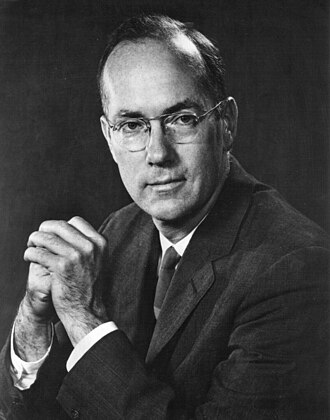
A maser is a device that produces coherent electromagnetic waves (microwaves) through amplification by stimulated emission. The term is an acronym for microwave amplification by stimulated emission of radiation. Nikolay Basov, Alexander Prokhorov and Joseph Weber introduced the concept of the maser in 1952, and Charles H. Townes, James P. Gordon, and Herbert J. Zeiger built the first maser at Columbia University in 1953. Townes, Basov and Prokhorov won the 1964 Nobel Prize in Physics for theoretical work leading to the maser. Masers are used as timekeeping devices in atomic clocks, and as extremely low-noise microwave amplifiers in radio telescopes and deep-space spacecraft communication ground-stations.
Modern masers can be designed to generate electromagnetic waves at microwave frequencies and radio and infrared frequencies. For this reason, Townes suggested replacing "microwave" with "molecular" as the first word in the acronym "maser".
The laser works by the same principle as the maser, but produces higher-frequency coherent radiation at visible wavelengths. The maser was the precursor to the laser, inspiring theoretical work by Townes and Arthur Leonard Schawlow that led to the invention of the laser in 1960 by Theodore Maiman. When the coherent optical oscillator was first imagined in 1957, it was originally called the "optical maser". This was ultimately changed to laser, for "light amplification by stimulated emission of radiation". Gordon Gould is credited with creating this acronym in 1957.
History
The theoretical principles governing the operation of a maser were first described by Joseph Weber of the University of Maryland, College Park at the Electron Tube Research Conference in June 1952 in Ottawa, with a summary published in the June 1953 Transactions of the Institute of Radio Engineers Professional Group on Electron Devices, and simultaneously by Nikolay Basov and Alexander Prokhorov from Lebedev Institute of Physics, at an All-Union Conference on Radio-Spectroscopy held by the USSR Academy of Sciences in May 1952, published in October 1954.
Technology
The maser is based on the principle of stimulated emission proposed by Albert Einstein in 1917. When atoms have been induced into an excited energy state, they can amplify radiation at a frequency particular to the element or molecule used as the masing medium (similar to what occurs in the lasing medium in a laser).
By putting such an amplifying medium in a resonant cavity, feedback is created that can produce coherent radiation.
Some common types
- Atomic beam masers
- Ammonia maser
- Free electron maser
- Hydrogen maser
- Gas masers
- Rubidium maser
- Liquid-dye and chemical laser
- Solid state masers
- Ruby maser
Uses
Masers serve as high precision frequency references. These "atomic frequency standards" are one of the many forms of atomic clocks. Masers were also used as low-noise microwave amplifiers in radio telescopes, though these have largely been replaced by amplifiers based on FETs.
During the early 1960s, the Jet Propulsion Laboratory developed a maser to provide ultra-low-noise amplification of S-band microwave signals received from deep space probes. This maser used deeply refrigerated helium to chill the amplifier down to a temperature of 4 kelvin.
Astrophysical masers
Maser-like stimulated emission has also been observed in nature from interstellar space, and it is frequently called "superradiant emission" to distinguish it from laboratory masers. These emissions are observed from molecules such as water (H2O), hydroxyl radicals (•OH), methanol (CH3OH), formaldehyde (HCHO), silicon monoxide (SiO), and carbodiimide (HNCNH). Water molecules in star-forming regions can undergo a population inversion and emit radiation at about 22.0 GHz, creating the brightest spectral line in the radio universe.
Terminology
The meaning of the term maser has changed slightly since its introduction. Initially the acronym was universally given as "microwave amplification by stimulated emission of radiation", which described devices which emitted in the microwave region of the electromagnetic spectrum.
The principle and concept of stimulated emission has since been extended to more devices and frequencies. Thus, the original acronym is sometimes modified, as suggested by Charles H.
以上节选摘自英文维基百科「Maser」,按 CC BY-SA 4.0 使用,去掉了参考文献、外部链接等尾部小节,公式改写成了纯文本。篇幅所限,较长的小节只摘了开头一部分,有的小节没有收;全文、配图和出处见原文。