格物
- 类型
- 理论
- 发现 / 发明时间
- 1955 年
- 发现者 / 提出者
- 约翰·惠勒
- 学科
- 物理学
- 是……的一个方面
- 量子力学
相关科学家
百科正文
在量子泡沫的普朗克尺度(10-35米)里,时空不再是平滑的,许多不同的形状会像泡沫一样随机浮出,又随机消失,这样在微小世界的能量起伏,就是所谓的“量子涨落”。在量子涨落中形成的小通道,就是所谓的虫洞,而这些量子虫洞则又可以连接到周遭众多的起伏泡沫,那些量子泡沫就是幼宇宙。
量子泡沫可用于极小尺度(普朗克长度量级)下量子振荡的定性描述。在这么小的尺度下海森堡的不确定性原理允许能量暂时产生并瞬间产生粒子和反粒子,然后在不违反物理守恒定律下互相湮灭,由于此处讨论的时间和空间规模极小,且加上虚拟粒子增加的能量,根据爱因斯坦的广义相对论,表明,在足够小的范围内,这些波动的能量将是大到足以使在较大的尺度上可观测到相对平滑时空的显著偏离,有如泡沫一般,因此,在量子泡沫里,空间没有一定的结构,对于各种不同的形状和曲度都有不同的几率。
以上内容摘自维基百科「量子泡沫」,按 CC BY-SA 4.0 使用,去掉了参考文献、外部链接等尾部小节,公式改写成了纯文本。全文、配图和出处见原文。
英文维基百科补充中文条目比较短,下面是英文条目「Quantum foam」的原文
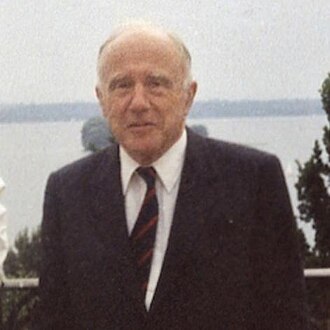
Quantum foam (also known as spacetime foam, or spacetime bubble) is a theoretical quantum fluctuation of spacetime on very small scales due to quantum mechanics. The theory predicts that at this small of a scale, particles of matter and antimatter are constantly created and destroyed. These small subatomic objects are called virtual particles. The idea was devised by John Wheeler in 1955.
Background
With an incomplete theory of quantum gravity, it is impossible to be certain what spacetime looks like at small scales. However, there is no definitive reason that spacetime needs to be fundamentally smooth. It is possible that instead, in a quantum theory of gravity, spacetime would consist of many small, ever-changing regions in which space and time are not definite, but fluctuate in a foam-like manner.
John Wheeler suggested that the uncertainty principle might imply that over sufficiently small distances and sufficiently brief intervals of time, the "very geometry of spacetime fluctuates". These fluctuations could be large enough to cause significant departures from the smooth spacetime seen at macroscopic scales, giving spacetime a "foamy" character.
Experimental results
The experimental proof of the Casimir effect, which is possibly caused by virtual particles, is strong evidence for the existence of virtual particles. The g-2 experiment, which predicts the strength of magnets formed by muons and electrons, also supports the existence of virtual particles.
In 2005, during observations of gamma-ray photons arriving from the blazar Markarian 501, MAGIC (Major Atmospheric Gamma-ray Imaging Cherenkov) telescopes detected that some of the photons at different energy levels arrived at different times, suggesting that some of the photons had moved more slowly and thus were in violation of special relativity's notion that the speed of light is constant, a discrepancy which could be explained by the irregularity of quantum foam. Subsequent experiments were, however, unable to confirm the supposed variation on the speed of light due to graininess of space.
Other experiments involving the polarization of light from distant gamma ray bursts have also produced contradictory results. More Earth-based experiments are ongoing or proposed.
Constraints on the size of quantum fluctuations
The fluctuations characteristic of a spacetime foam would be expected to occur on a length scale on the order of the Planck length (≈ 10−35 m), but some models of quantum gravity predict much larger fluctuations.
Photons should be slowed by quantum foam, with the rate depending on the wavelength of the photons. This would violate Lorentz invariance. But observations of radiation from nearby quasars by Floyd Stecker of NASA's Goddard Space Flight Center failed to find evidence of violation of Lorentz invariance.
A foamy spacetime also sets limits on the accuracy with which distances can be measured because photons should diffuse randomly through a spacetime foam, similar to light diffusing by passing through fog. This should cause the image quality of very distant objects observed through telescopes to degrade. X-ray and gamma-ray observations of quasars using NASA's Chandra X-ray Observatory, the Fermi Gamma-ray Space Telescope and ground-based gamma-ray observations from the Very Energetic Radiation Imaging Telescope Array (VERITAS) showed no detectable degradation at the farthest observed distances, implying that spacetime is smooth at least down to distances 1,000 times smaller than the nucleus of a hydrogen atom, setting a bound on the size of quantum fluctuations of spacetime.
Relation to other theories
The vacuum fluctuations provide vacuum with a non-zero energy known as vacuum energy.
Spin foam theory is a modern attempt to make Wheeler's idea quantitative.
以上内容摘自英文维基百科「Quantum foam」,按 CC BY-SA 4.0 使用,去掉了参考文献、外部链接等尾部小节,公式改写成了纯文本。全文、配图和出处见原文。