格物
- 类型
- 理论、方程
- 命名来源
- 莱昂哈德·欧拉、雅各布·伯努利
- 学科
- 物理学
相关科学家
百科正文
历史
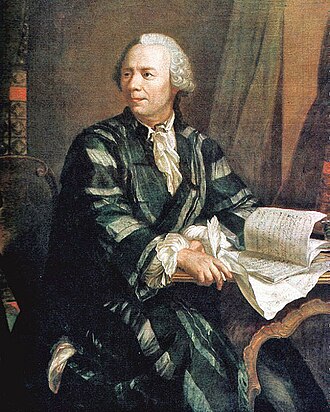
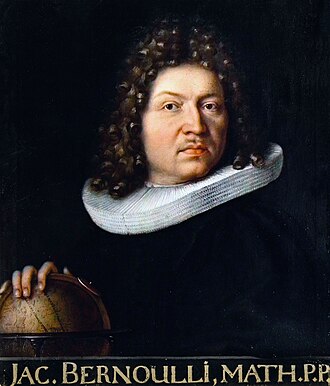
普遍认为,伽利略是提出关于梁的重要理论的第一人,但是近代史家发现,达芬奇才是第一位研究梁的科学家。但是由于当时缺乏建材弹性的研究和数学基础(主要是微积分),导致伽利略等的科学家没有成功取得突破。1750年,瑞士学者莱昂哈德·欧拉与丹尼尔·伯努利开始研究梁并把梁理论推向实用,成功地把科学与工程学区分成两个学科,同时使得工程学成为了一门数理科学。
欧拉-伯努力梁方程
欧拉─伯努利梁方程内容描述了梁的位移与载重的关系: (公式略)
而其中: u 为位移 (∂ u)/(∂ x) 为梁的斜率, (公式略) 为梁的弯矩, (公式略) 是梁的剪力, (公式略) 是梁的均布力。
以上内容摘自维基百科「歐拉-伯努力棟樑方程」,按 CC BY-SA 4.0 使用,去掉了参考文献、外部链接等尾部小节,公式改写成了纯文本。全文、配图和出处见原文。
英文维基百科补充中文条目比较短,下面是英文条目「Euler–Bernoulli beam theory」的原文
Euler–Bernoulli beam theory (also known as engineer's beam theory or classical beam theory) is a simplification of the linear theory of elasticity which provides a means of calculating the load-carrying capacity and deflection of beams.
When external forces are applied to a beam, internal shear forces and bending moments develop causing bending and curvature. Euler–Bernoulli beam theory states that the shear force at any point on a beam is the cumulative sum of the loads applied along the length of the beam up to that point. Similarly, the bending moment at any point is the sum of the shear forces along the beam up to that point. Additionally, the theory states that the deflection at any point on the beam is the fourth integral of the applied loads up to that point, and depends on flexural rigidity. Through the use of calculus, and boundary conditions describing the beam's curvature at its supports, the theory provides a mathematical model to predict the structural behavior of beams.
Euler–Bernoulli beam theory is limited to small deflections of a beam that is subjected to lateral loads only, causing elastic bending. Beam theories were later refined in the 20th century to account for the effects of shear deformation and rotatory inertia; Euler–Bernoulli beam theory is now considered a case of Timoshenko–Ehrenfest beam theory that neglects these effects.
It was first enunciated circa 1750, but was not applied on a large scale until the development of the Eiffel Tower and the Ferris wheel in the late 19th century. Following these successful demonstrations, it quickly became a cornerstone of engineering and an enabler of the Second Industrial Revolution.
Additional models have been developed, such as plate theory, but the simplicity of beam theory makes it an important tool in the sciences, especially structural and mechanical engineering.
以上节选摘自英文维基百科「Euler–Bernoulli beam theory」,按 CC BY-SA 4.0 使用,去掉了参考文献、外部链接等尾部小节,公式改写成了纯文本。篇幅所限,较长的小节只摘了开头一部分,有的小节没有收;全文、配图和出处见原文。