格物
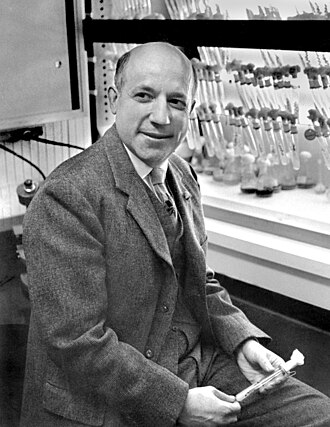
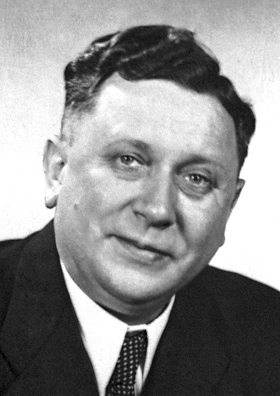
诺曼·皮里埃1907—1997
Norman Pirie
British biochemist (1907-1997)
诺曼·皮里埃 是一位英国生物化学家和病毒学家,1936年和弗雷德·鲍登结晶了一种病毒(TBSV),并发现病毒的组成除了蛋白质以外还有核酸,1949年当选皇家学会会士。
摘自维基百科「诺曼·皮里埃」,CC BY-SA 4.0
- 出生
- 1907 年 7 月 1 日,托兰斯
- 逝世
- 1997 年 3 月 29 日,哈本登
- 国籍
- 英国、大不列颠及爱尔兰联合王国
- 学科
- 化学、生物学
- 职业
- 生物化学家、病毒学家
- 母语 / 工作语言
- 英语
- 母校
- 剑桥大学
- 工作单位
- 剑桥大学
所获奖项(3)
- 1963列文虎克演讲
- 1971科普利奖章
- —英国皇家学会院士
学会与院士
百科正文
英文维基百科补充中文条目比较短,下面是英文条目「Norman Pirie」的原文
Norman Wingate Pirie FRS (1 July 1907 – 29 March 1997), was a British biochemist and virologist who, along with Frederick Bawden, discovered that a virus can be crystallized by isolating tomato bushy stunt virus in 1936. This was an important milestone in understanding DNA and RNA.
Early and personal life
Pirie was born in Easebourne, near Midhurst in West Sussex, the youngest of three children of Sir George Pirie, a Scottish painter, and his wife while they were on a visit to England. He was raised near Torrance, East Dunbartonshire. He developed a stammer, and was educated by private tutors and then spent periods at Kelvinside Academy in Glasgow, Harriston School near Dumfries, and Hastings Grammar School, and then from 1921 to 1925 at Rydal School in Colwyn Bay. He studied natural sciences (biochemistry) at Emmanuel College, Cambridge from 1925 to 1929, and became a demonstrator after graduating.
He married fellow biochemist Antoinette Patey in 1931. They had a son and a daughter. Like his wife, he was an atheist, and was concerned about nuclear weapons. He served as chairman of the Campaign for Nuclear Disarmament (CND) scientific committee for several years. His wife died in 1991. He died in Harpenden in 1997, survived by his two children.
Career
He worked at Cambridge University until 1940, working with Sir Frederick Gowland Hopkins. From 1932, he worked with Ashley Miles on the Brucella bacteria responsible for brucellosis, and with Frederick Bawden on potato viruses. They studied the tobacco mosaic virus, demonstrating that the virus contained ribonucleic acid (when others claimed they were just proteins). Bawden moved to Rothamsted Experimental Station in Harpenden in 1936, and Pirie also moved to Rothamsted as a virus physiologist in 1940, becoming head of the biochemistry department from 1947 until 1973. During the Second World War, Pirie investigated the possibility of extracting edible proteins from leaves. Experiments on extracting edible leaf proteins continued into the 1970s.
He was elected a Fellow of the Royal Society in 1949, delivered its Leeuwenhoek Lecture in 1963 and won its Copley Medal in 1971 for his virology work. He retired in 1972, but continued work on beta carotene in leaf proteins, and the use of leaf proteins in new foods for humans.
以上内容摘自英文维基百科「Norman Pirie」,按 CC BY-SA 4.0 使用,去掉了参考文献、外部链接等尾部小节,公式改写成了纯文本。全文、配图和出处见原文。
同一学科、同时代的科学家


同一学科的科学家
更多 ›