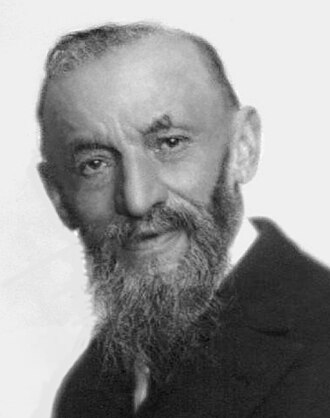
格物
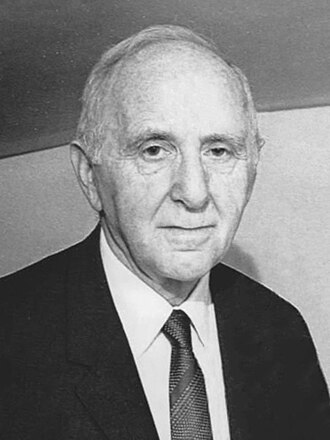
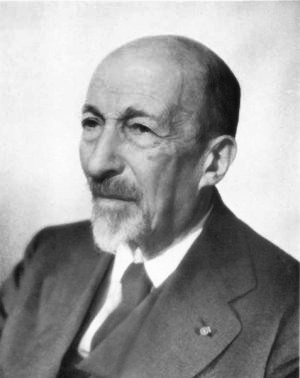
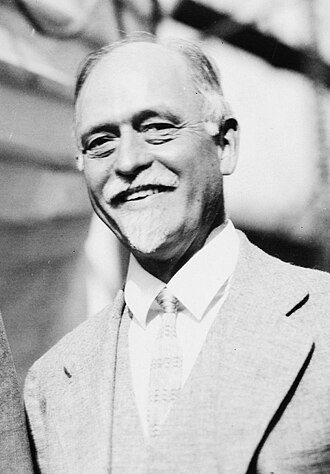
图:作者不详 · Public domain · Wikimedia Commons
- 出生
- 1878 年 9 月 2 日,马利尼
- 逝世
- 1973 年 6 月 4 日,巴黎十四区
- 国籍
- 法国
- 学科
- 数学、博物与综合
- 职业
- 数学家、世界语者、统计学家、大学教师
- 母语 / 工作语言
- 世界语、法语、德语、英语
- 母校
- 高等师范学校(1903 年)、布丰中学(1900 年)、圣路易中学
- 工作单位
- 普瓦捷大学(1910—1919)、斯特拉斯堡大学(1919—1927)、高等师范学校(1928—1948)、高等研究应用学院、普鲁旺斯大学
研究领域
主要贡献
代表成就
以他 / 她命名
师承
博士导师1
博士生13
来自 Wikidata 的「博士导师」「师从」「博士生」「学生」记录,可能不全。
所获奖项(9)
- 1923法国荣誉军团骑士勋章
- 1925蒙蒂雍奖
- 1926第一次世界大战盟军胜利奖章
- 1934彭赛列奖
- 1935Petit d'Ormoy, Carriere, Thebault Award
- 1946Émile Picard Medal
- 1947法国荣誉军团军官勋章
- 1950Fellow of the Econometric Society
- 2014Ayme-Poirson price
学会与院士
百科正文
生平
他主要贡献了点集拓扑学并介入了度量空间的完整概念。他还在统计学、概率论和微积分领域作出了很多重要贡献。他的论述开放了在度量空间上的泛函的整个领域并介入了紧致性的概念。独立于弗里杰什·里斯,他发现了勒贝格平方可积函数的空间中的表示定理。
以上内容摘自维基百科「莫里斯·弗雷歇」,按 CC BY-SA 4.0 使用,去掉了参考文献、外部链接等尾部小节,公式改写成了纯文本。全文、配图和出处见原文。
英文维基百科补充中文条目比较短,下面是英文条目「René Maurice Fréchet」的原文
René Maurice Fréchet (French: [ʁəne mɔʁis fʁeʃɛ, moʁ-]; 2 September 1878 – 4 June 1973) was a French mathematician. He made major contributions to general topology and was the first to define metric spaces. He also made several important contributions to the field of statistics and probability, as well as calculus. His dissertation opened the entire field of functionals on metric spaces and introduced the notion of compactness. Independently of Riesz, he discovered the representation theorem in the space of Lebesgue square integrable functions. He is often referred to as the founder of the theory of abstract spaces.
Biography
Early life
He was born to a Protestant family in Maligny to Jacques and Zoé Fréchet. At the time of his birth, his father was a director of a Protestant orphanage in Maligny and was later appointed a head of a Protestant school; but under the Jules Ferry laws lost his job. His mother set up a boarding house for foreigners in Paris; and in due course his father found a teaching position within the secular system.
Maurice attended the secondary school Lycée Buffon in Paris where he was taught mathematics by Jacques Hadamard. Hadamard recognised the potential of young Maurice and decided to tutor him on an individual basis. After Hadamard moved to the University of Bordeaux in 1894, Hadamard continuously wrote to Fréchet, setting him mathematical problems and harshly criticising his errors. Much later Fréchet admitted that the problems caused him to live in a continual fear of not being able to solve some of them, even though he was very grateful for the special relationship with Hadamard he was privileged to enjoy.
After completing high-school Fréchet was required to enroll in military service. This is the time when he was deciding whether to study mathematics or physics – he chose mathematics out of dislike of the chemistry classes he would have had to take otherwise. Thus in 1900 he enrolled to École Normale Supérieure to study mathematics.
He started publishing quite early, having published four papers in 1903. He also published some of his early papers with the American Mathematical Society due to his contact with American mathematicians in Paris—particularly Edwin Wilson.
Middle life
Fréchet served at many different institutions during his academic career. From 1907 to 1908 he served as a professor of mathematics at the Lycée in Besançon, then moved in 1908 to the Lycée in Nantes to stay there for a year. After that he served at the University of Poitiers between 1910 and 1919.
In 1908 he married Suzanne Carrive (1881–1945). They had four children: Hélène, Henri, Denise and Alain.
First World War
Fréchet was planning to spend a year in the United States at the University of Illinois, but his plan was disrupted when the First World War broke out in 1914. He was mobilised on 4 August the same year. Because of his diverse language skills, gained when his mother ran the establishment for foreigners, he served as an interpreter for the British Army.
Main works
His first major work was his outstanding 1906 PhD thesis Sur quelques points du calcul fonctionnel, on the calculus of functionals. Here Fréchet introduced the concept of a metric space, although the name is due to Hausdorff. Fréchet's level of abstraction is similar to that in group theory, proving theorems within a carefully chosen axiomatic system that can then be applied to a large array of particular cases.
- Here is a list of his most important works, in chronological order:
- Sur les opérations linéaires I–III, 1904–1907 (On linear operators)
- Les Espaces abstraits, 1928 (Abstract spaces)
Recherches théoriques modernes sur la théorie des probabilités, 1937–1938 (Modern theoretical research in the theory of probability)
Les Probabilités associées à un système d'événements compatibles et dépendants, 1939–1943 (Probabilities Associated with a System of Compatible and Dependent Events)
Pages choisies d'analyse générale, 1953 (Selected Pages of General Analysis)
Les Mathématiques et le concret, 1955 (Mathematics and the concrete)
Fréchet also developed ideas from the article Deux types fondamentaux de distribution statistique (1938; an English translation The Two Fundamental Types of Statistical Distribution) of Czech geographer, demographer and statistician Jaromír Korčák.
Fréchet is sometimes credited with the introduction of what is now known as the Cramér–Rao bound, but Fréchet's 1940s lecture notes on the topic appear to have been lost.
Family
In 1908 he married Suzanne Carrive.
以上节选摘自英文维基百科「René Maurice Fréchet」,按 CC BY-SA 4.0 使用,去掉了参考文献、外部链接等尾部小节,公式改写成了纯文本。篇幅所限,较长的小节只摘了开头一部分,有的小节没有收;全文、配图和出处见原文。
同一学科、同时代的科学家

同一学科的科学家
更多 ›