格物
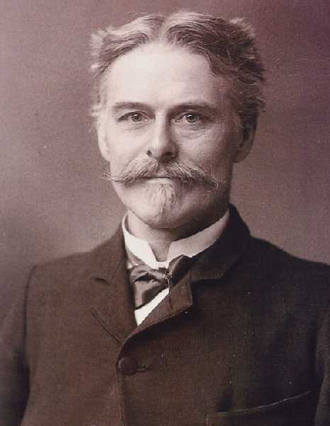
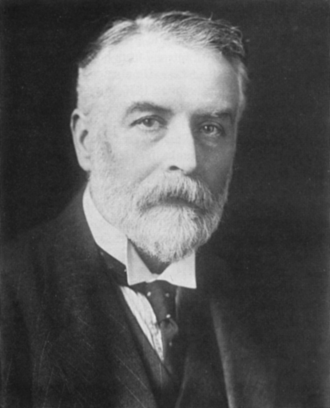
图:Frederick Gutekunst · Public domain · Wikimedia Commons
- 出生
- 1840 年 7 月 28 日,费城
- 逝世
- 1897 年 4 月 12 日,费城
- 国籍
- 美国
- 学科
- 生物学、地球科学、医学、博物与综合
- 职业
- 地质学家、古生物学家、动物学家、大学教师
- 母语 / 工作语言
- 英语
- 工作单位
- 宾夕法尼亚大学
研究领域
师承
来自 Wikidata 的「博士导师」「师从」「博士生」「学生」记录,可能不全。
所获奖项(2)
- 1879比格斯比奖章
- 1891海登纪念地质学奖
学会与院士
百科正文
科普专注于美国的脊椎动物化石研究,他在一生当中发掘了超过1000个新物种,其中包括已灭绝动物。共有56种恐龙是由科普所发现。他曾经与另一位恐龙研究者奥斯尼尔·查利斯·马什进行一场“化石战争”,对新化石的发现展开竞争。
以上内容摘自维基百科「愛德華·德林克·科普」,按 CC BY-SA 4.0 使用,去掉了参考文献、外部链接等尾部小节,公式改写成了纯文本。全文、配图和出处见原文。
英文维基百科补充中文条目比较短,下面是英文条目「Edward Drinker Cope」的原文
Edward Drinker Cope (July 28, 1840 – April 12, 1897) was an American zoologist, paleontologist, comparative anatomist, herpetologist, and ichthyologist. Born to a wealthy Quaker family, he distinguished himself as a child prodigy interested in science, publishing his first scientific paper at the age of 19. Though his father tried to raise Cope as a gentleman farmer, he eventually acquiesced to his son's scientific aspirations.
Cope had little formal scientific training, and he eschewed a teaching position for field work. He made regular trips to the American West, prospecting in the 1870s and 1880s, often as a member of U.S. Geological Survey teams. A personal feud between Cope and paleontologist Othniel Charles Marsh led to a period of intense fossil-finding competition now known as the Bone Wars. Cope's financial fortunes soured after failed mining ventures in the 1880s, forcing him to sell off much of his fossil collection. He experienced a resurgence in his career toward the end of his life.
Though Cope's scientific pursuits nearly bankrupted him, his contributions helped to define the field of American paleontology. He was a prodigious writer with 1,400 papers published over his lifetime, although his rivals debated the accuracy of his rapidly published works. He discovered, described, and named more than 1,000 vertebrate species, including hundreds of fishes and dozens of dinosaurs.
Biography
Early life
Edward Drinker Cope was born on July 28, 1840, the eldest son of Alfred and Hanna Cope. The death of his mother when he was three years old seemed to have had little effect on young Edward, as he mentioned in his letters that he had no recollection of her. His stepmother Rebecca Biddle filled the maternal role; Cope referred to her warmly, as well as his younger stepbrother, James Biddle Cope. Alfred, an orthodox member of the Religious Society of Friends or Quakers, operated a lucrative shipping business started by his father Thomas P. Cope in 1821. He was a philanthropist who gave money to the Society of Friends, the Philadelphia Zoological Gardens and the Institute for Colored Youth.
Personality
Julia assisted Osborn in writing a biography of her father, titled Cope: Master Naturalist. She would not comment on the name of the woman with whom her father had had an affair prior to his first European travel. Julia is believed to have burned any of the scandalous letters and journals Cope had kept, but many of his friends were able to give their recollections of the scandalous nature of some of Cope's unpublished routines. Charles R.
Views
As a young man, Cope read Charles Darwin's Voyage of a Naturalist, which had little effect on him. The only comment about Darwin's book recorded by Cope was that Darwin discussed "too much geology" from the account of his voyage. Due to his background in taxonomy and paleontology, Cope focused on evolution in terms of changing structure, rather than emphasizing geography and variation within populations as Darwin had. Over his lifetime, Cope's views on evolution shifted. His early views held that while Darwin's natural selection may affect the preservation of superficial characteristics in organisms, natural selection alone could not explain the formation of genera.
Legacy
In his career, Cope published over 1,400 scientific papers. His major works include three volumes: On the Origin of Genera (1867), The Vertebrata of the Tertiary Formations of the West (1884) and "Essays in Evolution". He discovered a total of 56 new dinosaur species during the Bone Wars compared to Marsh's 80. Although Cope is today known as a herpetologist and paleontologist, his contributions extended to ichthyology, in which he cataloged 300 species of fishes and described over 300 species of reptiles over three decades. In total, he discovered and described over 1,000 species of fossil vertebrates and published 600 separate titles; one species of Caribbean snake, Liophis juliae, he named in honor of his daughter.
以上节选摘自英文维基百科「Edward Drinker Cope」,按 CC BY-SA 4.0 使用,去掉了参考文献、外部链接等尾部小节,公式改写成了纯文本。篇幅所限,较长的小节只摘了开头一部分,有的小节没有收;全文、配图和出处见原文。
同一学科、同时代的科学家
同一学科的科学家
更多 ›