格物

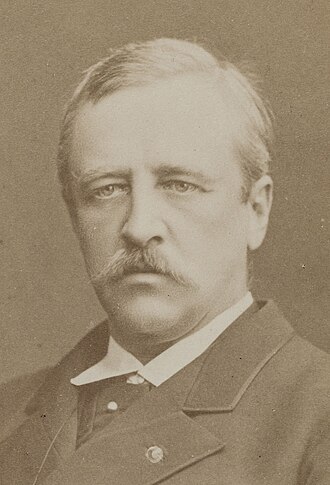
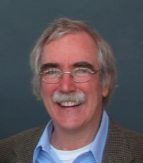
图:Fowler, Evanston · No restrictions · Wikimedia Commons
亨利·费尔费尔德·奥斯本1857—1935
Henry Fairfield Osborn
19至20世纪美国地质学家、古生物学家和优生学家
亨利·费尔费尔德·奥斯本,美国古生物学家、地质学家和优生学倡导者。他担任美国自然历史博物馆馆长25年,也是美国优生学协会的联合创始人。他命名了霸王龙等许多恐龙。
摘自维基百科「亨利·費爾費爾德·奧斯本」,CC BY-SA 4.0
- 出生
- 1857 年 8 月 8 日,费尔菲尔德
- 逝世
- 1935 年 11 月 6 日,纽约
- 国籍
- 美国
- 学科
- 生物学、地球科学、博物与综合
- 职业
- 地质学家、古生物学家、动物学家、古人类学家
- 母语 / 工作语言
- 英语
- 母校
- 普林斯顿大学
- 工作单位
- 美国地质调查局、哥伦比亚大学、美国自然史博物馆
研究领域
师承
博士导师1
博士生1
来自 Wikidata 的「博士导师」「师从」「博士生」「学生」记录,可能不全。
所获奖项(8)
学会与院士
百科正文
英文维基百科补充中文条目比较短,下面是英文条目「Henry Fairfield Osborn」的原文
Henry Fairfield Osborn, Sr. (August 8, 1857 – November 6, 1935) was an American paleontologist, geologist and eugenics advocate. He was professor of anatomy at Columbia University, president of the American Museum of Natural History for 25 years and a cofounder of the American Eugenics Society.
Among his significant contributions include naming the dinosaurs Tyrannosaurus and Velociraptor, his widely used system of names for dental cusps and other features of mammalian teeth, as well as his research on fossil proboscideans (elephants and their extinct relatives).
Osborn was one of the most well known scientists in the United States during his own lifetime, "second only to Albert Einstein", and was a prominent public advocate for the existence of evolution. Active during the eclipse of Darwinism, Osborn was a prominent opponent of natural selection as a mechanism of evolution, favouring the now discredited orthogenesis theory of which he was one of the most prominent advocates.
In addition to being an advocate of eugenics, he was a Nordicist, viewing the white race as superior, and supported immigration controls. Osborn's political connections allowed him to gain significant funding for the American Museum of Natural History, using this to redesign and expand the museums exhibits, which he used to reflect his own views on "racialism, eugenics, and immigration".
Early life and education
Family
Henry Fairfield Osborn was born in Fairfield, Connecticut on August 8, 1857, in a family of distinction. He was the eldest son of shipping magnate and railroad tycoon William Henry Osborn and Virginia Reed (née Sturges) Osborn.
His maternal grandparents were Jonathan Sturges, a prominent New York businessman and arts patron who was a direct descendant of Jonathan Sturges, a U.S.
Career
In 1891, Osborn was hired by Columbia University as a professor of zoology; simultaneously, he accepted a position at the American Museum of Natural History, New York, where he served as the curator of a newly formed Department of Vertebrate Paleontology.
Fossil hunting
As a curator, he assembled a remarkable team of fossil hunters and preparators, including William King Gregory, Roy Chapman Andrews, Barnum Brown, and Charles R. Knight.
Theories
Dawn Man Theory
Osborn developed his own evolutionary theory of human origins called the "Dawn Man Theory". His theory was founded on the discovery of Piltdown Man (Eoanthropus) which was dated to the Late (Upper) Pliocene. Writing before Piltdown was exposed as a hoax, the Eoanthropus or "Dawn Man" Osborn maintained sprang from a common ancestor with the ape during the Oligocene period which he believed developed entirely separately during the Miocene (16 million years ago).
Eugenics, racialism and immigration
Osborn is widely known to have held racist and antisemitic views.102 Osborn, who cofounded the American Eugenics Society in 1922, advocated that heredity is superior to influences from the environment. As an extension of this, he accepted that distinct races existed with fixed hereditary traits, and was a Nordicist, regarding, the Nordic or Anglo-Saxon "race" to be highest. Osborn therefore supported eugenics to preserve "good" racial stock.
Personal life
In June 1881, Osborn was married to writer Lucretia Thatcher Perry (1858–1930) at the military chapel on Governors Island. She was the daughter of Brigadier General Alexander James Perry and Josephine (Adams) Perry, and a descendant of Justice Christopher Raymond Perry). Lucretia's sister, Josephine Adams Perry, was the wife of banker Junius Spencer Morgan II.
Eponyms
The dinosaur Saurolophus osborni was named after Osborn by Barnum Brown in 1912.
An African dwarf crocodile, Osteolaemus osborni, was named in his honor by Karl Patterson Schmidt in 1919.
Also named in his honor is the early canid genus Osbornodon.
Published books
- From the Greeks to Darwin: An Outline of the Development of the Evolution Idea (1894)
- Present Problems in Evolution and Heredity (1892)
- Evolution of Mammalian Molar Teeth: To and From the Triangular Type (1907)
- Men of the Old Stone Age: Their Environment, Life and Art (1915)
- The Origin and Evolution of Life (1916)
- Men of the Old Stone Age (1916)
- The Age of Mammals in Europe, Asia and North America (1910)
- Evolution and Religion (1923)
- Evolution And Religion In Education (1926)
以上节选摘自英文维基百科「Henry Fairfield Osborn」,按 CC BY-SA 4.0 使用,去掉了参考文献、外部链接等尾部小节,公式改写成了纯文本。篇幅所限,较长的小节只摘了开头一部分,有的小节没有收;全文、配图和出处见原文。
同一学科、同时代的科学家



同一学科的科学家
更多 ›