格物
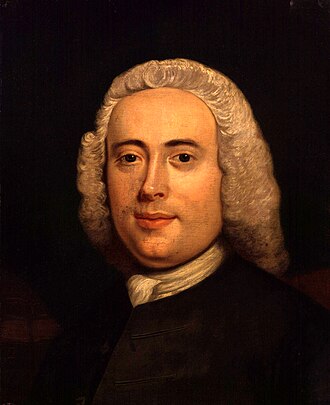
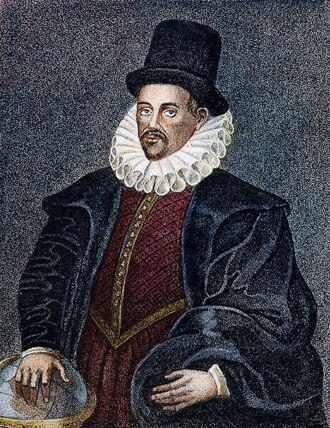
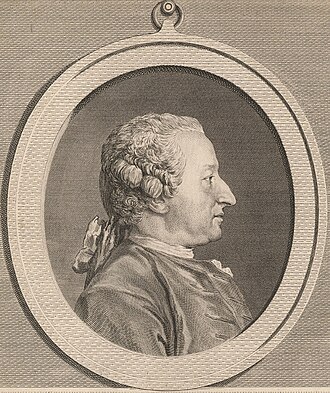
图:作者不详 · Public domain · Wikimedia Commons
- 出生
- 1718 年 7 月 31 日,斯特劳德
- 逝世
- 1772 年 3 月 22 日,伦敦
- 国籍
- 大不列颠王国
- 学科
- 物理学、博物与综合
- 职业
- 物理学家
- 母语 / 工作语言
- 英语
所获奖项(3)
学会与院士
百科正文
生平
坎通1718年出生于格洛斯特郡斯特劳德中央大街,是一个英格兰织工的儿子。
以上内容摘自维基百科「约翰·坎通」,按 CC BY-SA 4.0 使用,去掉了参考文献、外部链接等尾部小节,公式改写成了纯文本。全文、配图和出处见原文。
英文维基百科补充中文条目比较短,下面是英文条目「John Canton」的原文
John Canton (31 July 1718 – 22 March 1772) was a British physicist. He was born in Middle Street Stroud, Gloucestershire, to a weaver, John Canton (b. 1687) and Esther (née Davis). As a schoolboy, he became the first person to determine the latitude of Stroud, while making a sundial. The sundial caught the attention of many, including Dr Henry Miles, a Stroud-born Fellow of the Royal Society. Miles encouraged Canton to leave Gloucestershire to become a trainee teacher for Samuel Watkins, the headmaster of a Nonconformist school in Spital Square, London, with whom he ultimately entered into partnership.
In 1750, he read a paper before the Royal Society on a method of making artificial magnets, and was subsequently elected a Fellow of the society (FRS). In 1751 he was a recipient of the Copley Medal "On account of his communicating to the Society, and exhibiting before them, his curious method of making Artificial Magnets without the use of Natural ones." He was the first in England to verify Benjamin Franklin's hypothesis of the identity of lightning and electricity, and he made several important electrical discoveries.
In 1762 and 1764, he published experiments in refutation of the decision of the Florentine Academy, at that time generally accepted, that water is incompressible. He put a hollow glass sphere with a thin capillary tube on it, and filled the sphere with water. He put the entire thing under an air pump, and changed the pressure between 2 atm and a near vacuum. He observed that the water rose up the capillary when in a near vacuum, and vice versa. He thus concluded that an increase of 1 atm would compress water by 1/10870 in volume. This agrees with modern value for the bulk modulus of water to within 3%. He also studied the compressibility of spirit of wine, olive oil, mercury and seawater, etc., and found that the compressibility increased with a decrease in density.
In 1768, he described the preparation, by calcining oyster-shell with sulphur, of the phosphorescent material known as Canton's phosphorus. His investigations were carried on while he worked as a school teacher. He died in London aged 53 of dropsy.
He read to the Royal Society letters from Thomas Bayes that formed the foundation for modern day Bayes' Theorem. These were later published by the Royal Society. John Canton did not receive the letters directly from Bayes, but through an intermediary, Richard Price, who edited Bayes' manuscripts before sending them to John Canton.
Canton is now mainly remembered for his work in electrostatics, particularly the invention of the pith ball electroscope, and his studies in atmospheric electricity. He is honoured with a blue plaque at the site of his old school in his hometown of Stroud.
以上内容摘自英文维基百科「John Canton」,按 CC BY-SA 4.0 使用,去掉了参考文献、外部链接等尾部小节,公式改写成了纯文本。全文、配图和出处见原文。
同一学科、同时代的科学家





同一学科的科学家
更多 ›