格物
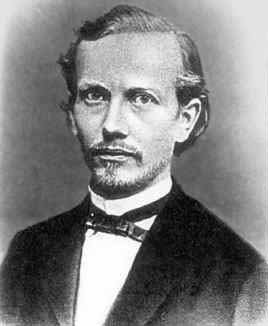
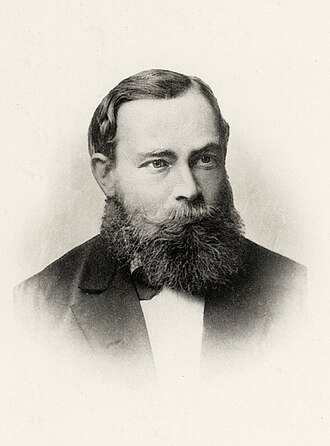
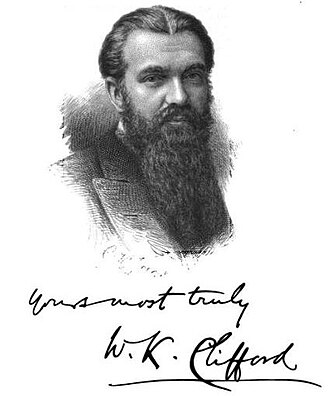
图:Public domain · Wikimedia Commons
- 出生
- 1839 年 2 月 14 日,萨勒河畔哈雷
- 逝世
- 1873 年 3 月 29 日,施兰贝格
- 国籍
- 普鲁士王国
- 学科
- 数学、博物与综合
- 职业
- 数学家、数学史学家、科学家、大学教师
- 母语 / 工作语言
- 德语
- 母校
- 哥廷根大学(1861 年)、弗里德里希·威廉大学(1862 年)、莱比锡大学(1860 年)、莱比锡大学(博士,1862 年)
- 工作单位
- 蒂宾根大学(1869—1873)、莱比锡大学(1863—1867)、埃尔朗根-纽伦堡大学(1867—1869)
研究领域
主要贡献
代表成就
师承
博士生6
来自 Wikidata 的「博士导师」「师从」「博士生」「学生」记录,可能不全。
所获奖项(1)
- 1857honorary member of the Physics Association (Frankfurt am Main, Germany)
百科正文
汉克尔曾与莫比乌斯、黎曼、维尔斯特拉斯和克罗内克等数学家共同学习和工作。
数学贡献
汉克尔著名的贡献包括他提出的贝塞尔方程的一类特殊函数解(称为“第三类贝塞尔函数”或汉克尔函数),和线性代数中的汉克尔矩阵。
函数与点集理论
汉克尔于1870年所发表的论文“无限振荡与不连续函数的研究”,在当时有广泛的影响力。这篇论文研究线性不连续函数,明确提出点集理论中的稠密与无处稠密的概念(由狄利克雷所启发),并以“奇点稠密化原理”(principle of condensation of singularities)来对函数做分类,这个原理可以建构出一个函数,使其在一段有限区间内拥有无限多个非连续点。康托尔于1871年对这篇论文发表了一篇评论,其中对“奇点稠密化原理”表示印象深刻。
以上内容摘自维基百科「赫尔曼·汉克尔」,按 CC BY-SA 4.0 使用,去掉了参考文献、外部链接等尾部小节,公式改写成了纯文本。全文、配图和出处见原文。
英文维基百科补充中文条目比较短,下面是英文条目「Hermann Hankel」的原文
Hermann Hankel (14 February 1839 – 29 August 1873) was a German mathematician. Having worked on mathematical analysis during his career, he is best known for introducing the Hankel transform and the Hankel matrix.
Biography
Hankel was born on 14 February 1839 in Halle, Germany. His father, Wilhelm Gottlieb Hankel, was a physicist. Hankel studied at Nicolai Gymnasium in Leipzig before entering Leipzig University in 1857, where he studied with Moritz Drobisch, August Ferdinand Möbius and his father. In 1860, he started studying at University of Göttingen, where he acquired an interest in function theory under the tutelage of Bernhard Riemann. Following the publication of an award winning article, he proceeded to study under Karl Weierstrass and Leopold Kronecker in Berlin. He received his doctorate in 1862 at Leipzig University. Receiving his teaching qualifications a year after, he was promoted to an associate professor at Leipzig University in 1867. At the same year, he received his full professorship in University of Erlangen–Nuremberg and spent his last four years in University of Tübingen. He died from an illness on 29 August 1873 in Schramberg, near Tübingen. He was married to Marie Hankel.
In 1867, he published Theorie der Complexen Zahlensysteme, a treatise on complex analysis. His works on the theory of functions include 1870's Untersuchungen über die unendlich oft oscillirenden und unstetigen functionen and his 1871 article “Grenze” for the Ersch-Gruber Encyklopädie. His work for Mathematische Annalen has highlighted the importance of Bessel functions of the third kind, which were later known as Hankel functions.
His 1867 exposition on complex numbers and quaternions is particularly memorable. For example, Fischbein notes that he solved the problem of products of negative numbers by proving the following theorem: "The only multiplication in R which may be considered as an extension of the usual multiplication in R+ by respecting the law of distributivity to the left and the right is that which conforms to the rule of signs."
Furthermore, Hankel draws attention to the linear algebra that Hermann Grassmann had developed in his Extension Theory in two publications. This was the first of many references later made to Grassmann's early insights on the nature of space.
以上内容摘自英文维基百科「Hermann Hankel」,按 CC BY-SA 4.0 使用,去掉了参考文献、外部链接等尾部小节,公式改写成了纯文本。全文、配图和出处见原文。
同一学科、同时代的科学家


同一学科的科学家
更多 ›