 格物
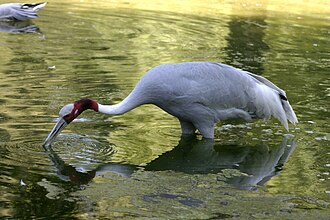
图:User:Nino Barbieri · CC BY 2.5 · Wikimedia Commons
- 学名
- Grus
- 分类等级
- 属
- 上级类群
- 鹤科
- 大类
- 鸟类
- 命名
- 马蒂兰·雅克·布里松,1760 年
- 数据库
- NCBI 分类 · GBIF
下级类群(9)

百科正文
下属物种
- 本属包括以下物种:
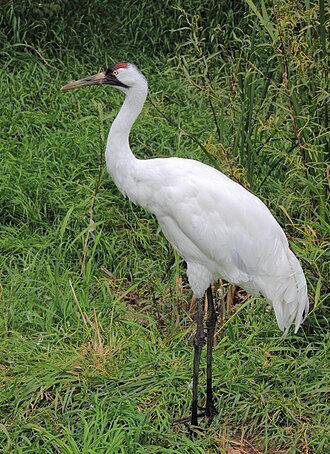
- 美洲鹤 Grus americana (Linnaeus, 1758)
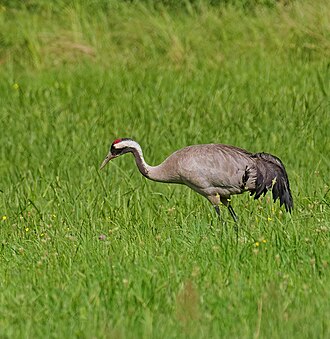
- 灰鹤 Grus grus (Linnaeus, 1758)
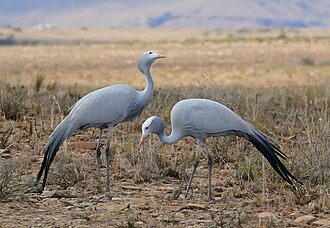
蓝鹤 Grus paradisea (Lichtenstein, AAH, 1793)
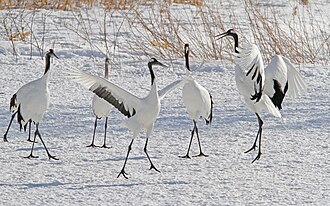
丹顶鹤 Grus japonensis (Statius Muller, 1776)
- 肉垂鹤 Grus carunculata (Gmelin, JF, 1789)
- 白头鹤 Grus monacha Temminck, 1835
- 黑颈鹤 Grus nigricollis Prjevalsky, 1876
- 蓑羽鹤 Grus virgo (Linnaeus, 1758)
以上内容摘自维基百科「鹤属」,按 CC BY-SA 4.0 使用,去掉了参考文献、外部链接等尾部小节,公式改写成了纯文本。全文、配图和出处见原文。
英文维基百科补充中文条目比较短,下面是英文条目「Grus (bird)」的原文
Grus is a genus of large birds in the crane family.
The genus Grus erected by the French zoologist Mathurin Jacques Brisson in 1760. The name Grus is the Latin word for "crane". The German ornithologist Peter Simon Pallas was sometimes credited with erecting the genus in 1766 but the International Commission on Zoological Nomenclature ruled in 1956 that Brisson should have priority.
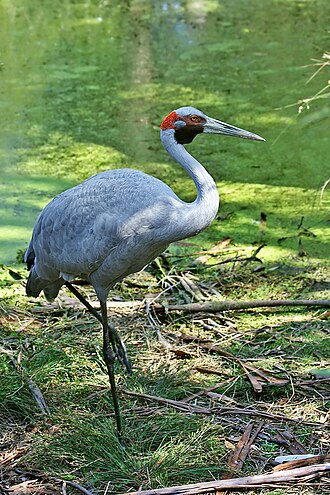
The genus formerly included additional species. A molecular phylogenetic study published in 2010 found that the genus Grus, as then defined, was polyphyletic. In the resulting rearrangement to create monophyletic genera, the sandhill crane, the white-naped crane, the sarus crane and the brolga were moved to the resurrected genus Antigone that had been erected by the German naturalist Ludwig Reichenbach in 1853. The Siberian crane was moved to the resurrected monotypic genus Leucogeranus.
Species
The genus contains eight living species:
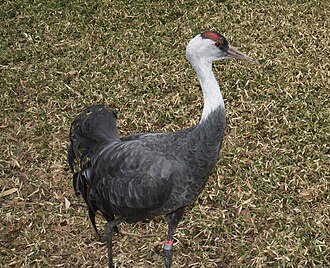
The HBW/BirdLife and Clements checklists place the demoiselle crane and blue crane in the genus Anthropoides, and the wattled crane in the monospecific genus Bugeranus, leaving only the red-crowned, whooping, common, hooded, and black-necked cranes in the genus Grus.
The Cuban flightless crane (Antigone cubensis), which became extinct in the Pleistocene, was formerly assigned to the genus Grus.
Fossil record
The fossil record of the genus stretches back some 12 million years or so. A considerable number of prehistoric species are known, with the oldest, Grus miocaenicus (Middle Miocene of Credinţa, Romania) perhaps not a crane but a junior synonym of the swimming-flamingo Palaelodus ambiguus; ("Grus" problematica certainly is).
Grus afghana (Late Miocene of Molayan, Afghanistan) - doubtfully distinct from G. penteleci
- Grus sp. 1 (Late Miocene of Love Bone Bed, USA)
- Grus sp. 2 (Late Miocene of Love Bone Bed, USA)
- Grus cf. antigone (Late Miocene/Early Pliocene of Lee Creek Mine, USA)
Grus nannodes (Late Miocene/Early Pliocene -? Edson Middle Pliocene of Sherman County, USA)
Grus sp. (Late Miocene/Early Pliocene of Lee Creek Mine, USA)
Grus haydeni (Late Miocene/Early Pliocene - Pleistocene? of WC USA) - 2 species, one may be same as G. canadensis
- Grus penteleci (Late Miocene - Early Pliocene of C and SE Europe) - formerly in Pliogrus
- Grus sp. (Late Pliocene of Puebla de Valverde, Spain)
- Grus bogatshevi (Late Pleistocene of Azerbaijan) - doubtfully distinct form G. primigenia
- Grus latipes (Shore Hills Late Pleistocene of Bermuda, W Atlantic) - formerly Baeopteryx
Maltese crane Grus melitensis (Late Pleistocene of Malta) - doubtfully distinct from G. primigenia
Grus pagei (Late Pleistocene of Rancho La Brea)
Grus cubensis (Pleistocene and Holocene of Cuba)
Several other fossil gruiforms formerly placed in Grus have since been reclassified into different genera. "Grus" prentici is now in Paragrus, "Grus" princeps, "Grus" excelsa and "Grus" hordwellianus are placed in Palaeogrus, and "Grus" excelsa in Balearica. "Grus" marshi belongs in Aletornis.
More uncertain is the position of Probalearica (variously considered Late Oligocene to Middle Pliocene but probably Late Miocene) from Golboçica (Moldavia) and maybe elsewhere. It is usually regarded a nomen dubium but might belong into Grus. "Grus" conferta (Late Miocene/Early Pliocene of Contra Costa County, USA) is apparently too different from the modern genus to be placed herein, but its affiliations are not well resolved.
以上内容摘自英文维基百科「Grus (bird)」,按 CC BY-SA 4.0 使用,去掉了参考文献、外部链接等尾部小节,公式改写成了纯文本。全文、配图和出处见原文。