格物
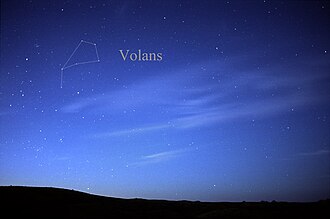
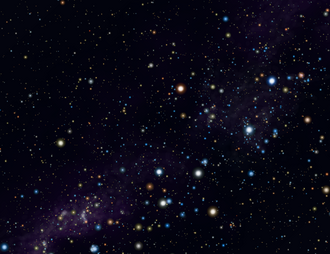
图:Till Credner · CC BY-SA 4.0 · Wikimedia Commons
- 类型
- 星座
- 发现 / 发明时间
- 1597 年
- 发现者 / 提出者
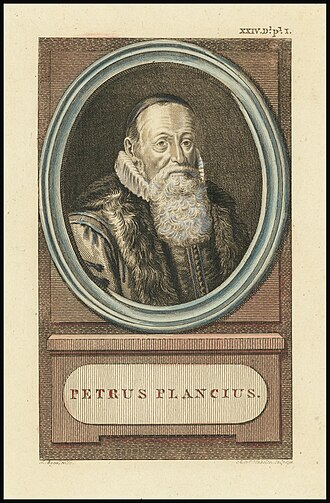
- 彼得勒斯·普朗修斯
- 命名来源
- flying fish
- 属于
- 南天 (天球)
- 学科
- 天文学
相关科学家
百科正文
重要主星
来源:The Bright Star Catalogue, 5th Revised Ed., The Hipparcos Catalogue, ESA SP-1200
深空天体
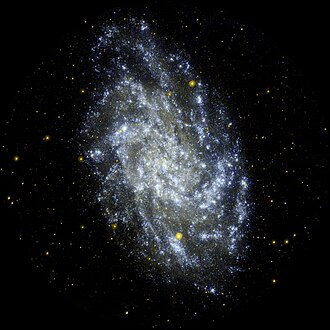
NGC 2442/2443:中间螺旋星系
NGC 2397:螺旋星系
以上内容摘自维基百科「飞鱼座」,按 CC BY-SA 4.0 使用,去掉了参考文献、外部链接等尾部小节,公式改写成了纯文本。全文、配图和出处见原文。
英文维基百科补充中文条目比较短,下面是英文条目「Volans」的原文
Volans is a constellation in the southern sky. It represents a flying fish; its name is a shortened form of its original name, Piscis Volans. Volans was one of twelve constellations created by Petrus Plancius from the observations of Pieter Dirkszoon Keyser and Frederick de Houtman and it first appeared on a 35-cm (14") diameter celestial globe published in 1597 (or 1598) in Amsterdam by Plancius with Jodocus Hondius. The first depiction of this constellation in a celestial atlas was in Johann Bayer's Uranometria of 1603.
History
Volans is one of the 12 constellations that were introduced by the Dutch navigators Pieter Dirkszoon Keyser and Frederick de Houtman in the late 16th century. It was first depicted on Petrus Plancius’ globe in 1598. Plancius called the constellation Vliegendenvis (flying fish).
In 1603, Johann Bayer included the constellation in his star atlas Uranometria under the name Piscis Volans, the flying fish. John Herschel proposed shrinking the name to one word in 1844, noting that Lacaille himself had abbreviated his constellations thus on occasion. This was universally adopted.
Volans represents a type of tropical fish that can jump out of the water and glide through the air on wings. In early celestial maps, the flying fish was often depicted as accompanying the ship Argo Navis, and being chased by the predatory fish represented by the adjoining constellation Dorado.
Features
Volans has several deep-sky objects within its borders.
Stars
Lacaille gave 12 stars Bayer designations Alpha through Kappa in 1756 and labelled two stars as Gamma and Kappa.
There are two double stars within the constellation which can be observed using a small telescope, Gamma Volantis and Epsilon Volantis, along with two galaxies which may be more difficult to see clearly, NGC 2442 and NGC 2434. The magnitudes of the Gamma Volantis stars are 3.8 and 5.6, and of Epsilon Volantis 4.4 and 7.3.
The Astronomical Society of Southern Africa in 2003 reported that observations of the variable stars R and S Volantis in Volans were very urgently needed as data on their light curves was incomplete.
HD 76700 is a sunlike star some 195 light-years distant that has been found to have a planet.
Deep-sky objects
The Lindsay-Shapley ring, also categorized as AM0644-741, is a ring galaxy located 300 million light-years from Earth. Named for its discoverers, the Lindsay-Shapley ring was found near the Large Magellanic Cloud in 1960. Like the Cartwheel Galaxy in Sculptor, the unusual shape of this galaxy results from a collision many millions of years ago. The blue ring, 150,000 light-years in diameter, was formed when a shock wave from the collision created a ring of hot blue stars; the yellow core is an amalgamation of the progenitors' cores. NGC 2442, an intermediate-spiral galaxy, is also located in this constellation, with a distance of 50 million light-years from Earth.
Graham's Object, aka Das Rheingold or Nibelungen Ring is a ring shaped galaxy at R.A. 6h 41.4m / Decl. -74° 19' (2000.0) in Volans
以上内容摘自英文维基百科「Volans」,按 CC BY-SA 4.0 使用,去掉了参考文献、外部链接等尾部小节,公式改写成了纯文本。全文、配图和出处见原文。