格物
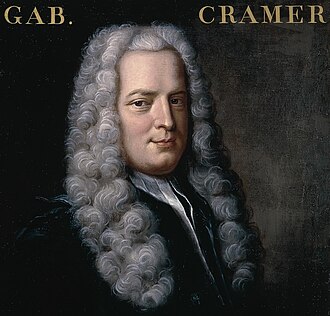
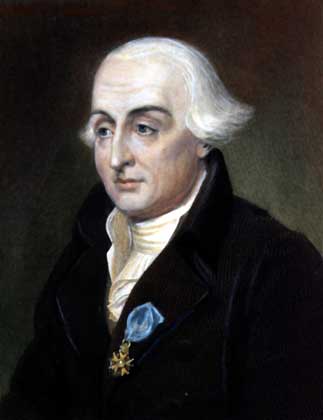
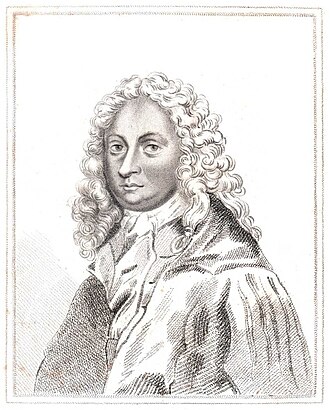
图:作者不详 · Public domain · Wikimedia Commons
- 出生
- 1704 年 7 月 31 日,日内瓦
- 逝世
- 1752 年 1 月 4 日,塞兹河畔巴尼奥勒
- 国籍
- 日内瓦共和国
- 学科
- 物理学、数学、博物与综合
- 职业
- 数学家、物理学家、大学教师
- 母语 / 工作语言
- 法语
- 母校
- 日内瓦大学(1722 年)
- 工作单位
- 日内瓦大学(1724—1751)
研究领域
主要贡献
代表成就
以他 / 她命名
所获奖项(1)
- 1749英国皇家学会院士
学会与院士
百科正文
生平
克莱姆早年在日内瓦读书,1722年时发表论文而获得博士学位,1724年起在日内瓦加尔文学院任教,1734年成为几何学教授,1750年任哲学教授。他自1727年起进行为期两年的旅行访学。在巴塞尔与约翰·伯努利、欧拉等人交流学习,结为挚友。后又到英国、荷兰、法国等地拜见许多数学名家,回国后在与他们的长期通信中,加强了数学家之间的联系,为克莱姆的数学宝库留下了大量有价值的文献。他一生未婚,专心治学,平易近人且德高望重,先后当选为伦敦皇家学会、柏林研究院和法国、意大利等学会的成员。首先定义了正则、非正则、超越曲线和无理曲线等概念,第一次正式引入坐标系的纵轴(Y轴),然后讨论曲线变换,并依据曲线方程的阶数将曲线进行分类。为了确定经过5个点的一般二次曲线的系数,应用了著名的被后世称为“克莱姆法则(即克莱姆法则、克莱姆法则)”的方法,即由线性方程组的系数确定方程组的解的方法。该法则于1729年由英国数学家麦克劳林得到并于1748年发表,但克莱姆使用符号的优越性使得这一方法以“克莱姆法则”之名为世人所知。他最著名的工作是在1750年发表关于代数曲线方面的权威之作。他最早证明一个第n度的曲线是由 n(n + 3)/2 个点来决定的。
以上内容摘自维基百科「加布里尔·克拉默」,按 CC BY-SA 4.0 使用,去掉了参考文献、外部链接等尾部小节,公式改写成了纯文本。全文、配图和出处见原文。
英文维基百科补充中文条目比较短,下面是英文条目「Gabriel Cramer」的原文
Gabriel Cramer (French: [kʁamɛʁ]; 31 July 1704 – 4 January 1752) was a Genevan mathematician.
Biography
Cramer was born on 31 July 1704 in Geneva, Republic of Geneva to Jean-Isaac Cramer, a physician, and Anne Mallet. The progenitor of the Cramer family in Geneva was Jean-Ulrich Cramer, Gabriel's great-grandfather, who immigrated from Strasbourg in 1634. Cramer's mother, a member of the Mallet family, was of Huguenot origin. Cramer showed promise in mathematics from an early age. In 1722, aged 18, he received his doctorate from the Academy of Geneva, and at 20 he was made co-chair (along with Jean-Louis Calandrini) of mathematics at the Academy.
He became the sole professor of mathematics in 1734 and was appointed professor of philosophy at the Academy in 1750. Cramer was also involved in the politics of the Republic of Geneva, entering first the Council of Two Hundred in 1734 then the Council of Sixty in 1750. He was a member of the science academies of Bologna, Lyon, and Montpellier, as well as a foreign member of the Royal Society of London and the Royal Academy of Sciences of Berlin. Cramer died on 4 January 1752 at Bagnols-sur-Cèze while traveling in southern France to restore his health.
Contributions to mathematics
In 1728, Cramer proposed a solution to the St. Petersburg Paradox that came very close to the concept of expected utility theory given ten years later by Daniel Bernoulli. He did extensive travel throughout Europe in the late 1730s, which greatly influenced his works in mathematics.
Cramer published his best-known work in his forties. This included his treatise on algebraic curves (1750). It contains the earliest demonstration that a curve of the n-th degree is determined by n(n + 3)/2 points on it, in general position (see Cramer's theorem (algebraic curves)). This led to the misconception that is Cramer's paradox, concerning the number of intersections of two curves compared to the number of points that determine a curve.
Cramer edited the works of the two elder Bernoullis, and wrote on the physical cause of the spheroidal shape of the planets and the motion of their apsides (1730), and on Newton's treatment of cubic curves (1746).
In 1750 he published Cramer's rule, giving a general formula for the solution for any unknown in a linear equation system having a unique solution, in terms of determinants implied by the system. This rule is still standard.
以上内容摘自英文维基百科「Gabriel Cramer」,按 CC BY-SA 4.0 使用,去掉了参考文献、外部链接等尾部小节,公式改写成了纯文本。全文、配图和出处见原文。
同一学科、同时代的科学家




同一学科的科学家
更多 ›